Exhibitions
Barcelona, living laboratory of global architecture
The World Congress of Architects 2026 draws an open, critical city connected to the sea.
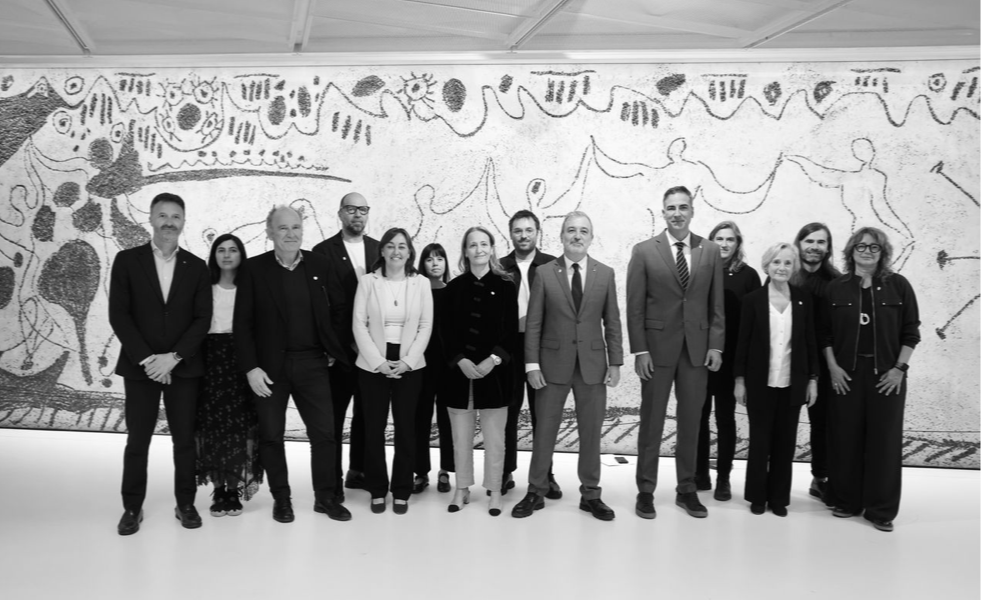
Barcelona is once again at the centre of world architectural thought. Three decades after the 1996 Congress, the city is taking up the thread of that founding moment to project itself into the future with a proposal that goes beyond the limits of the traditional format. Within the framework of a symbolic year —with the world capital of architecture, the Gaudí Year and the Cerdà Year—, the World Congress of Architects is presented as an invitation to rethink the role of architecture in a planet in transformation.
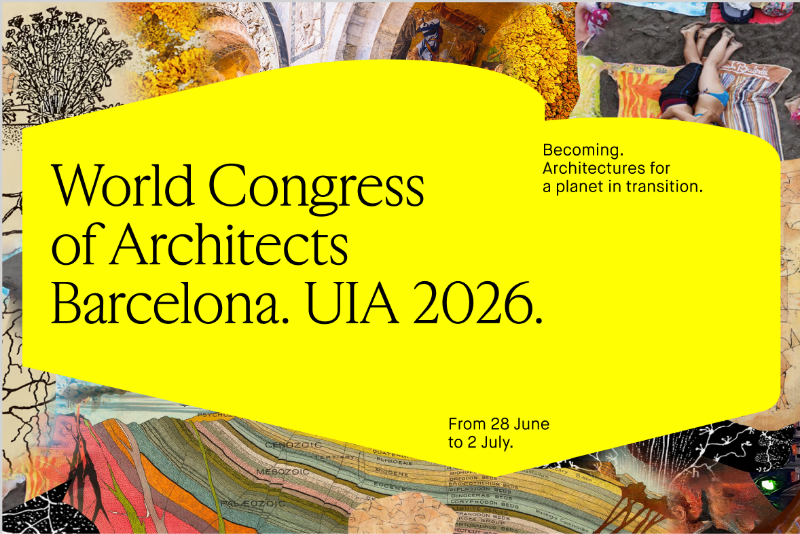
Under the motto Becoming. Architectures for a Planet in Transition , Barcelona will host, from June 28 to July 2, more than 10,000 participants and 250 speakers from over 130 countries. Far from being limited to a professional event, the Congress unfolds as an urban and collective experience, with more than 100 sessions, a large central exhibition and around seventy itineraries that will connect the debates with the territory.
Architecture can no longer be understood as a finished work, but as an open process: building, adapting, transforming. In a world torn by the housing crisis, the climate emergency and the often forgotten need for beauty, big cities become living laboratories where everything is under constant review.
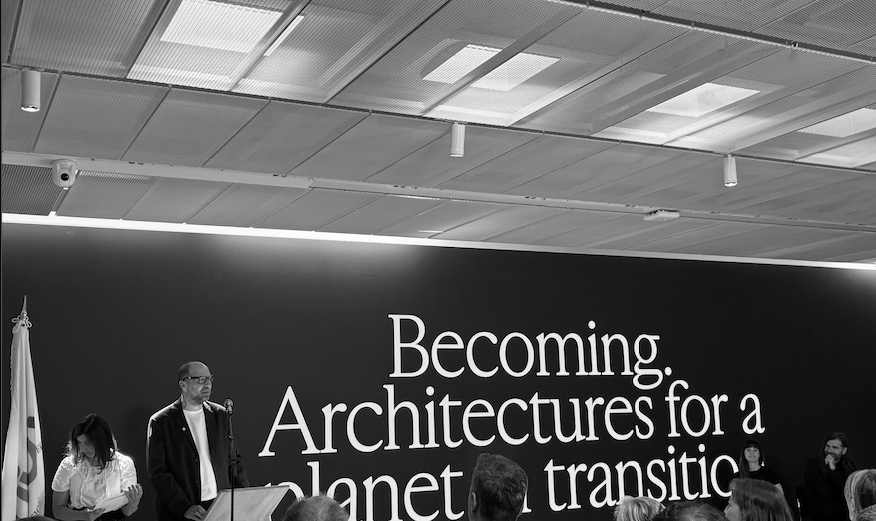
The curators are: Pau Bajet, Mariona Benedito, Maria Giramé, Tomeu Ramis, Pau Sarquella and Carmen Torres.
This “becoming” appeals to an architecture in gerund: thinking while doing, responding while building. It is not just about giving shape to spaces, but also about taking on conflicts and imagining new ways of inhabiting them. Between urgency and hope, architecture is deployed as a tool to negotiate the present and project possible futures.
A symbolic geography: triangle architecture
The Congress does not only occupy spaces: it articulates them. The main venues—the Tres Xemeneies in Sant Adrià de Besòs, the CCIB and the Disseny Hub Barcelona—form a kind of symbolic triangle that is conceptually reminiscent of Constantin Brâncuși's sculptural arrangement in Târgu Jiu. In this case, however, the common thread is not only formal, but also geographical and emotional: the Mediterranean Sea acts as a backbone, connecting spaces, discourses and perspectives.
This tour also includes the Sagrada Família, which will host the UIA triennial award ceremony, reinforcing the link between heritage, spirituality and contemporaneity.
A congress that opens in the city
One of the great successes of the program is its desire for openness. More than 70 itineraries will allow access to spaces that are usually closed, turning Barcelona and its surroundings into a living extension of the Congress. This urban dimension is amplified by the participation of a hundred local architects as hosts , figures who will connect the global debates with the specific reality of the city.
The heart of this opening will be the Open Forum, at the Tres Xemeneies: an ephemeral structure facing the sea, with capacity for 1,500 people, conceived as a horizontal debate space. Here, the boundaries between speakers and audience are diluted, and architecture becomes a shared conversation. The structure itself, built with rental elements, puts into practice the principles of sustainability that the Congress defends.
Voices that define the present
The program brings together a constellation of key figures in contemporary architecture. Speakers include Pritzker Prize winners Lacaton & Vassal, Shigeru Ban, Amateur Architecture Studio and recent award winner Smiljan Radić. Also participating are the winners of the 2026 Mies van der Rohe Award, Architecten Jan de Vylder Inge Vinck.
The selection is committed to real diversity: territorial, generational and gender. It combines consolidated trajectories with emerging practices, in an explicit attempt to build a plural narrative about contemporary challenges.
Research, experimentation and future
The Central Exhibition, with more than 4,000 m², will be one of the key spaces of the Congress. It will bring together 12 investigations from the Research by Design program, as well as prototypes, installations and projects developed in international workshops. This space will function as an open laboratory, where research becomes tangible and accessible.
Barcelona, between memory and projection
The return of the Congress to Barcelona is not just a historical repetition, but a reinterpretation. If in 1996 the city consolidated its post-Olympic urban model, today it presents itself as a territory under constant review, aware of its limits and potential.
In this context, the coincidence with the Year dedicated to Antoni Gaudí and Ildefons Cerdà is not anecdotal: it symbolizes the tension between two ways of understanding the city—the organic and the ordered—that continue to dialogue in the present.

You may be
interested
...