Opinion
Mark Rothko Returns to Florence: The City as Encounter
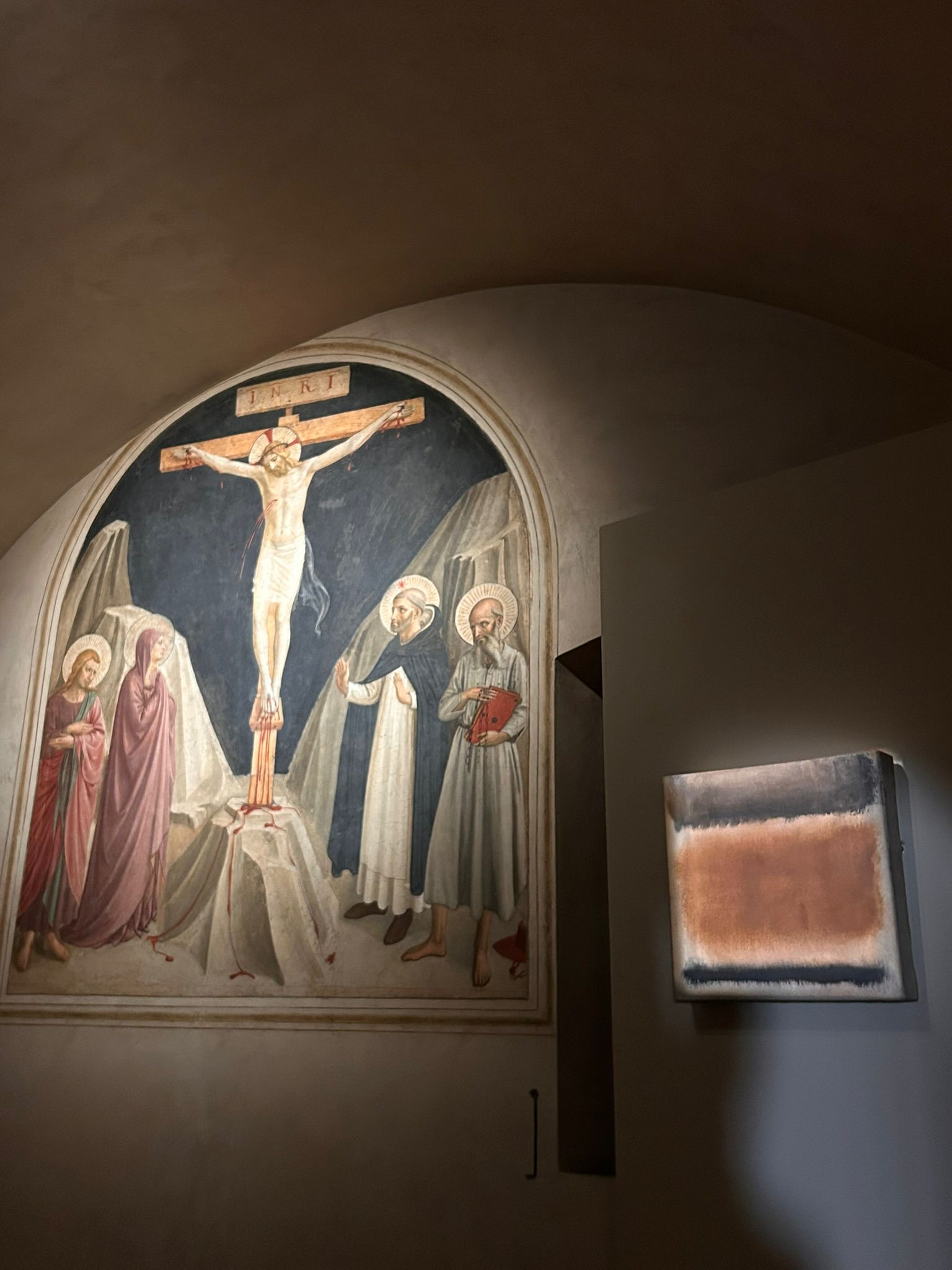
Florence does not offer itself as a reasoned destination. It insists on being encountered, repeatedly, and to write about it directly feels almost like a betrayal as if naming it too precisely might diminish its effect. But this is not, strictly speaking, about Florence. It is about Mark Rothko, and about what it also means to encounter his work here. The retrospective at Palazzo Strozzi, curated by his son Christopher Rothko, refuses the containment one might expect of it. It disperses across the city, from Palazzo Strozzi to the convent of San Marco, and finally to the Biblioteca Medicea Laurenziana, designed by Michelangelo.
Three sites, a structure that does not simply organise the exhibition, but announces a new meaning in it. You move between them, or they move you; it's not entirely clear. It would be easy, perhaps too easy to describe this as a simple dispersal across the city but the structure here insists on something else. In doing so, it becomes impossible to look at Rothko without looking at the influences from the masters that have now trespassed his body of work.In this context, it begins to feel less like a retrospective and more like a return to source. I began, perhaps arbitrarily, to notice this tendency of three everywhere.
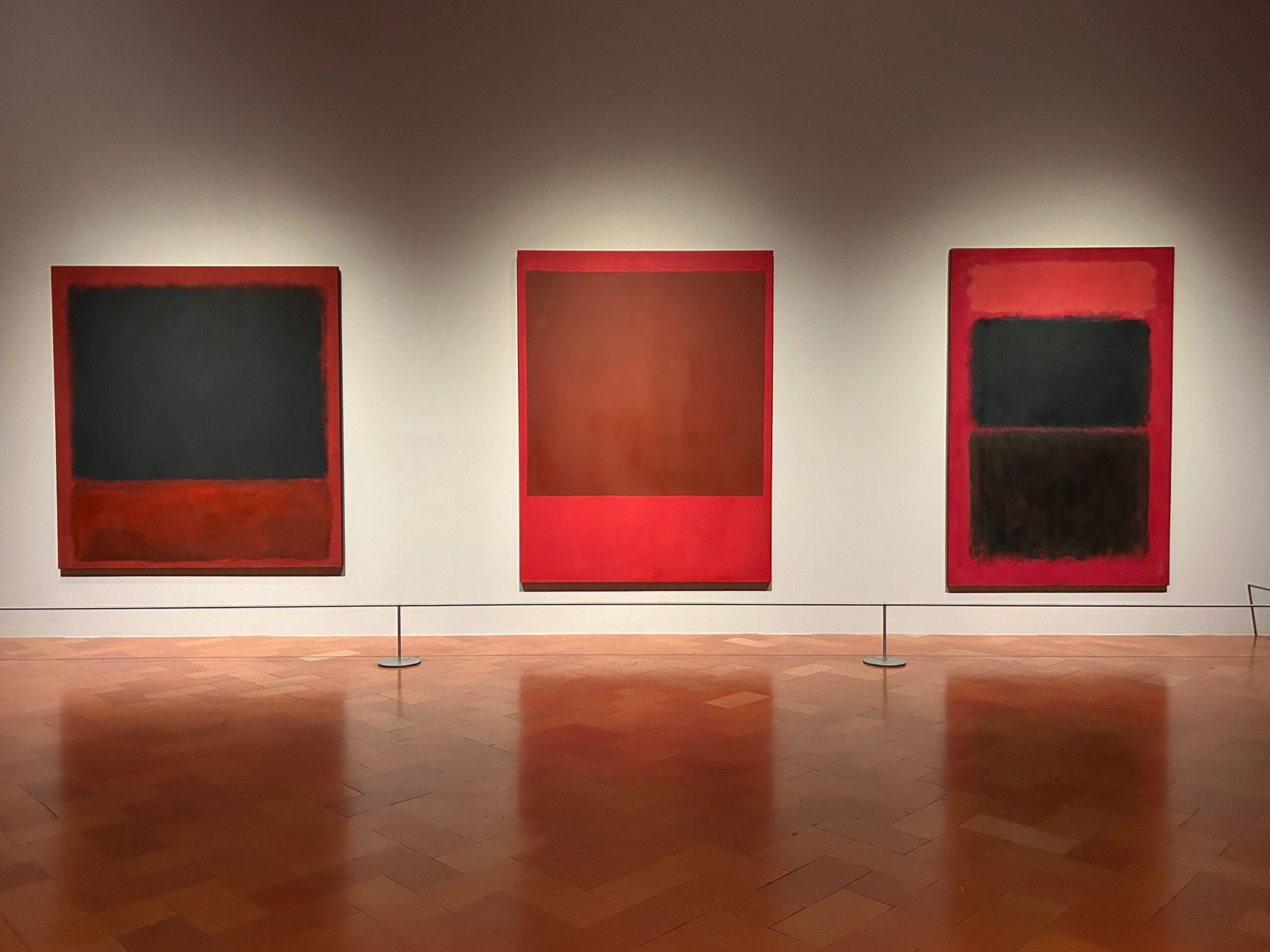
At Palazzo Strozzi, the early works appear almost as a concession to a narrative where figures first lingered quickly became unstable. One senses the afterimage of European modernism on the verge of dissolving. Every abrupt brushstroke settles a battlefield of colour climbing onto one another, like quiet sediment. In the large canvases, this accumulation becomes architectural where colour does not sit; but builds. It presses forward and withdraws at once, producing a density that feels almost inhabitable. When asked about Michelangelo’s work Rothko observed that, “Michelangelo achieved the kind of feeling [he was] looking after. He makes the viewers feel that they are trapped in a room where all the doors and windows are bricked up so that all they can do is butt their heads forever against the wall.” If Michelangelo traps the body, Rothko corners the gaze.
Falling into this triadic structure, the paintings organise themselves through three colours, one dense, one luminous, one receding, or perhaps more precisely, through three spatial conditions, surface, depth, and vibration. The eye moves between them but never quite settles; it hovers at the periphery of vision, as if Rothko were not painting forms but pressing the eye up against blocks of paint. There is always a third encounter that resists immediate perception. Perhaps this triadic form recalls what Sigmund Freud outlines in The Theme of the Three Caskets, an essay in which he traces a recurring structure across myth and literature: the three choices. In King Lear, the daughter who refuses to perform love is the one who carries necessity. We find the third term, least visible, and most associated with mortality.Freud suggests that this third term carries an encounter with necessity, one that cannot be avoided or aestheticised. The recurring narrative structure in which meaning does not reside in opposition (one or two), but in the third term which is often the least visible, and the one associated with our mortality. In Rothko's paintings, we are drawn to the luminous, then to the dense, but it is the interval between them that holds the work together. A space that cannot quite be seen, only felt, not a line, nor a form, but a tension where something hides that resists being seen. If the first element seduces, and the second stabilises, the third withdraws from vision while restructuring the entire field. In this sense, Rothko does not depict mortality; he structures the conditions under which it is felt.
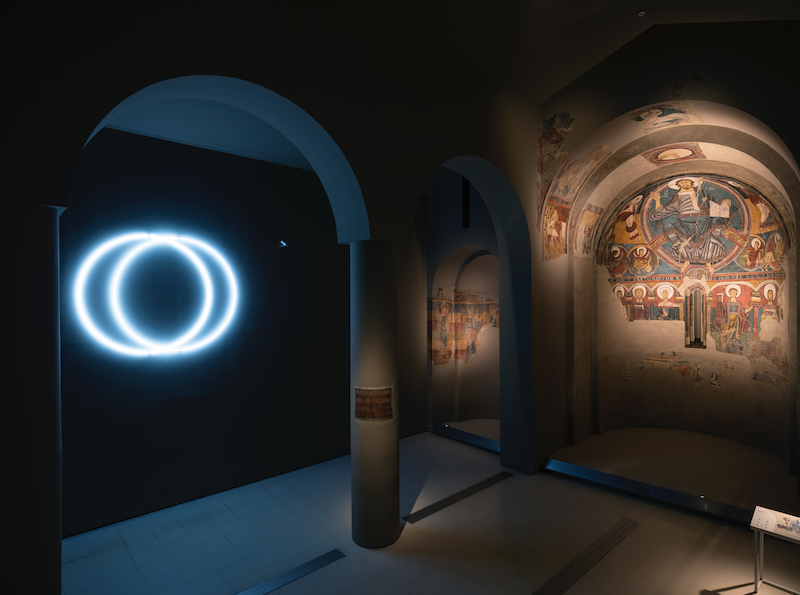
Once this structure becomes noticed it's quite difficult to unsee it, especially in Florence. It feels like a composition one can fully ingest if present in the city during the duration of the retrospective. Renaissance painting, after all, is built upon the triangle, not only as a compositional device but as a theological one: the Holy Trinity, a geometry that connects heaven and earth. In the frescoes of Fra Angelico at the convent of San Marco, figures are arranged in this triangular stability, held in quiet, harmonious ascent. Rothko’s admiration for Fra Angelico is well known as he reportedly left Florence in 1950 with tears in his eyes. To encounter his work now within the cells of the convent feels less like juxtaposition than a return. Fra Angelico’s frescoes are precise, devotional, and structured around narrative clarity. Beside Rothko’s abstract paintings, even in the absence of the figure, it begins to seem possible, though I am not entirely certain, that his work undeniably operates within the same coherence. We feel the same standing before both only that what provokes that feeling has utterly changed.
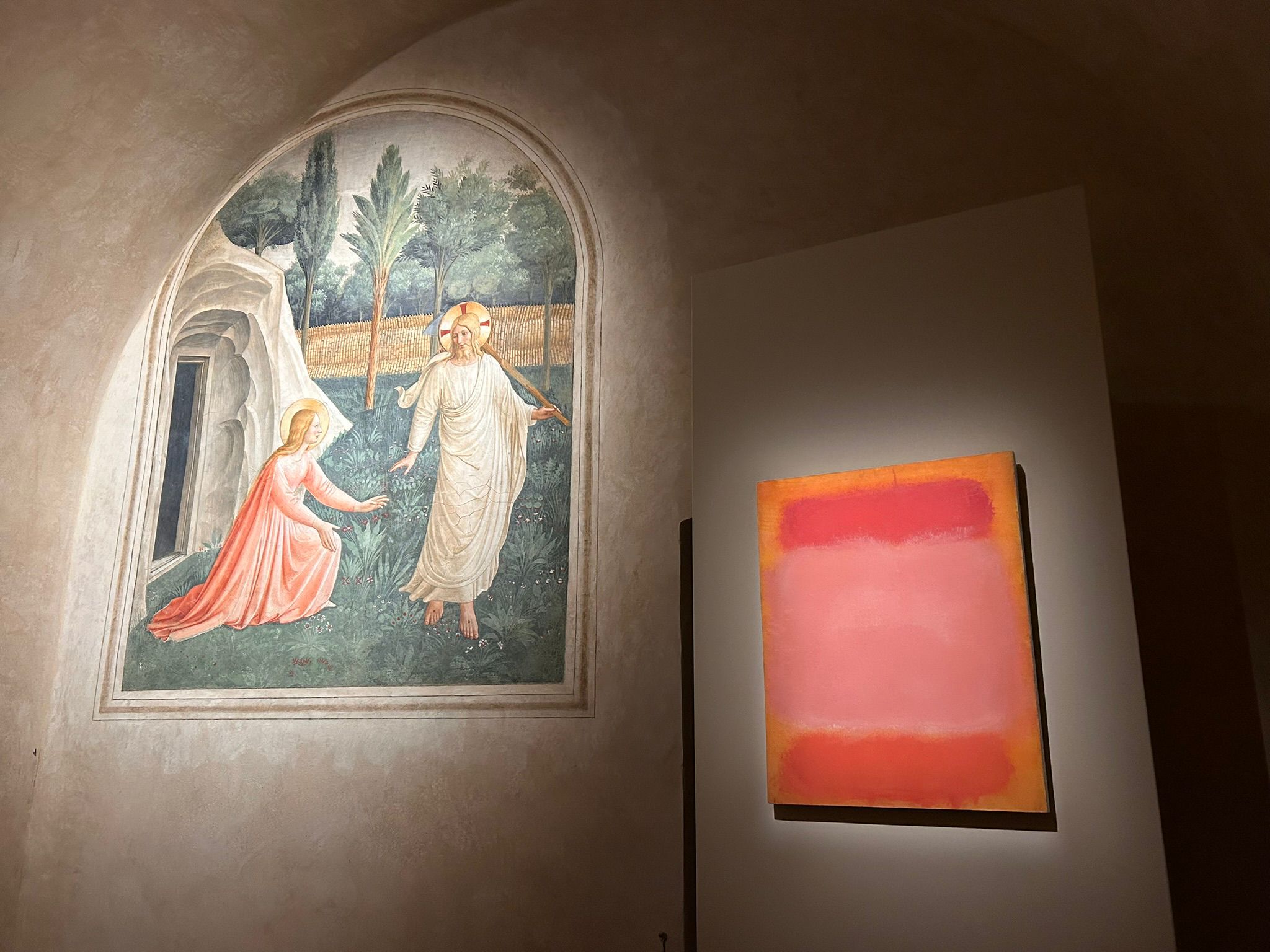
There is a temptation to describe Rothko as timeless, but after this retrospective in Florence, he feels insistently historical. Perhaps this is what the exhibition ultimately proposes not a retrospective in the conventional sense, but something closer to a translation. Rothko, positioned within Florence, does not oppose the Renaissance; he reframes it. He removes its narratives, its certainties, its figures, and leaves behind something more fragile: the conditions under which Renaissance painting once operated, now returned, altered, to the contemporary viewer.

You may be
interested
...