Exhibitions
Ahmed Umar at the Chopo Museum, Mexico City
The Museo Universitario del Chopo is not a neutral space. Since its founding, it has served as a bastion for counterculture and an archive for dissent in Mexico. Its history is intrinsically linked to the visibility of the gay community; it hosted the first Lesbian and Gay Culture Weeks in the 1980s and, more recently, significant exhibitions such as Elements of Vogue , curated by Sabel Gavaldón and Manuel Segade. It is within this context, steeped in memory and activism—and as part of an annual program with a clear emphasis on LGBTQ+ artists—that the work of Sudanese-Norwegian artist Ahmed Umar is now being presented.
His work, in fact, recently had a prominent presence on the international scene: he participated in the 60th Venice Biennale as part of the main exhibition Stranieri Ovunque – Foreigners Everywhere , curated by Adriano Pedrosa, with his work displayed at the Arsenale. Born in Sudan, Umar grew up under the shadow of the Public Order Act, an instrument of repression that punished any deviation from the norm. Being an artist was suspect; being gay, a crime. After being denounced, he fled to Norway in 2008 as a political refugee. This exile marked the beginning of his work: an attempt to reconstruct a fractured identity between the country that expelled him and the one that welcomed him, between the tradition he loved and the one that condemned him.
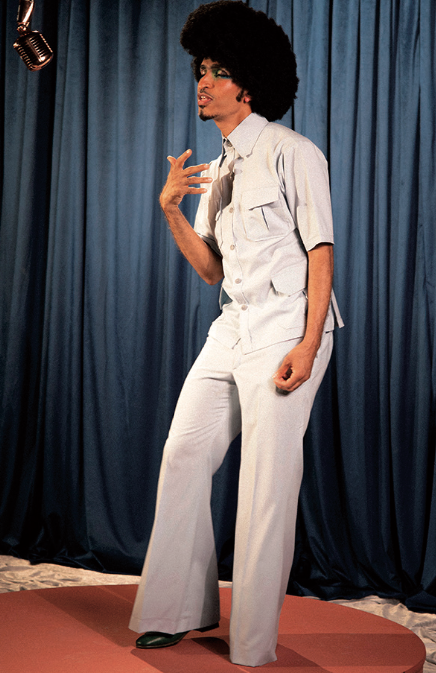
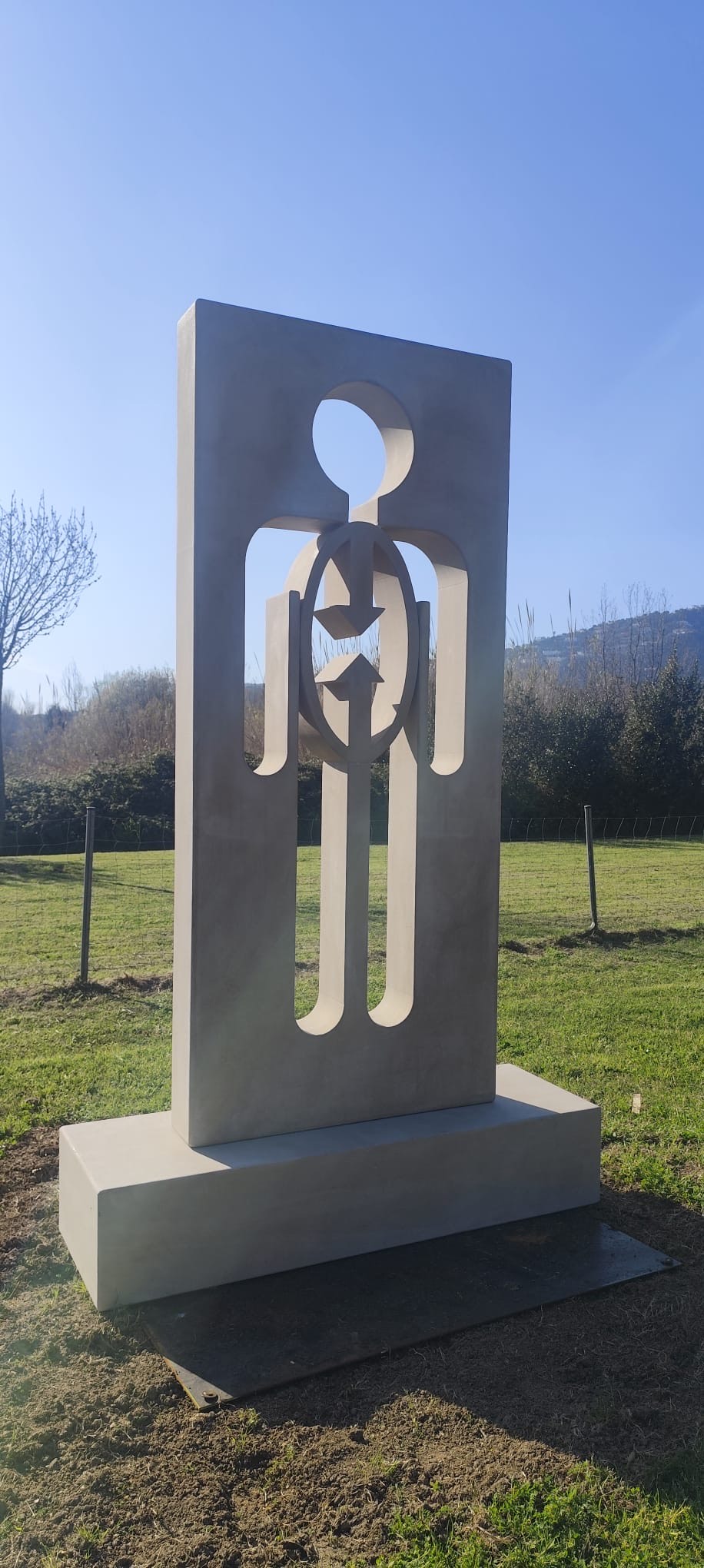
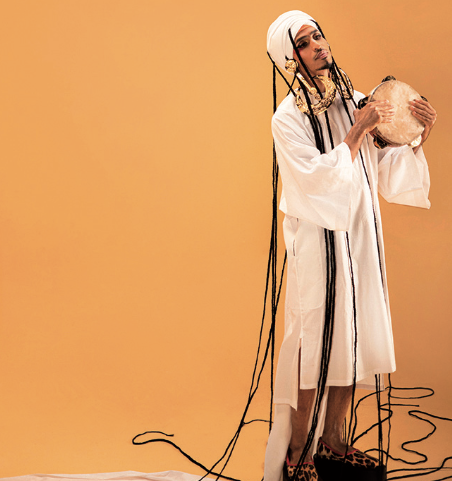
His exhibition at El Chopo, The Truth Is Not a Scandal / Glowing Phalanges , is a journey through this process of reconstruction. The subtitle, “Glowing Phalanges,” is key: the 14 phalanges of each hand, used in Islam for prayer, are for Umar the symbol of action, of work, of the capacity to create. His hands are the tool with which he remakes himself. Through sculptures that evoke totems and amulets, and through photographs where his own body is the living archive of the wound, Umar confronts his past.
She uses organic materials and artisanal techniques from her native Sudan, but strips them of their original function to imbue them with new meanings, transforming the stigma into an emblem of resilience. The lingering question, however, is that of the encounter itself. While El Chopo has a long history as a platform for dissenting voices, the exhibition doesn't quite articulate the reasons for this specific dialogue, leaving the viewer to build a bridge that the curatorial approach seems only to sketch.
Despite this, Ahmed Umar's work, which can be visited until June 28, stands with immense and solitary strength. It is tangible proof that the most honest art does not decorate life, but rather makes it possible. A body that was once outlawed becomes a relic, and a story that should have been reduced to ashes becomes a talisman that shines brightly.


You may be
interested
...