News
Where are you, Richard Serra?
Ministers, crooks, scrap dealers, police chiefs of the heritage brigade, artists, fake artists, performers, journalists, terrorists and above all Juan Tallón.
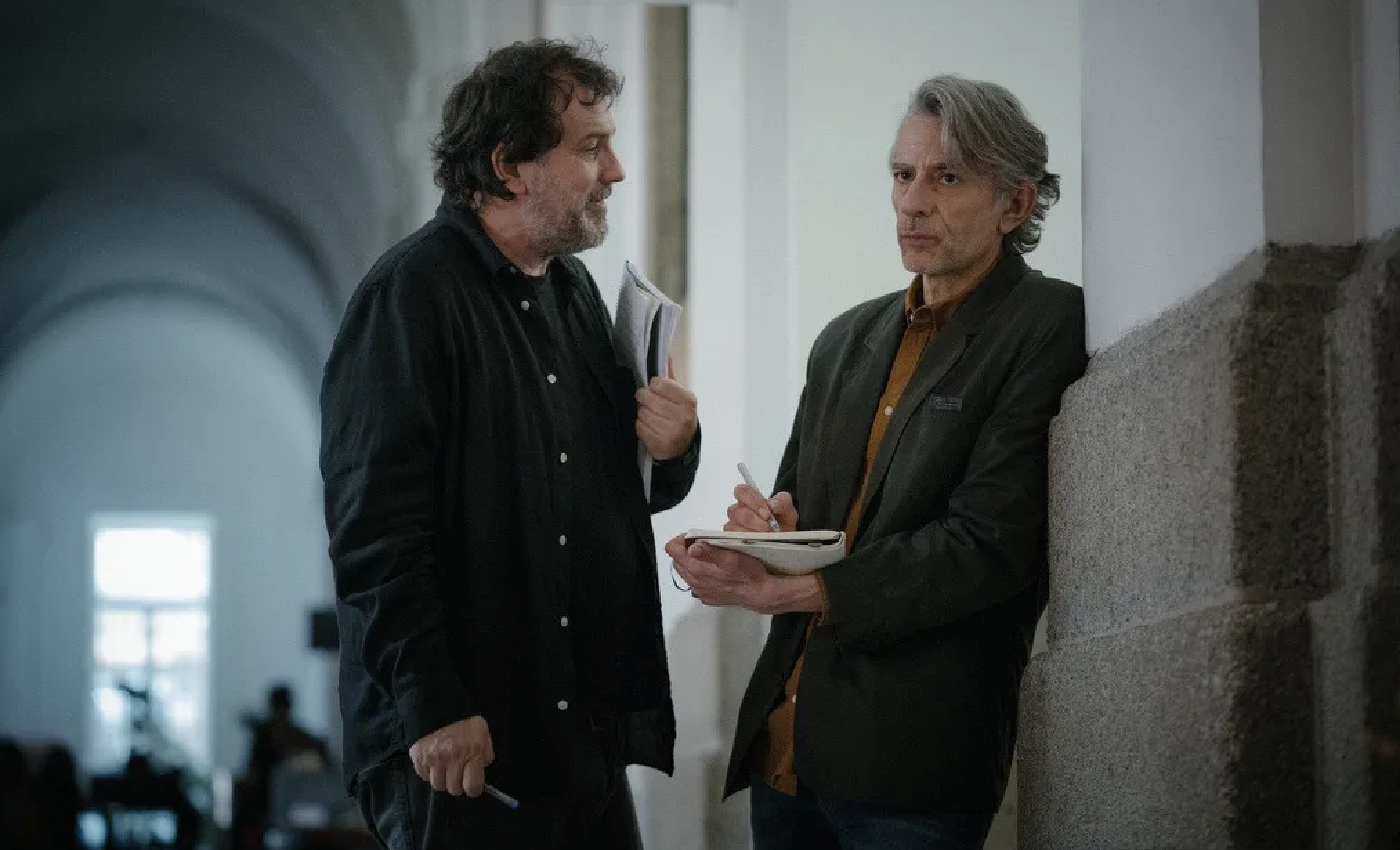
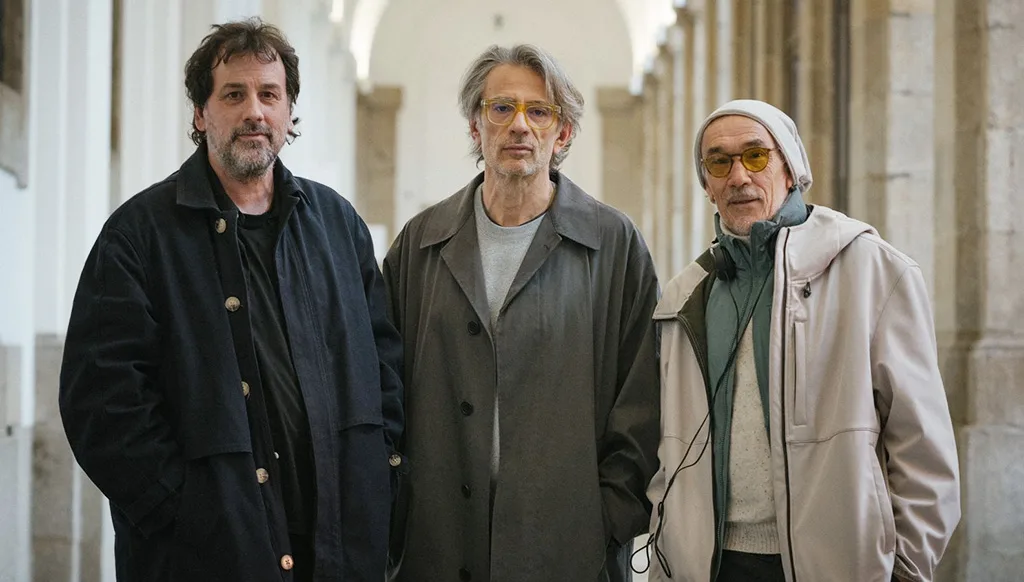
These are just some of the characters who, according to Isaki Lacuesta ( Second Prize, 2024; Between Two Waters, 2018), will wonder where on earth Equal-Parallel/Guernica-Bengasi , the renowned work of the American artist Richard Serra, could be.
It's always exciting to hear that Isaki Lacuesta will be leading a new project. But it's difficult to know what to expect until you actually sit down in the cinema seat, the lights go down, and the first images appear on the screen.
Children returning home as strangers, a lost poet and boxer, siblings reunited, love and bombs, fathers and daughters with no time, extraterrestrial friendships, music; but above all, many questions. Because if there's one thing that defines Isaki Lacuesta's cinema, it's his masterful ability to ask questions.
But let's talk about the novel; or, if necessary, about Richard Serra.
Juan Tallón constructs Masterpiece through a succession of testimonies, both real and fictional, from entirely disparate backgrounds—ranging from retirees, taxi drivers, and scrap metal dealers to gallery owners, critics, and politicians—all revolving around sculpture and its disappearance. For some, Equal-Parallel/Guernica-Bengasi is the great masterpiece of minimalism; others see nothing beyond its four 38-ton steel blocks. There are even those who consider sculpture a nuisance. Pure junk.
At a certain point in the novel, the writer also offers his own testimony. This testimony, however, remains only a small part of the perspective he proposes throughout the novel regarding the work's central debate: where does contemporary art begin and end? Or, indeed, where does the figure of the artist end?
Juan Tallón approaches the eternal question of the art world with a distance that is neither intimacy nor devoid of his own unique perspective. But it is precisely this distance that lends the text its extraordinary power. This masterpiece does not seek answers, does not seek the truth because it knows that is absurd. Instead, mystery prevails. And, as Jorge Luis Borges aptly points out in the quote from "The Aleph" chosen to preface the novel, when the mystery is revealed, the spell is broken.
The search by these many characters to find a solid answer to the disappearance of Richard Serra's sculpture; the gaze of each of them, not only towards Equal-Parallel/Guernica-Bengasi, but also towards its author and others of his lineage, functions as a perfect narrative framework for the reader -another character in this literary game, if I may say so- to ask the right questions and draw their own conclusions, always variable and contradictory, regarding its value.
The artist's inner world is never comparable to the external world that surrounds them. Perhaps for this reason, the result of the clash between the two remains, to this day, an undefined mystery. The perception of art, or of the artistic, is something that sustains itself through a kind of constant evolution; often as a consequence of, or in reaction to, time. But this perception has little to do with the mind that, for reasons beyond comprehension, decides to truly believe in four 38-ton steel blocks arranged in a specific space. This is, and always has been, something quite different.


You may be
interested
...