
Exhibitions
Rauschenberg’s Refusal of Material Hierarchies in Nasher Sculpture Center
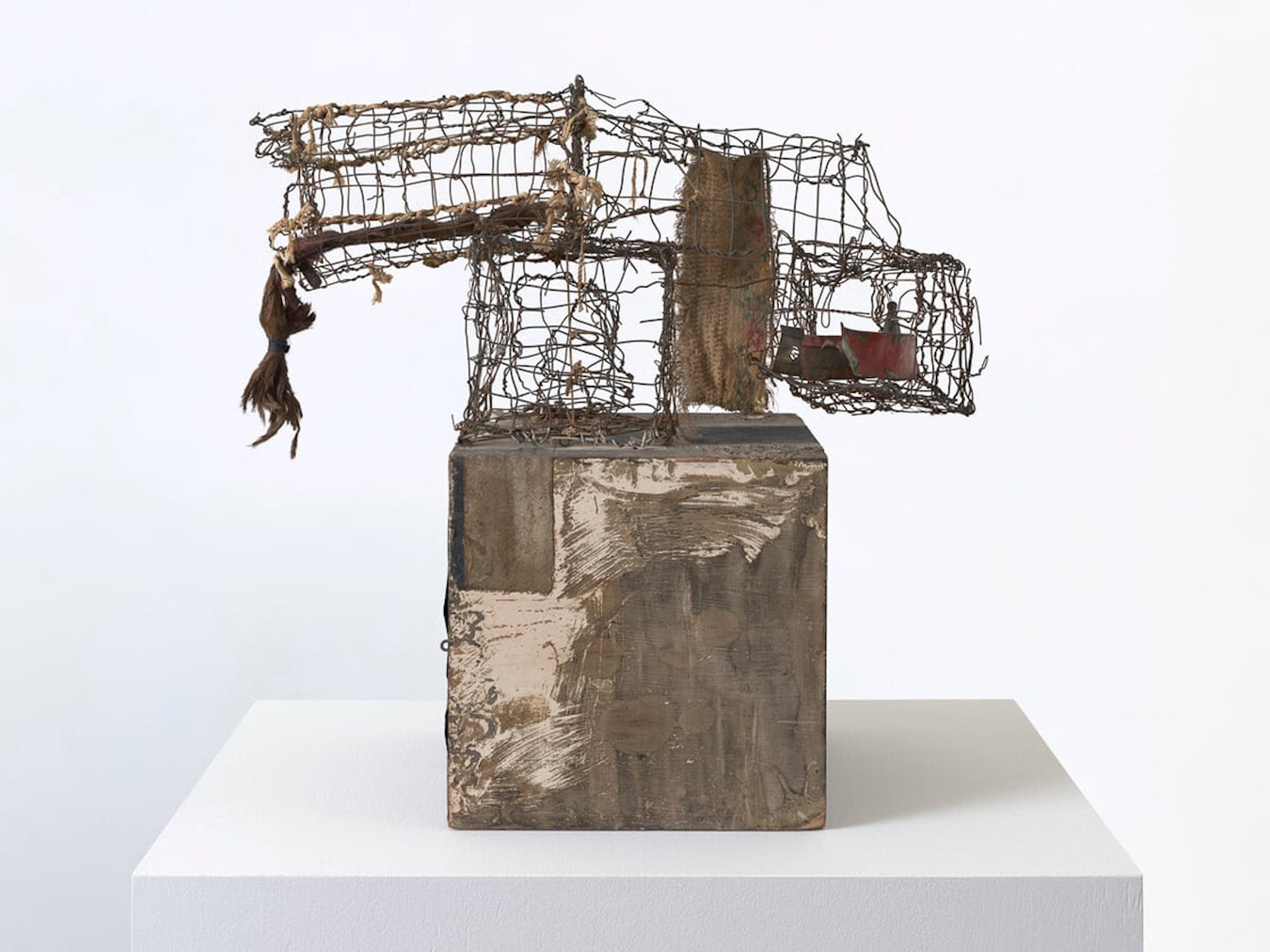
The Nasher Sculpture Center announces Rauschenberg Sculpture, though the word “announces” already feels too declarative for an artist who spent his life distrusting declaration. Rauschenberg Sculpture, on view at the Nasher Sculpture Center from January 31 to April 26, 2026, seems to take this uncertainty as its guiding principle. Organized by Senior Curator Dr. Catherine Craft and presented during the centennial year of the artist’s birth, the exhibition does not so much commemorate Rauschenberg as reopen the combinations he persisted in creating, many of which remain stubbornly unresolved.
Rauschenberg is often described as an artist who transformed contemporary art, yet such phrasing risks implying a decisive rupture, a clean historical break. Viewed through a post-structuralist lens, his work resists precisely this kind of closure where rather than presenting the artwork as a unified object authored by a sovereign subject, Rauschenberg disperses intention, allowing meaning to emerge through adjacency and chance. From the late 1940s until his death, he pursued a single, persistent ambition, to let as much of the world as possible into his art, so that it would not be something that just simply exists, but happens. Sculpture, if the term can still be sustained within such a practice, became one of his most effective strategies for dismantling boundaries and multiplying possibilities within this context.
Rauschenberg’s practice operates against the modernist doctrine of medium specificity, most famously articulated by Clement Greenberg. Rather than purifying painting or sculpture, Rauschenberg destabilizes both, producing works that refuse categorical closure. The exhibition foregrounds the artist’s lifelong engagement with three-dimensional form, beginning with the Combines (1954–64), those famously unruly works that merged painting and sculpture while fully belonging to neither, appearing to us as three-dimensional ready-made collages. These objects do not seek harmony but insist on friction found in their material differences. Rauschenberg famously rejected traditional hierarchies of material, where paint collided with fabric, photographs with furniture, gestures with debris. Later sculptural works would continue this refusal of boundaries, emerging alongside Rauschenberg’s parallel experiments in photography, printmaking, performance, technology, ceramics, and stage design, all feeding freely into one another.
What distinguishes Rauschenberg’s sculpture is not technique as he neither carved nor modeled nor welded, but his ethics of attention. He dismantles the modernist ideal of medium specificity, exposing in his work a horizontal model of culture, in which high and low, art and life, technology and intuition coexist without hierarchy. These discarded materials recur throughout the exhibition from scrap metal and tires to cardboard boxes and rags. These were not chosen for shock value or symbolism but for their histories. Rauschenberg rejected the notion of “junk,” insisting instead on “things,” objects already inscribed with use, labor, and neglect. His sculptures function less as monuments than as carriers of lived time stemmed by an indexical logic.
Movement, both literal and implied, plays a central role in these sculptures, as the wheels, cranks, and motors introduce actual motion; the color, fabric, and suspended elements evoke a sense of breath and instability. Many works incorporate photographic imagery, multiplying points of reference rather than fixing meaning where technology is introduced not as spectacle but as collaborator, through sound transmitters, sensors, and sonar-activated mechanisms allowing the sculptures to respond to the presence of viewers, altering themselves in real time. This sense of responsiveness reflects Rauschenberg’s deep engagement with music, dance, and performance, and his desire to bring what he called theater’s “sense of urgency” into visual art. The exhibition’s accompanying programming including events devoted to his collaborations with John Cage and Merce Cunningham, and a February Study Day exploring technology, vernacular traditions, and popular culture extends this ethos beyond the gallery.
In the end, the exhibition Rauschenberg Sculpture does not ask what sculpture is, but what it can still become once we allow, as Rauschenberg did, as much of the world as possible to be allowed inside of it and enter the room.

You may be
interested
...