Exhibitions
Gastone Novelli, the artist who made the painting a manifesto
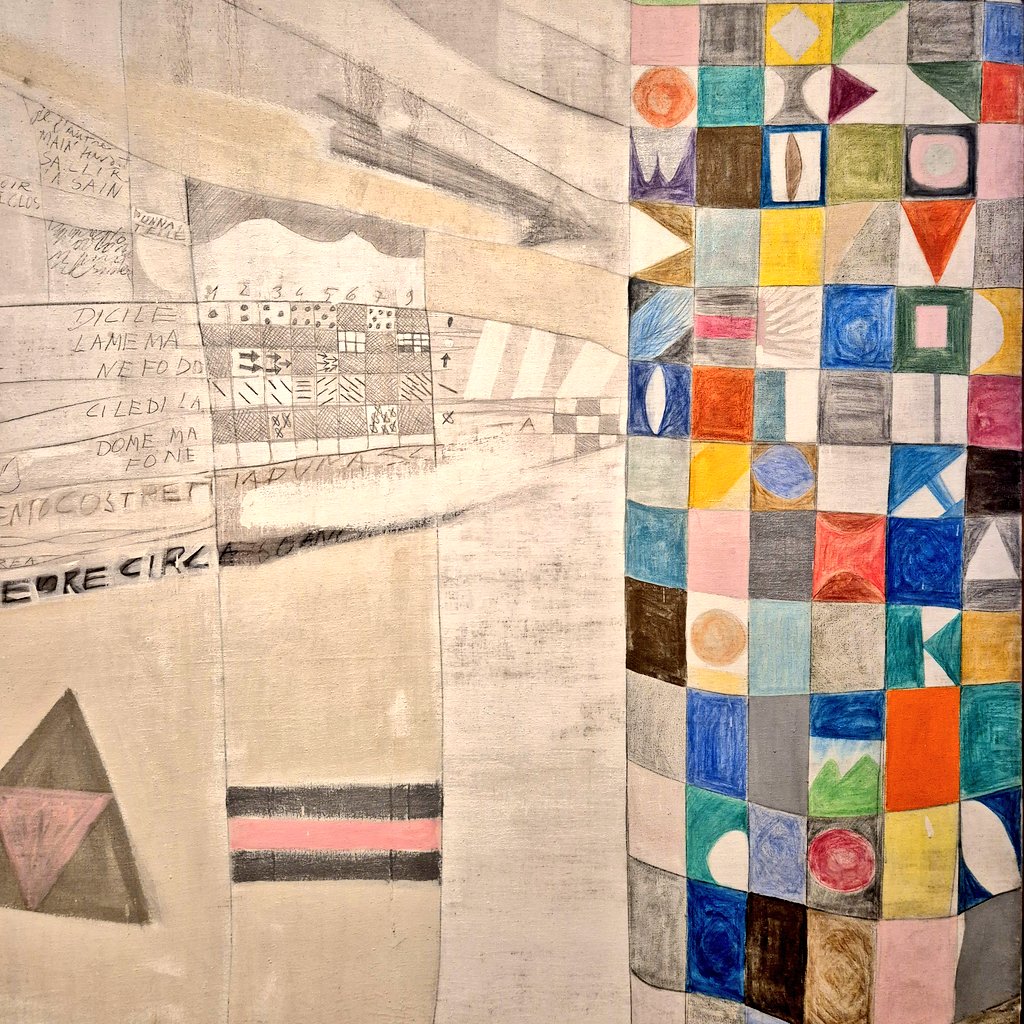
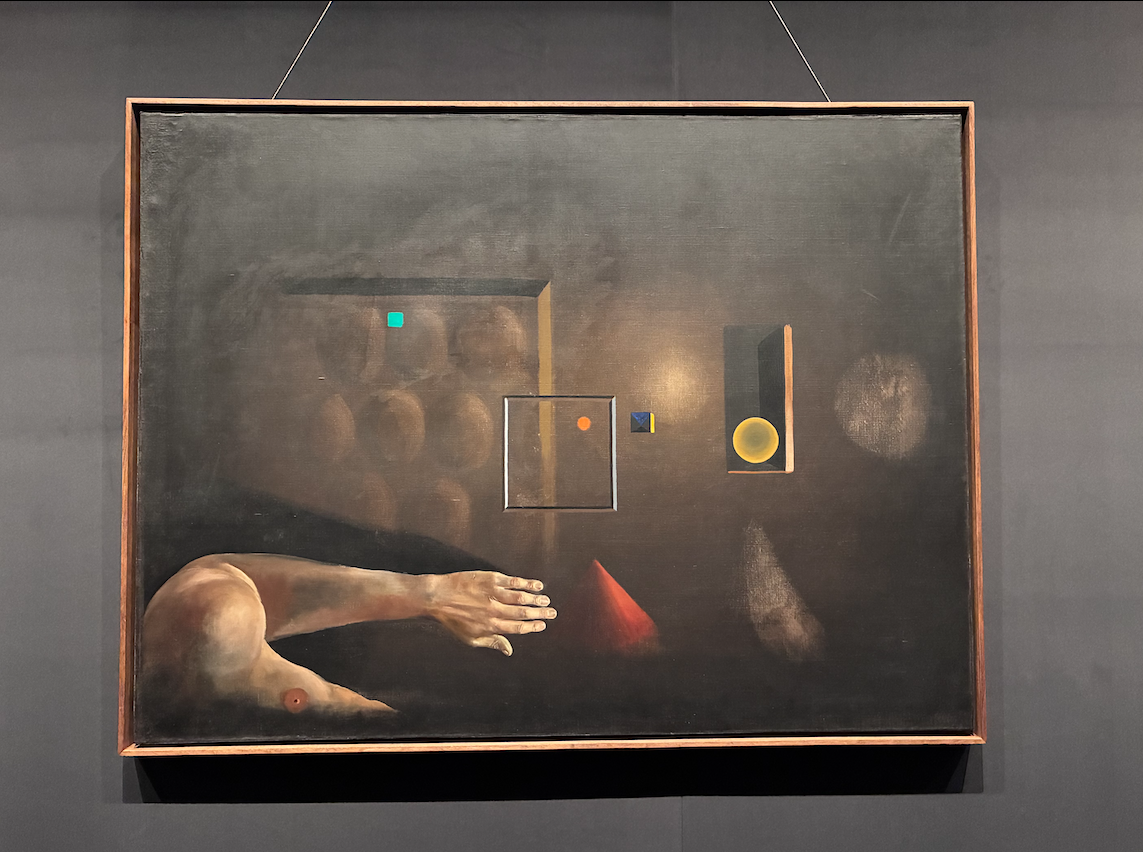
In Novelli's work, the word does not accompany the image: it overflows it. It bursts onto the canvas like a tide of signs that arrange themselves in narrative constellations, inviting the viewer to read rather than simply look. Matter becomes lighter, almost airy, and writing takes center stage: traced with an intimate touch, incised like a wound, recomposed in collages of newspapers that still hold the murmur of the world. In her paintings, the true figure is never a body or a landscape, but the word itself, vibrating across the surface.
And then 1968 comes back. At the Venice Biennale, a few months before his death, Novelli turned his paintings to face the wall. It wasn't a gesture of retreat, but of affirmation: a silent and radical act that removed the image from the public eye and transformed it into a political statement. Refusing to show was also a way of speaking. Turning his back on the spectacle was, in his case, another way of writing.
Born to an Austrian mother and an Italian father, Novelli embodied a borderland identity, shaped by the density of Central European culture—that almost imperial, stratified memory—and by the divergent, luminous, and expressive freedom of the Italian tradition. He lived for many years outside his country before settling in Rome, and this wandering condition honed his international sensibility. It is no surprise that he was one of the few Italian artists of his generation capable of resonating powerfully beyond his borders: his pictorial language, made of signs and silences, already belonged to a territory without maps.
Gastone Novelli (Vienna, 1925 – Milan, 1968) is among the most intense and singular voices in postwar Italian painting. The exhibition dedicated to him today stems from the incorporation into civic collections of a significant number of works generously donated by his heirs, a gesture that has allowed for a renewed and deeper exploration of his legacy.
To mark the centenary of his birth, the exhibition at Ca'Pesaro, presented by the Fondazione Musei Civici Venezia and on view until March 1st, is curated by Elisabetta Barisoni and Paola Bonani. It offers a comprehensive and rigorous overview of the various stages of his artistic exploration, bringing together some of his most representative works from public and private collections throughout Italy. More than a commemoration, it is a complete tribute to a career that masterfully combined formal experimentation, poetic tension, and intellectual commitment at the very heart of European modernism.
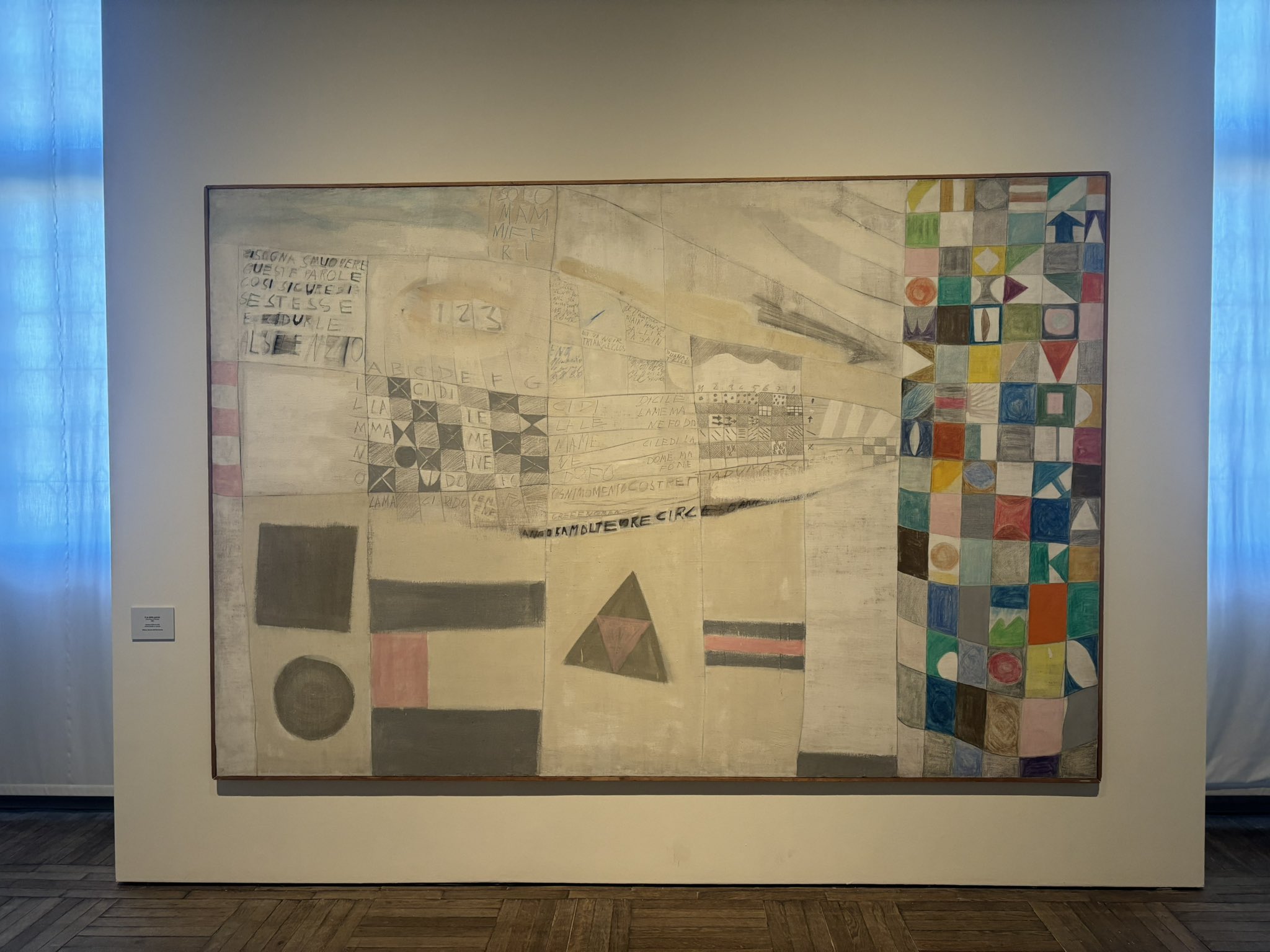
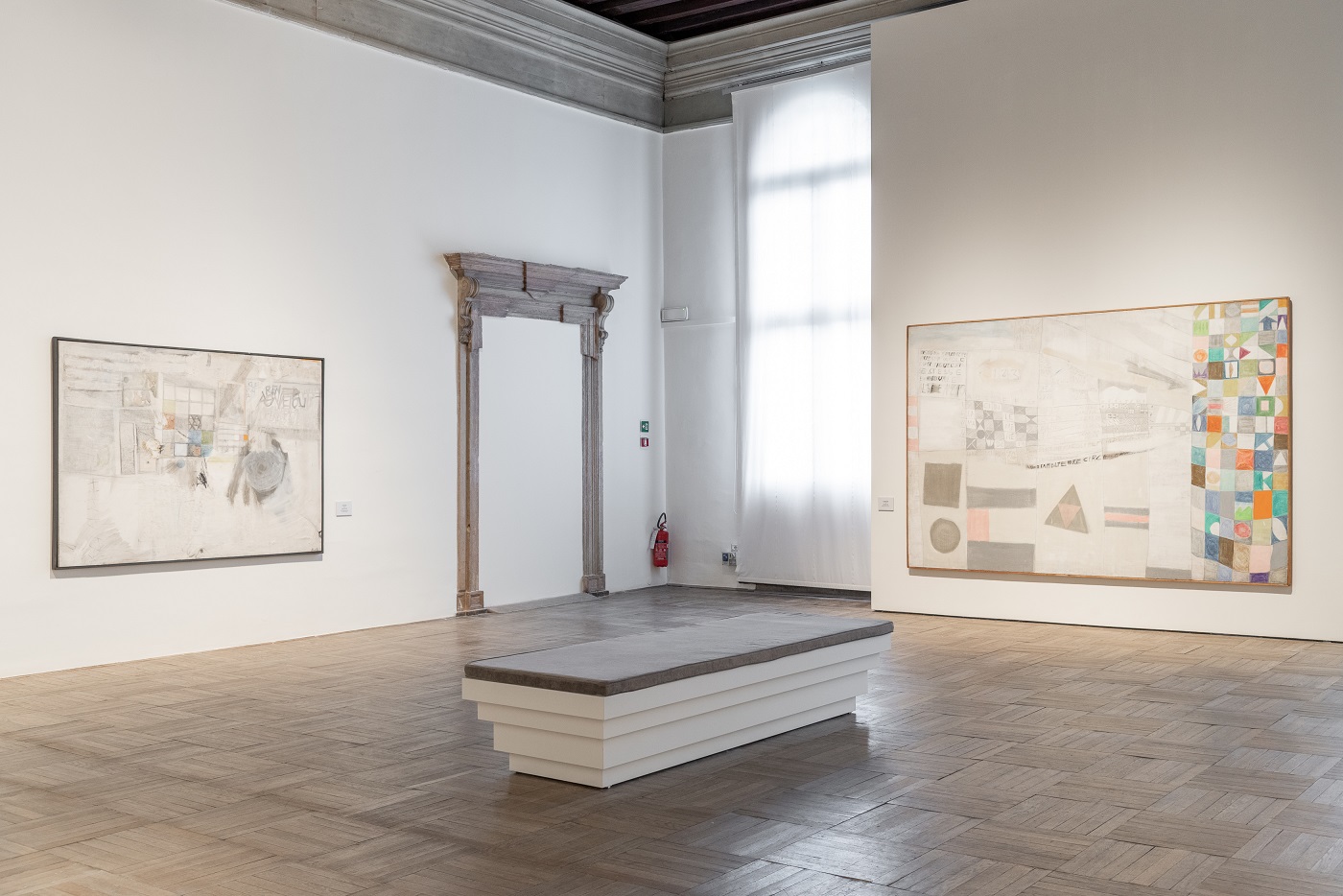
The itinerary of this anthology in Ca' Pesaro —unfolded in the eight rooms of the second floor of the museum— brings together nearly sixty works and focuses on the most fertile and decisive stretch of Novelli's production, between 1957 and 1968.
The exhibition opens with informal pieces from his years with L'Esperienza Moderna , the magazine he founded with Achille Perilli in 1957, and moves into the early 1960s, when the artist achieved his highly personal synthesis of writing and painting, of visual sign and word. The exhibition culminates with works of a more overtly ethical and political nature, those Novelli had assembled for his solo exhibition at the 1968 Venice Biennale.
Alongside some of his most emblematic and dazzling creations, the exhibition also reveals a significant collection of works long considered lost, which have resurfaced following the publication of the General Catalogue. Many of these pieces, recovered almost like fragments of memory, are now presented to the public for the first time, enriching and adding complexity to our understanding of his career.
You may be
interested
...