Exhibitions
The exhibition 'Lliscar - Flotar: Ingravidesa' by Joaquim Pujol extends its stay at the Espai Eat Art in Banyoles
An immersion between sport and architecture that connects Joaquim Pujol's Olympic career with his creative work.
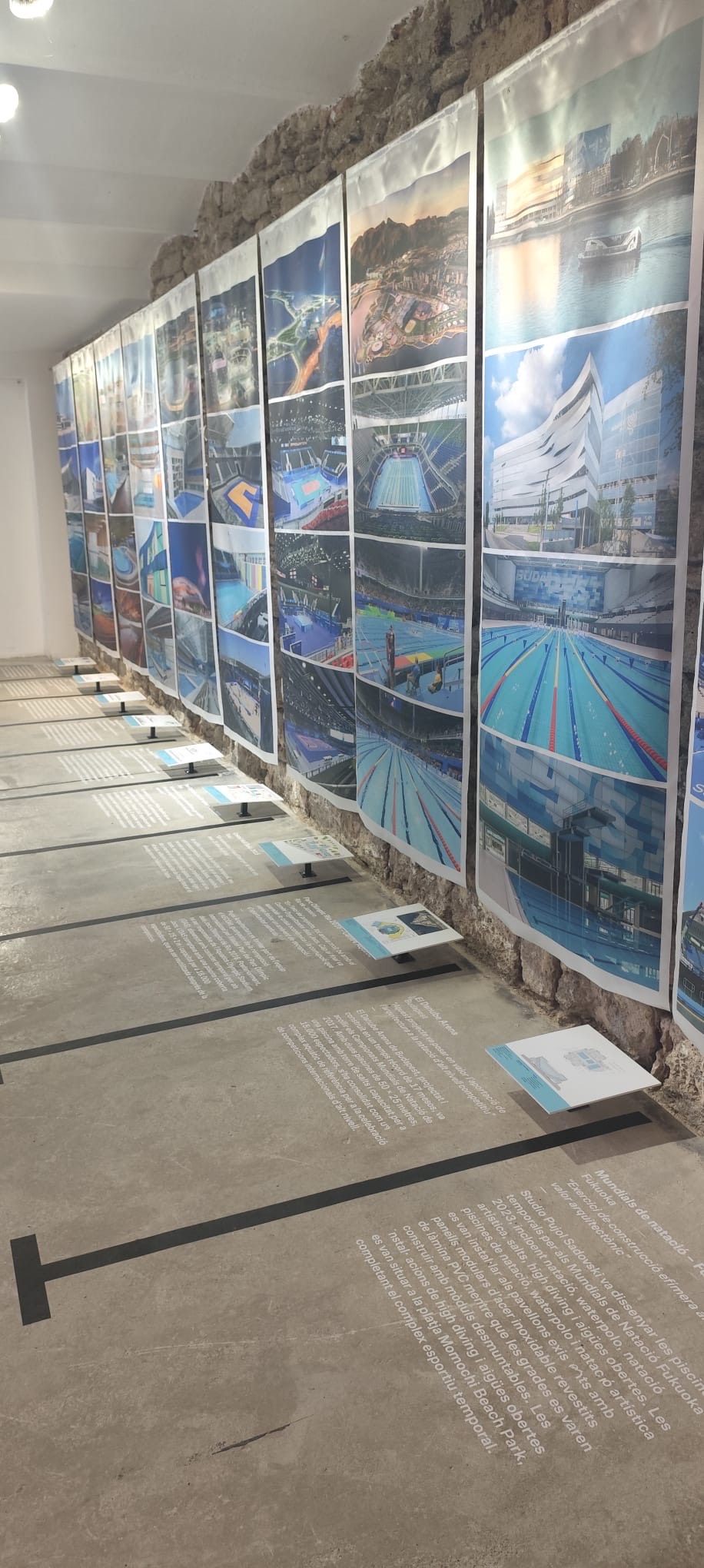
The temporary exhibition Lliscar-Flotar: Ingravidesa by architect and former Olympic swimmer Joaquim Pujol can be visited in the Eat Art Space of the Lluís Coromina Foundation in Banyoles until the end of February 2026.
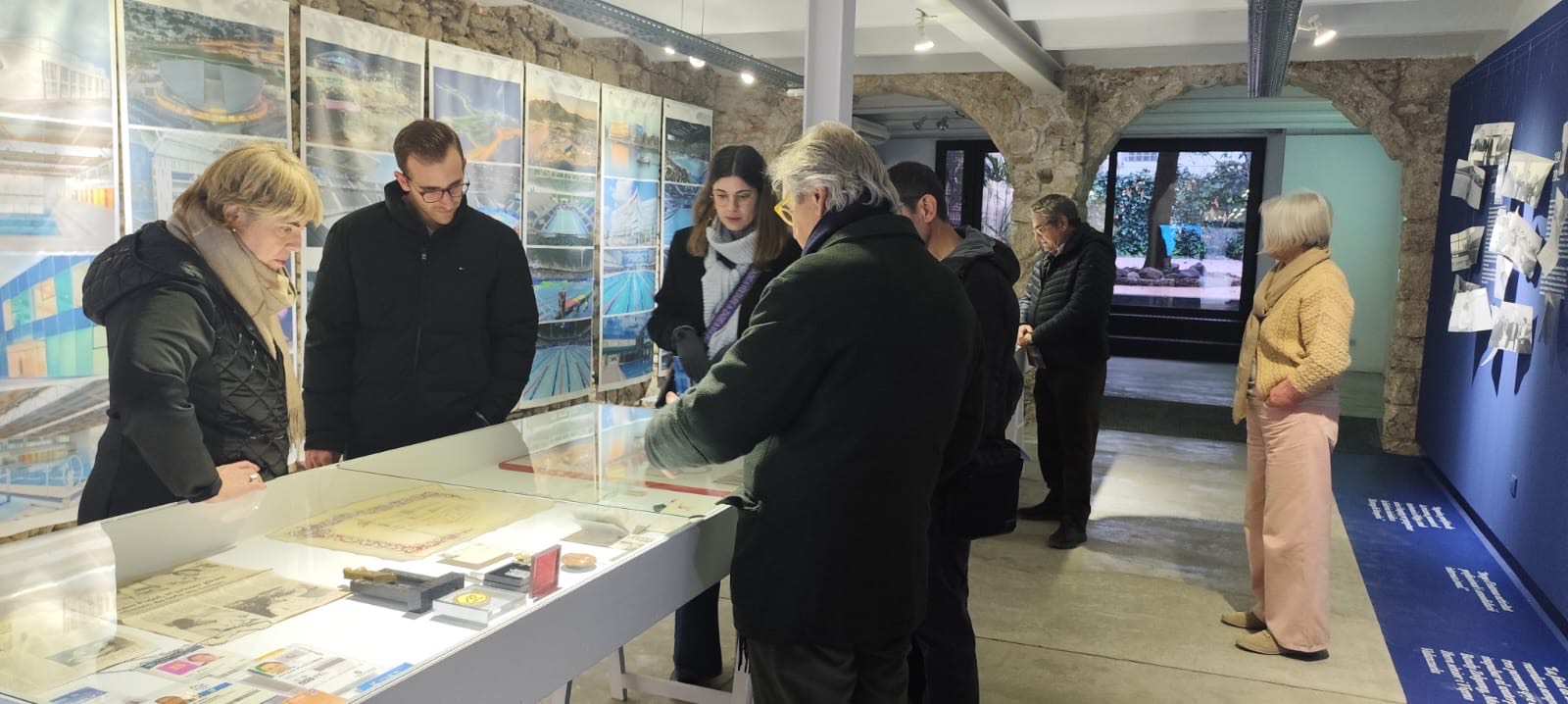
Since its inauguration, the exhibition has attracted a large number of visitors , both national and international, becoming a cultural reference point in the city. Pujol's proposal combines photography, installations and videos, offering a journey that reflects his sporting and professional career.
During the exhibition, several parallel activities were organized, such as guided tours by the artist himself, which allowed attendees to delve into his creative universe.
Joaquim Pujol: from water to architecture
Born in Banyoles on May 21, 1946, Joaquim Pujol is a prominent figure in both the world of sport and architecture. As a swimmer, he specialized in butterfly stroke, was Spanish champion in the 200 m butterfly in 1965, participated in the 1964 Tokyo Olympics and was capped 32 times with the Spanish national team.
He subsequently graduated as an architect from the Barcelona School of Architecture (ETSAB) in 1973, specializing in sports and recreational architecture, with a particular focus on aquatic facilities for major events.
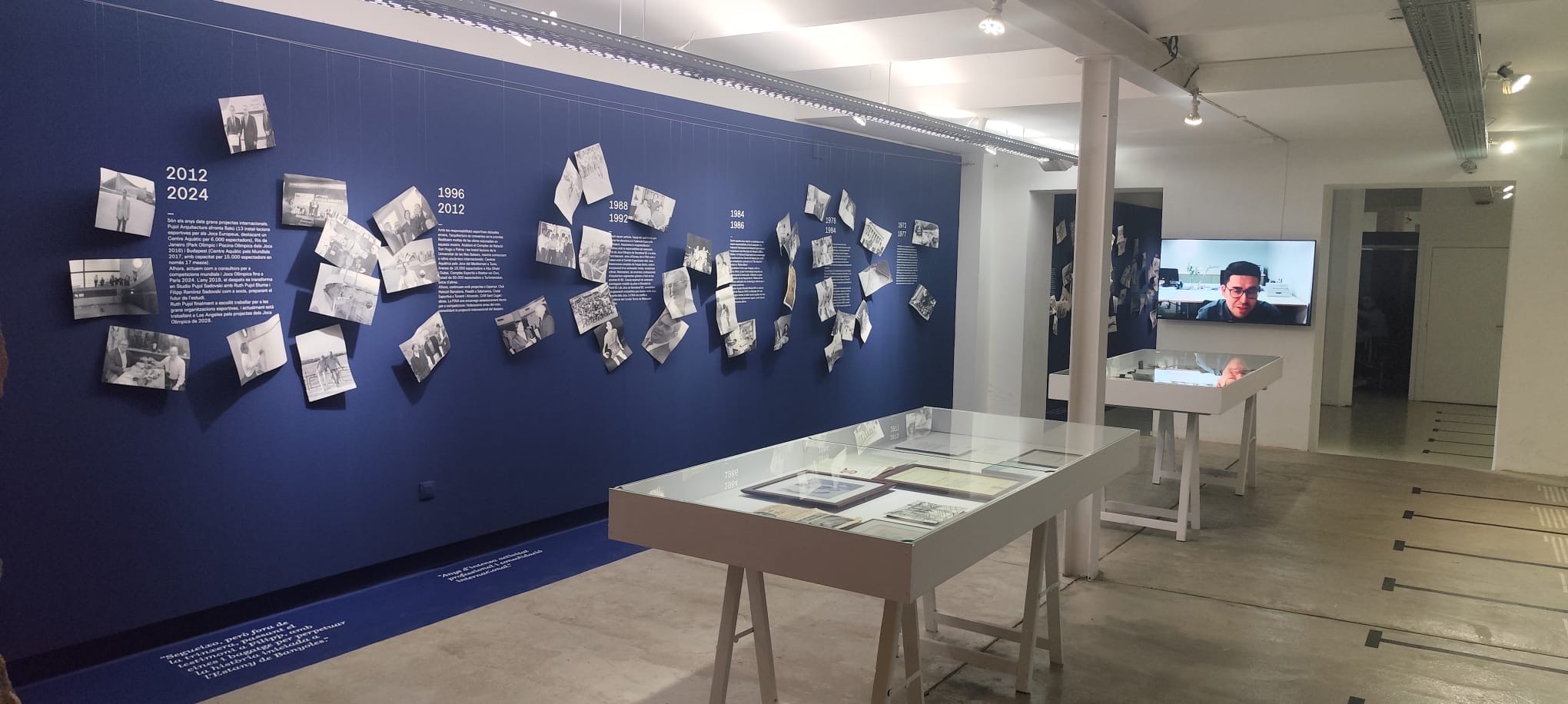
Interview with Joaquim Pujol
What are the main objectives of this temporary exhibition? Why Banyoles, swimming and architecture?
The main objective is to show how a sporting vocation can converge with a professional career linked to the world of sport. It also seemed very meaningful to me to review my sporting and professional history in Banyoles, the city where it all began, in Banys Vells de l'Estany.
What do you think the final result was?
Positive. It has sparked the interest of many people who, despite knowing my side as a swimmer, were completely unaware of my architectural career.
How has the response been from the local and international public?
It has been very enriching. I have spoken to parents of athletes from Banyola who commented that the exhibition has helped them see how it is possible to combine high-level competitive sport with a successful professional career.
Which section of the exhibition has been most successful?
The one that shows photographs of Olympic aquatic centers, such as those designed by Kenzo Tange for the 1964 Tokyo Games. This building is considered one of the most emblematic works of the great Japanese architect of the 20th century.
If you had to summarize the show in a single image, what would it be?
The model at the entrance to the gallery, where the teacher and the student are seen, perfectly sums up how it all began.
What impact does this exhibition leave on your personal career?
I had never imagined such a complete review of my sporting and professional life. Seeing the exhibition makes me feel that I have had a very intense and full life.
How will this experience influence your future projects?
It motivates me to continue with very exciting projects in the office, always looking forward and without getting stuck in the past.


You may be
interested
...