Exhibitions
Man Ray: When Objects dream, Metropolitan Museum of Art asks What do objects dream of?
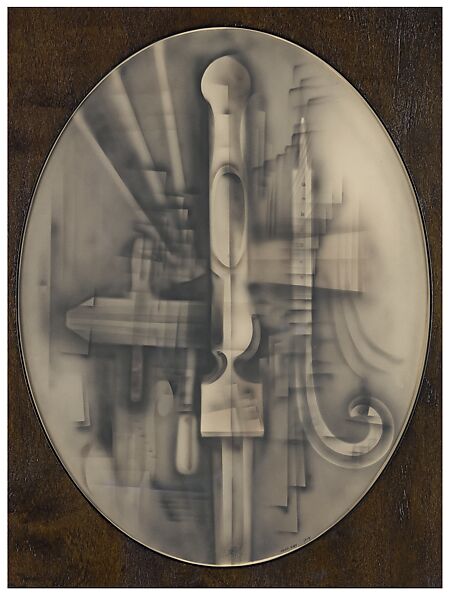
The Metropolitan Museum of Art’s Man Ray: When Objects Dream takes its title from a phrase by the Dadaist poet Tristan Tzara, who used “when objects dream” to describe the magical, transformative, and often uncanny nature of Man Ray’s rayographs. In this context, Man Ray can be understood as the “mechanic” of surrealist dreams within the artistic circles of the 1920s, working through rigorously material processes. The exhibition, which opened at the beginning of February, reframes the artist’s celebrated rayographs not as isolated experiments, but as the conceptual core that made the rest of his multi-hyphenate practice possible. Curated by Stephanie D’Alessandro, Curator of Modern Art, and Stephen Pinson, Curator in the Department of Photographs the exhibition concentrates on the period between 1914 and 1929, shifting attention away from Man Ray’s most recognizable images toward the experimental conditions that generated them.
In his 1963 autobiography Man Ray wrote, "Before my eyes an image began to form, not quite a simple silhouette of the objects as in a straight photograph, but distorted and refracted ... In the morning I examined the results, pinning a couple of the Rayographs as I decided to call them on the wall. They looked startlingly new and mysterious." Through his invention of the rayograph, he created a space between the laboratory and the atelier, combined by technical procedure with artistic intuition. For instance, Champ Délicieux (1922), displayed in the exhibition, demonstrates how repeated experimentation with light, shadow, and material produced images of increasing visual ambiguity, bringing ghostly forms out of simple objects. Throughout the space, viewers are guided through a dynamic play of light and shadow, in which illumination and obscurity are given equal weight, foregrounding the material processes through which Man Ray transforms technical procedure into visual mystery.
Man Ray appears to animate everyday objects, granting them a form of symbolic life also underscored in his connections to Dada and Surrealist moments, in which reality was deliberately distorted and objects were endowed with inner lives. Through this process, they are detached from their ordinary functions and transformed into poetic forms. This approach recalls Georges Perec’s Things: A Story of the Sixties, in which material objects acquire narrative and emotional significance within human experience. However, while Perec’s objects reflect the desires and anxieties of consumer society, Man Ray’s objects undergo a more intimate and poetic transformation.
Within the logic of the rayograph, objects are not merely represented; they are reimagined through light, shadow, and chemical process. They seem to “dream” of becoming something else, prompting the question: what do objects dream of? Perhaps they dream of being converted into new visual forms that later reappear across Man Ray’s wider artistic practice. In this way, the exhibition invites viewers to ask not only what these objects are, but what they aspire to become. Their “dreams” point toward continual metamorphosis, positioning the rayograph as both an origin and an extension of Man Ray’s imagination.
At the same time, these objects can only “dream” because light strikes their surfaces, chemicals react, and photographic paper records their traces, producing the magic of an absent presence.


You may be
interested
...