Exhibitions
La Pedrera will host the major exhibition dedicated to the Nabis, prophets of modern art, in March
From Bonnard to Vuillard, La Pedrera hosts the first major monographic exhibition in Barcelona dedicated to the group that paved the way from Impressionism to the avant-garde.
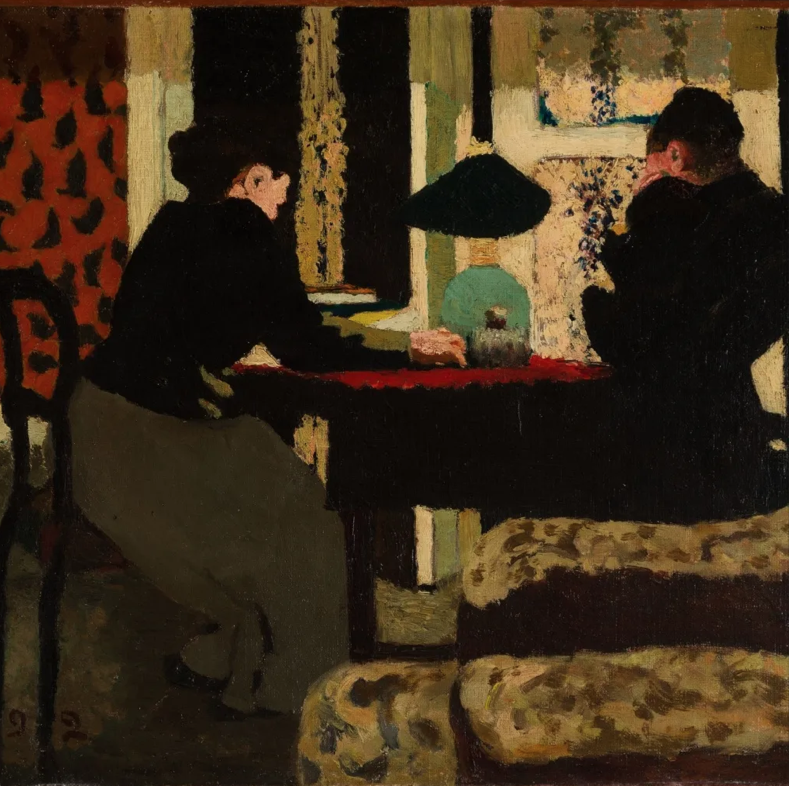
The word "nabi", which means prophet in Hebrew, was adopted by a group of twelve young artists as an emblem of their shared desire to profoundly renew painting. Among their members were names such as Pierre Bonnard, Maurice Denis, Édouard Vuillard, Ker-Xavier Roussel and Paul-Élie Ranson.
Under the tutelage of Paul Sérusier, who had assimilated in Pont-Aven the teaching of Paul Gauguin —condensed in the small but influential painting The Talisman—, these young artists consolidated a coherent group in Paris during a brief but intense period, between 1888 and 1900. Their artistic project, marked by symbolism, subjective color and a decorative conception of painting, became one of the most unique contributions of the turn of the century.
Soon, the initial core was enriched by the incorporation of foreign artists, such as the Dutchman Jan Verkade, the Hungarian József Rippl-Rónai and the Swiss Félix Vallotton, as well as like-minded figures such as Aristide Maillol, Georges Lacombe and the lithographer Henri-Gabriel Ibels. Together, the Nabis built a brief but decisive collective experience, which opened new paths between modern painting, decorative arts and symbolic thought.
With The Nabis: from Bonnard to Vuillard , La Pedrera takes over from the exhibition dedicated to Cristina Iglesias and presents a new temporary exhibition that can be visited from March 6 to June 28. This is the first major monographic exhibition held in Barcelona dedicated entirely to this key movement of artistic modernity.
The exhibition brings together a wide selection of works created between the end of the 19th century and the beginning of the 20th, and proposes an itinerary that allows us to delve deeper into the aesthetic and conceptual principles of a fundamental group in the transition from impressionism to the first avant-gardes. The art of the Nabis appeals to a slow and subtle observation. Through color, form and rhythm of composition, the works investigate the decorative dimension of painting and its desire to fully integrate into everyday life. The visitor is invited to enter a universe where painting, decorative arts and architecture maintain a constant dialogue, and where art is understood as a total experience.

You may be
interested
...