Opinion
Chapelle Saint‑Pierre: where Jean Cocteau tattooed the sea on the walls
A humble space in the port converted into a work of art, where Jean Cocteau fused spirituality, seafaring life and poetic imagination.
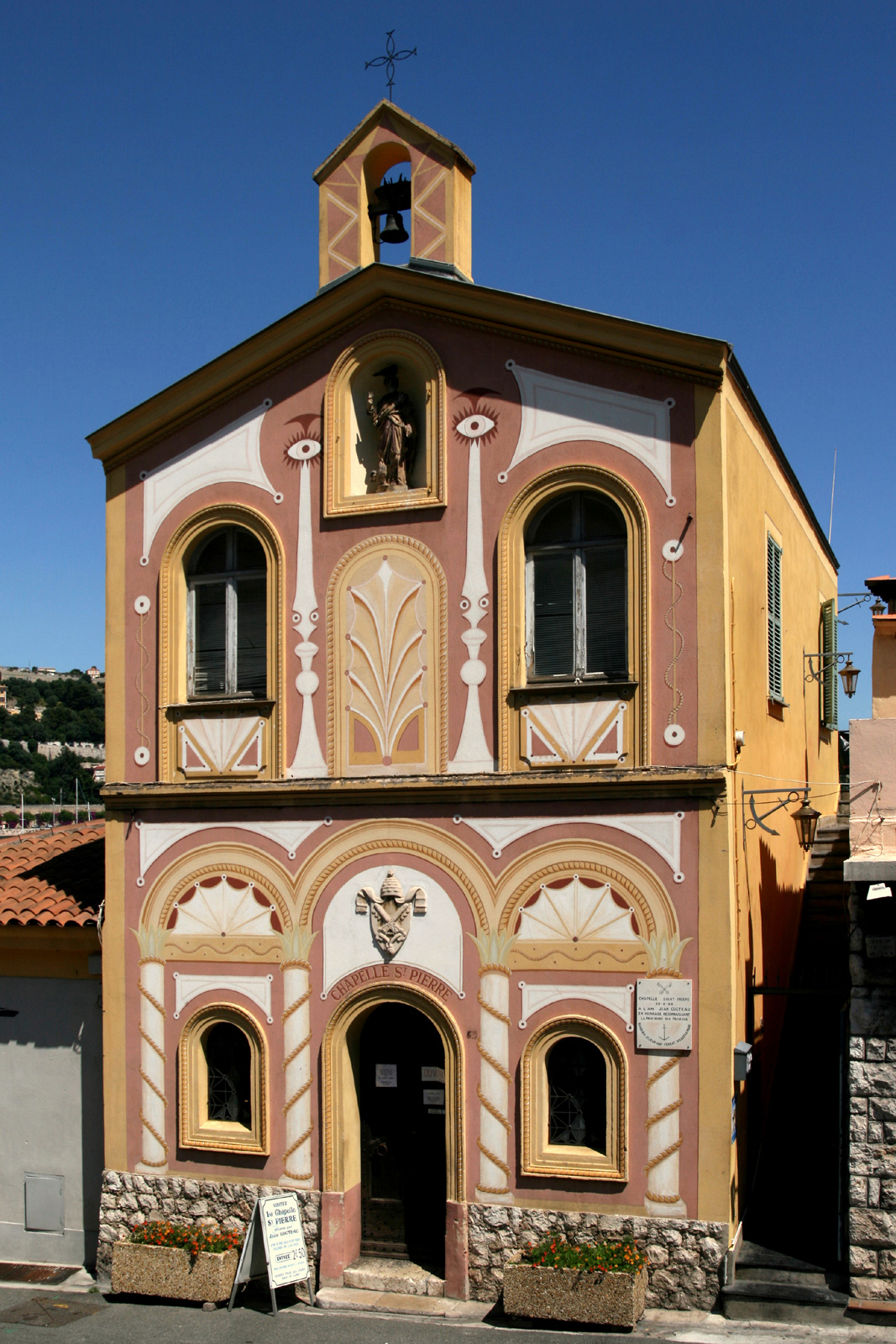
"Beauty is not recognized with a superficial glance." —Jean Cocteau
On the Courbet quay in Villefranche-sur-Mer, where the Mediterranean breathes with its own light and the sea murmurs against the stone, stands the Chapelle Saint-Pierre. Discreet, almost unnoticed among the movement of the port, this small chapel preserves the memory of the fishermen who erected it and the poetic imprint of an artist who knew how to see in it a space for dreaming. Dedicated to Saint Peter, patron saint of seafarers, it was born as a humble refuge, deeply linked to the daily life of a fishing village.
In the mid-20th century, however, this modest place was transformed into a living canvas when Jean Cocteau intervened there with the freedom of someone who paints out of friendship and love for the place. Like Picasso, Chagall or Matisse, Cocteau is part of the pantheon of artists who illuminated the Côte d'Azur, a territory he discovered in 1911 and which, from the 1920s, became his creative refuge. In Villefranche-sur-Mer he left one of his most intimate and singular works.
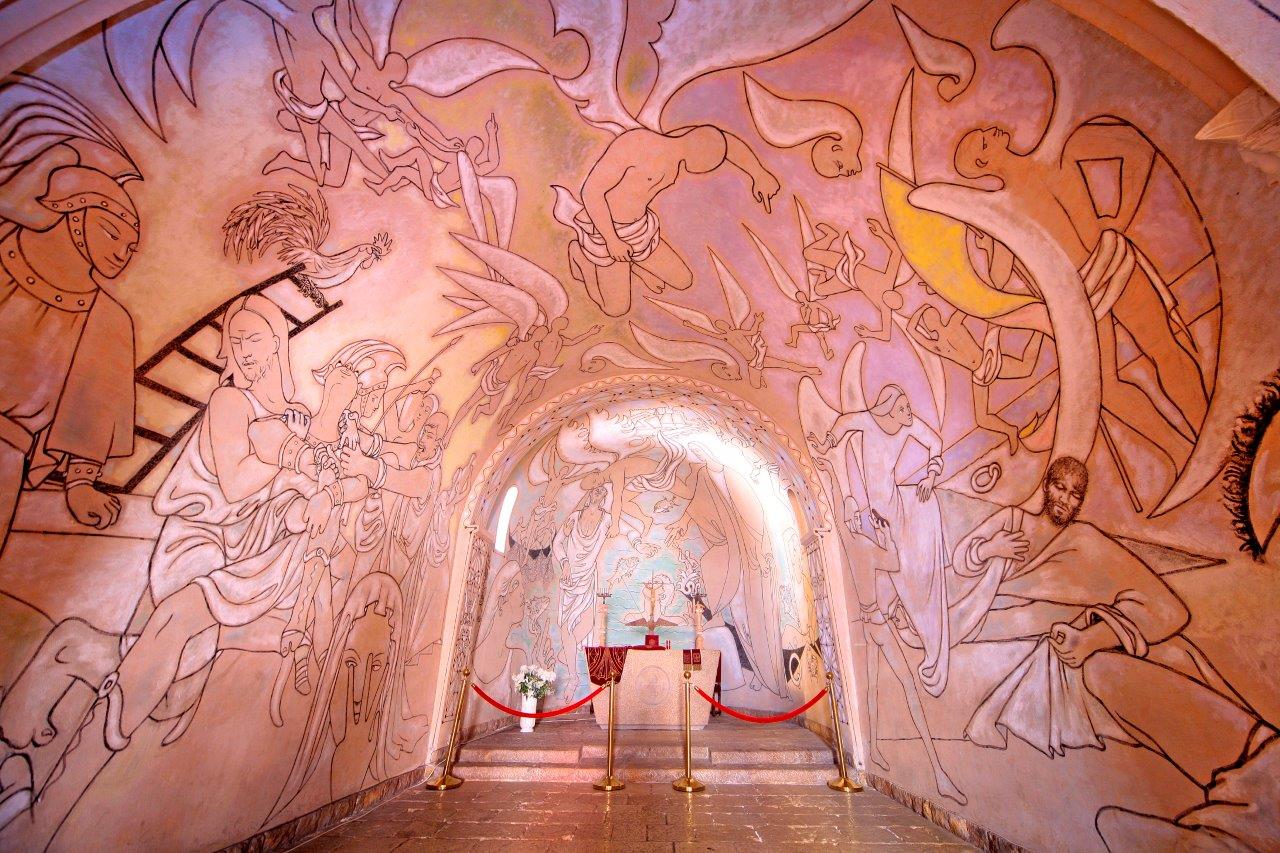
In 1957, Cocteau decorated the interior of the chapel with an apparently simple language, but of great symbolic force. Stylized figures, sinuous lines and scenes that oscillate between biblical tradition and Mediterranean life cover the walls: Saint Peter walking on the waters, fish that seem to float silently, angels, the silhouette of the citadel. The soft tones—gray, white and blue—envelop the space with a serene, almost ethereal light that invites contemplation.
Entering the Chapelle Saint-Pierre is like feeling time stand still. The sea air permeates the space, and Cocteau's art transforms the chapel into an intimate museum of the Mediterranean, where visual poetry dialogues with faith and collective memory. Even today, the building is still alive: weddings linked to the fishing community are held there, keeping the bond between art, tradition and daily life intact.
Beyond the touristic visit, the Chapelle Saint-Pierre offers a profound experience: immersing yourself in Cocteau's universe and understanding how art can transform a humble space into a place of wonder and contemplation. Between stone and sea, history and imagination, the chapel reminds us that the true legacy of an artist does not always inhabit museums, but rather merges with the light, the landscape and the soul of a town.



You may be
interested
...