Exhibitions
Panos Aprahamian's latest work at the Madre Museum
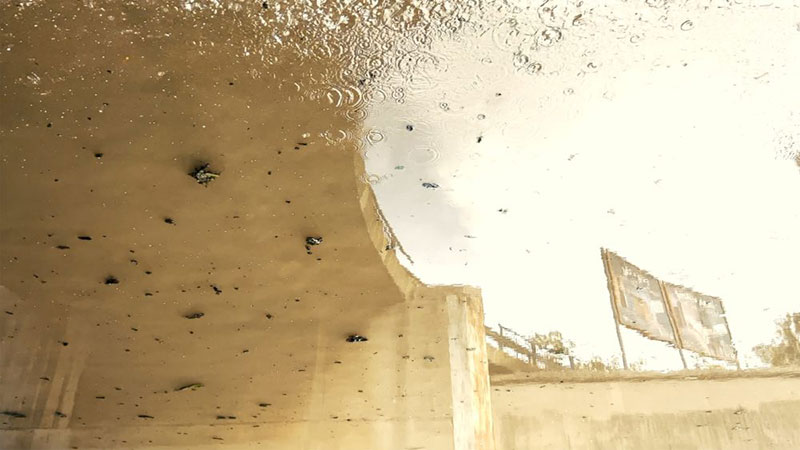
The Fondazione Donnaregina per le Arti Contemporanee – Museo Madre in Naples presents, until February 17 , More Spilled Blood Than Drinkable Water , the latest work by Panos Aprahamian. Awarded the Han Nefkens Foundation – Museu Tàpies Video Art Production Prize 2024, the project was born under the auspices of this distinction and unfolds as a visual meditation of great poetic and political density, where image, voice, and matter intertwine to interrogate the visible and invisible remnants of contemporary violence.
Released in 2025, the film concludes the thematic triptych informally known as the Karantina Trilogy . The three short films are set in or on the outskirts of Karantina, Beirut's former quarantine district, now one of the city's most degraded areas. Its proximity to the port, a waste sorting plant, and a former slaughterhouse—closed, but still haunted—has made this enclave a landscape saturated with toxicity, memory, and neglect.
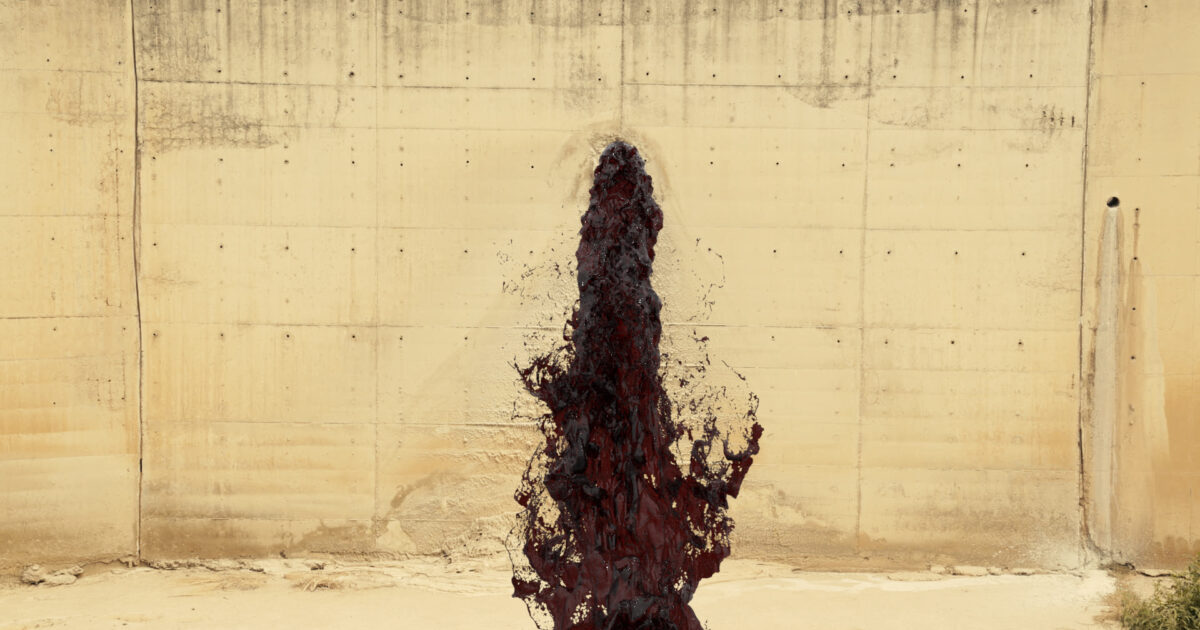
In More Spilled Blood Than Drinkable Water , a narrator—a paranormal investigator—guides a contemplative journey along the river's course, conceived as a descent into the underworld. Her account addresses chemical compounds and spectral echoes, lingering smells and unseen presences that inhabit a territory marked by interrupted flows and stagnant waters. As the camera follows the water's apparitions and submergences, it captures glimpses of decaying ecosystems and unstable reflections of industrial infrastructure, while the narrative intertwines disparate historical periods in a nonlinear structure that dissolves the boundaries between past, present, and specter.
By blending documentary realism, abstract passages, and fictional techniques, the work slowly delves into the deep layers of pain that permeate this wounded landscape. It is a territory inhabited by the traces and ghosts of countless entities—human and non-human—that met their end there. The body of water thus becomes a threshold to the intangible and a disquieting mirror of the present: a liquid archive reflecting the enduring consequences of violence, historical trauma, and environmental degradation.
Panos Aprahamian, a Lebanese-Armenian visual artist and filmmaker, develops a practice situated at the intersection of experimental cinema, artistic research, and political ecology. Through video, sound, and narrative, he explores the relationship between infrastructure, memory, and spectrality, addressing water, land, and waste as living archives of silenced histories. His works construct fragmentary and non-linear narratives in which the human and the non-human coexist, revealing how damaged landscapes continue to speak, even when they seem to have been condemned to oblivion.

You may be
interested
...