Exhibitions
Dmitry Sirotkin brings 'Filtrations' to Girona, a critical look at violence and the fate of humanity
The House of Culture is hosting the exhibition by the Russian photographer, a symbolic installation that reflects on power, historical memory and the risks of technological progress until January 10.
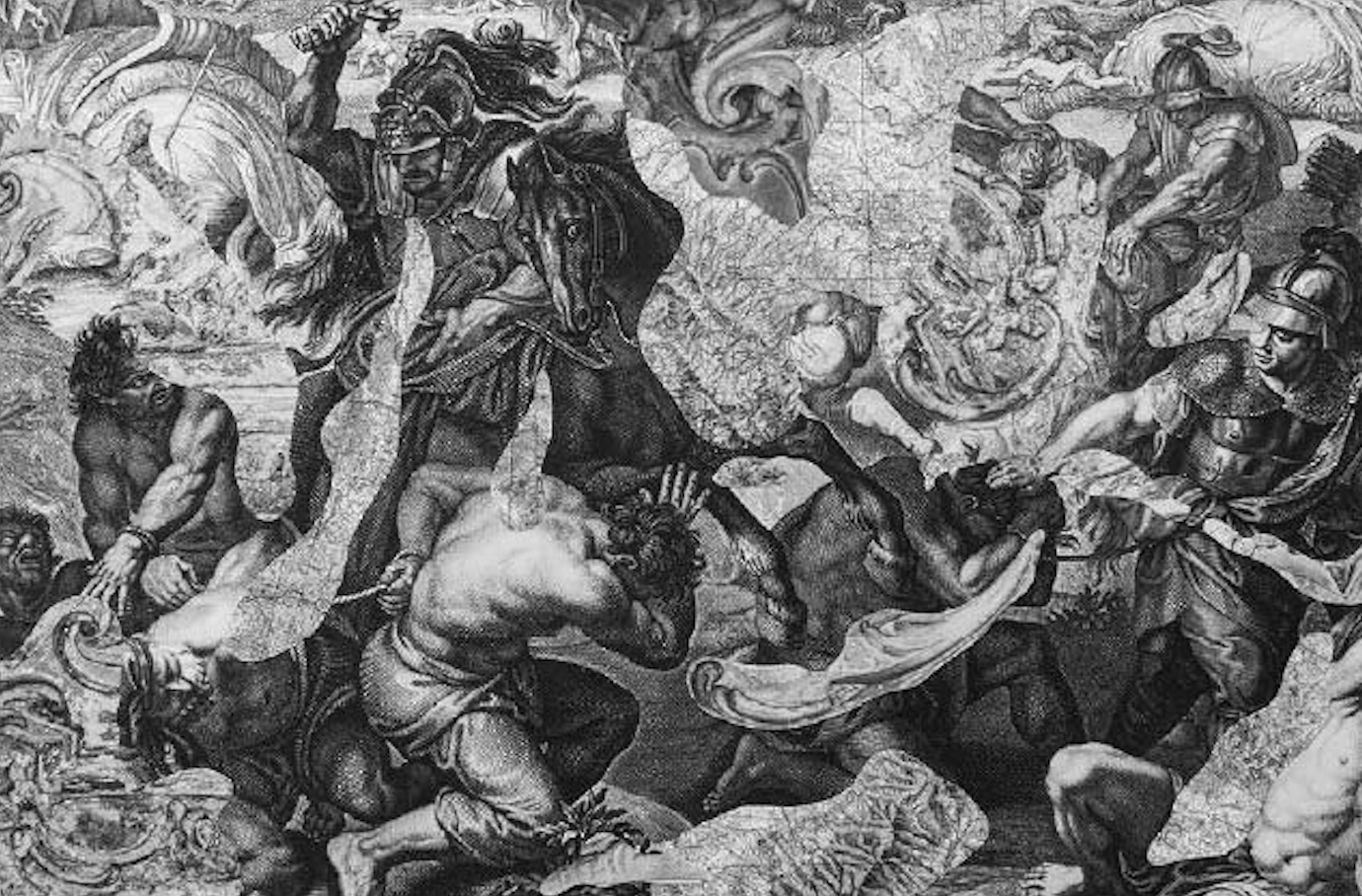
The Russian artist and photographer Dmitry Sirotkin, of international recognition and closely linked to the Hermitage Museum, has created the new exhibition, Filtrations , at the Casa de Cultura de Girona. The show proposes an intense visual reflection on violence, power dynamics and the destiny of humanity through a forceful and symbolic photographic language. Organized by the Casa de Cultura de la Diputació de Girona with the collaboration of the Fita Foundation, the temporary exhibition can be visited until January 10.
The project that the artist presents under the title Filtrations poses a profound reflection on the eternal ambitions of the human being and the impulses of domination that, throughout history, are reproduced in a cyclical manner. When tragedy is perceived as distant, it tends to seem strange to us; but when the conflict approaches, the fragile line that separates the present from the catastrophes of the past breaks.
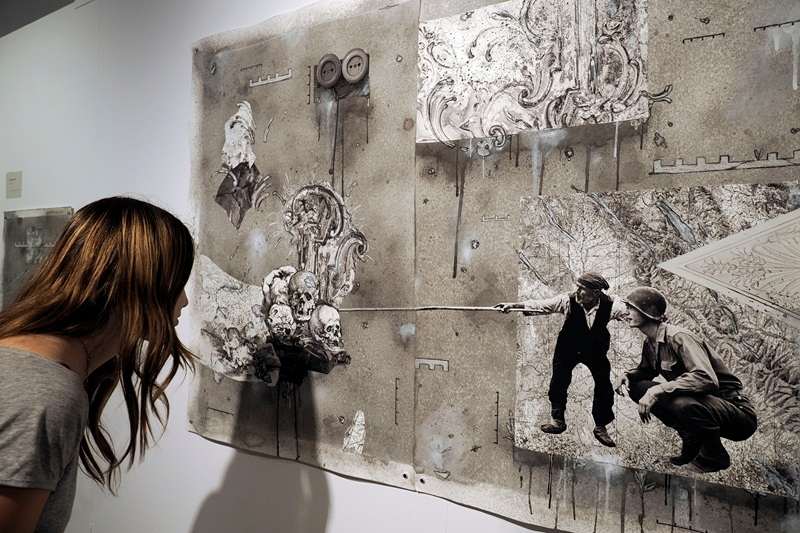
The proposal is also a meditation on violence, understood as an inseparable element of the human condition, which has repeatedly led to the disappearance of civilizations and has pushed humanity towards its own destruction.
The installation constructs a visual universe in which the image of a museum at rest, burnt-out matches and architectural vestiges of vanished empires coexist. The ceiling, decorated with baroque mouldings, seems to swell and drip water that flows into darkened pods. From the layers of plaster and lime, fragments of engravings emerge, as if they were mold or ghosts of ancient frescoes, evoking the colonial wars of Alexander the Great. On the table where the water falls, the geographical maps become soft and imprecise: countries, cities and battle scenes become confused and lose their contours, dissolving any defined borders.
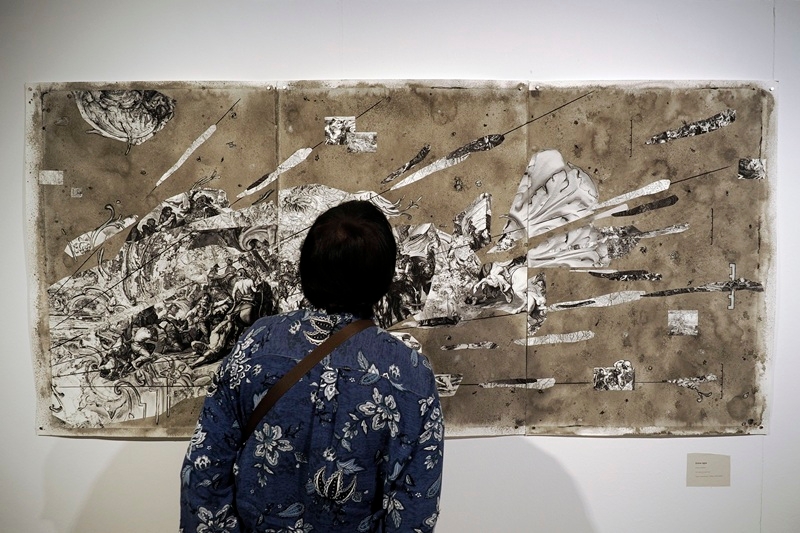
In parallel, the project points towards a second, even more accelerated spiral: that of technological development, which today puts the very survival of the planet at risk. Through his work, Sirotkin raises uncomfortable but necessary questions: is it reasonable to continue submitting to our own ambitions? Are we capable of stopping ourselves before we reach self-destruction? Or are violence and aggression part of a human nature so ingrained that it is impossible to break this repetitive circle?
History reminds us that even the most powerful empires have eventually collapsed, blinded by the will to dominate and accumulate wealth. Given this precedent, the question remains: has humanity learned anything from its past? Have we truly evolved if we continue to be unable to overcome the same fragilities?

You may be
interested
...