
Exhibitions
When Ghana painted cinema freehand
Col·lisió extrema recovers hand-painted cinema posters from the nineties at the Filmoteca de Catalunya, an explosion of popular art born from precariousness, imagination and the global circulation of cinematic imaginaries.
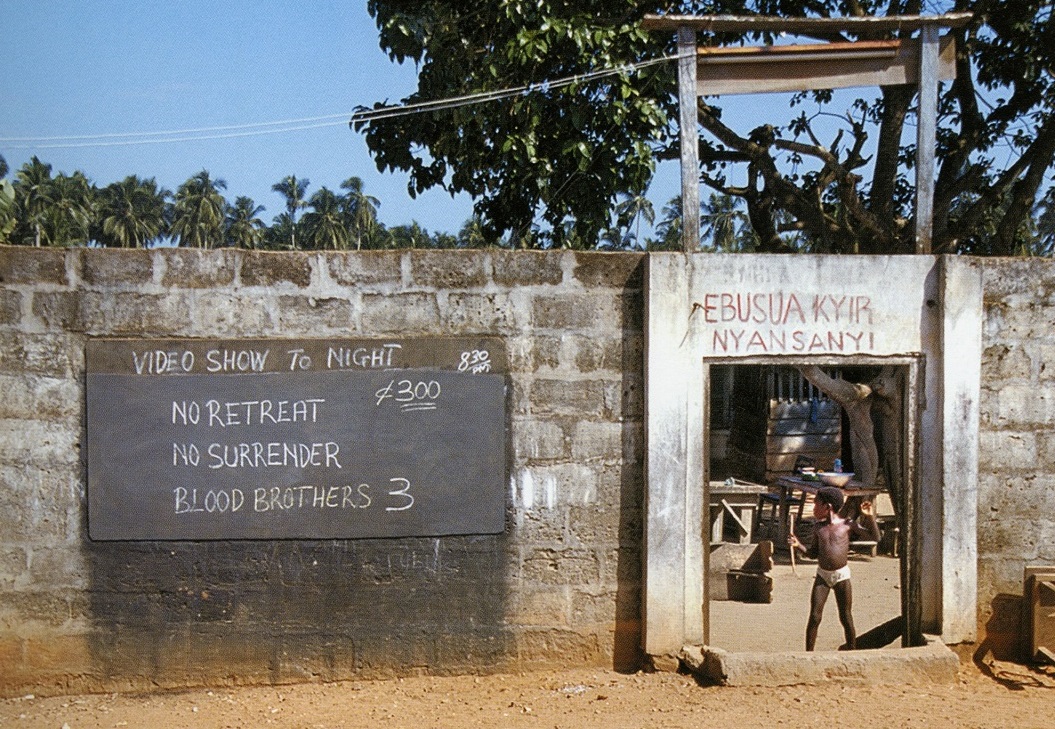
Extreme Collision is an exhibition dedicated to hand-painted cinema posters in Ghana during the 1990s, a radical and free visual expression that transforms the cinematic imagination into high-impact popular art. The exhibition, which can be seen at the Filmoteca de Catalunya until January 31, offers a journey through these unique pieces, created by local artists to promote traveling screenings, and highlights their aesthetic strength, their overflowing creativity and their cultural value beyond simple advertising.
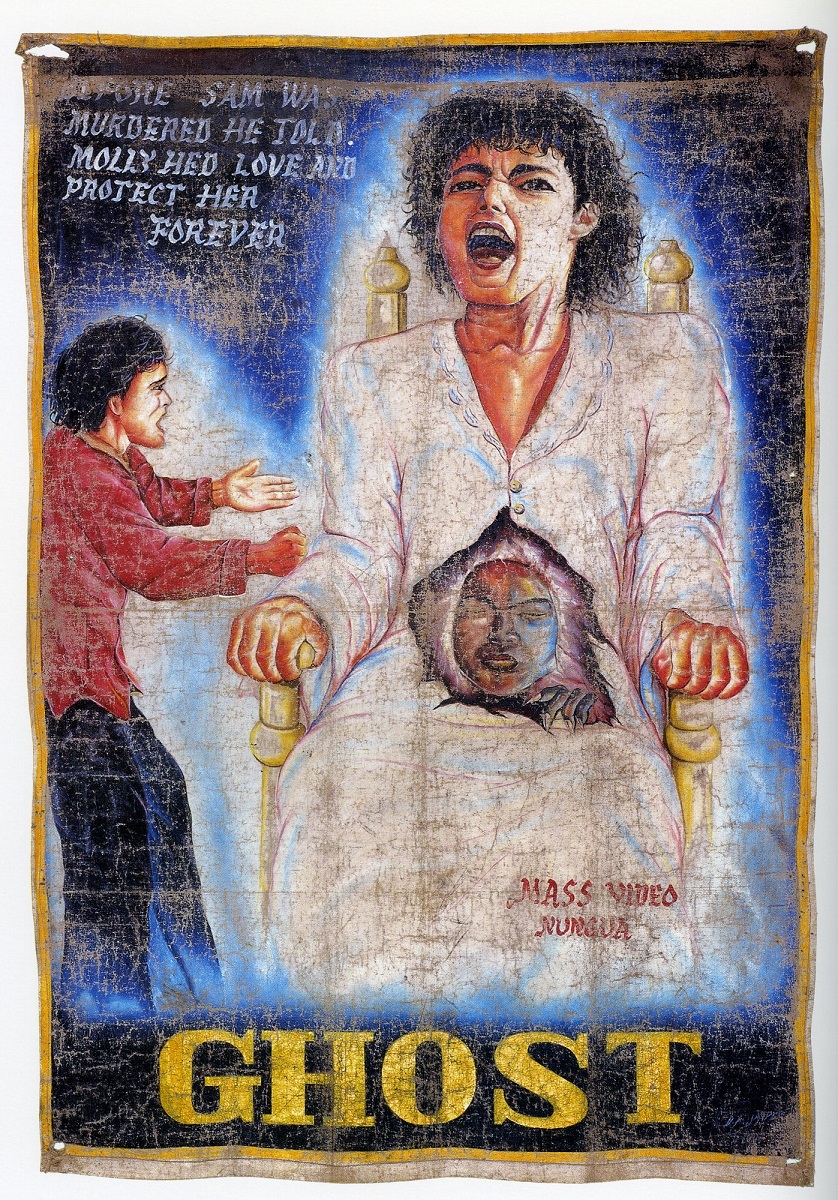
Poster for 'Ghost' (Jerry Zucker, 1990).
In the late 1980s, Ghana was plunged into a deep economic crisis, the result of decades of structural corruption and a long period of political instability. In a context marked by a lack of job opportunities and cultural infrastructure, a group of local entrepreneurs found an unexpected way out that would eventually give rise to a unique phenomenon on a continental scale: the creation of an extensive network of traveling video projections that brought cinema to neighborhoods, towns and improvised spaces throughout the country.
To attract the public to these mobile theaters, often set up in markets, squares or temporary premises, the promoters turned to local artists trained in urban advertising painting, usually dedicated to signs for shops, bars or hair salons. These creators began to hand-paint commercial movie posters on recycled cotton flour sacks: a resistant, economical support that was easy to roll up, transport and hang. Each poster thus became a unique piece, freely reinterpreted from VHS covers or oral stories about the films, without any obligation of fidelity to the original.
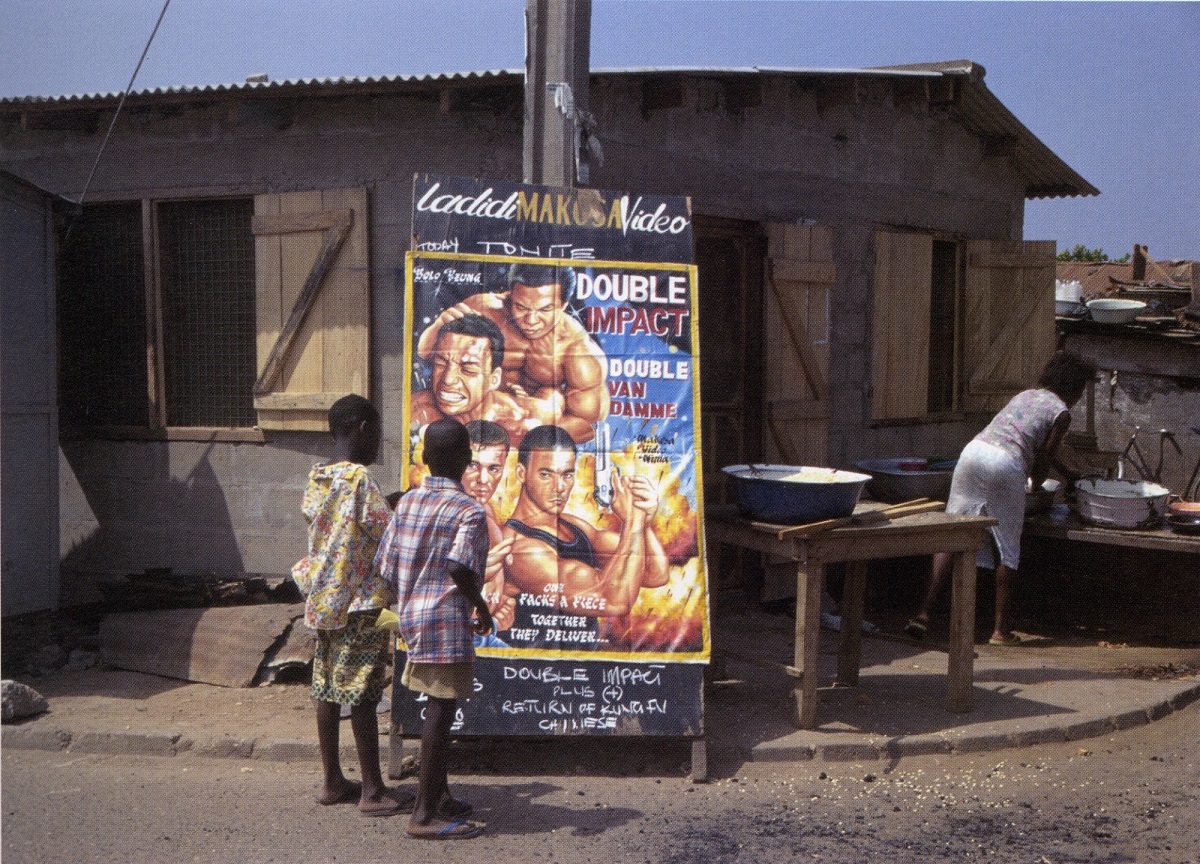
Movie poster mounted on a blackboard. Accra, 1996. Photo Ernie Wolfe III.
The exhibition Extreme Collision , curated by Beatriz Leal-Riesco, brings together a selection of posters from the 1990s signed by around twenty prominent authors of this unique movement. The works show a vibrant fusion between the Ghanaian artistic tradition —expressive, symbolic and intensely chromatic— and the visual strategies of Western advertising, especially the hyperbolic images of action, horror or martial arts cinema. The result is an overflowing visual universe, marked by radical creative freedom, where imagination often exceeds the limits of the cinematic narrative.
In these posters, Bollywood, Hollywood and Hong Kong cinema coexist and mix with local myths, spiritual figures and their own cultural references, giving rise to exaggerated, violent or fantastic scenes that reflect both the anxieties and desires of a society in transformation. Beyond their aesthetic value, these pieces function as a social and historical testimony to a specific moment in Ghana, in which popular creativity turned precariousness into a motor of cultural innovation.
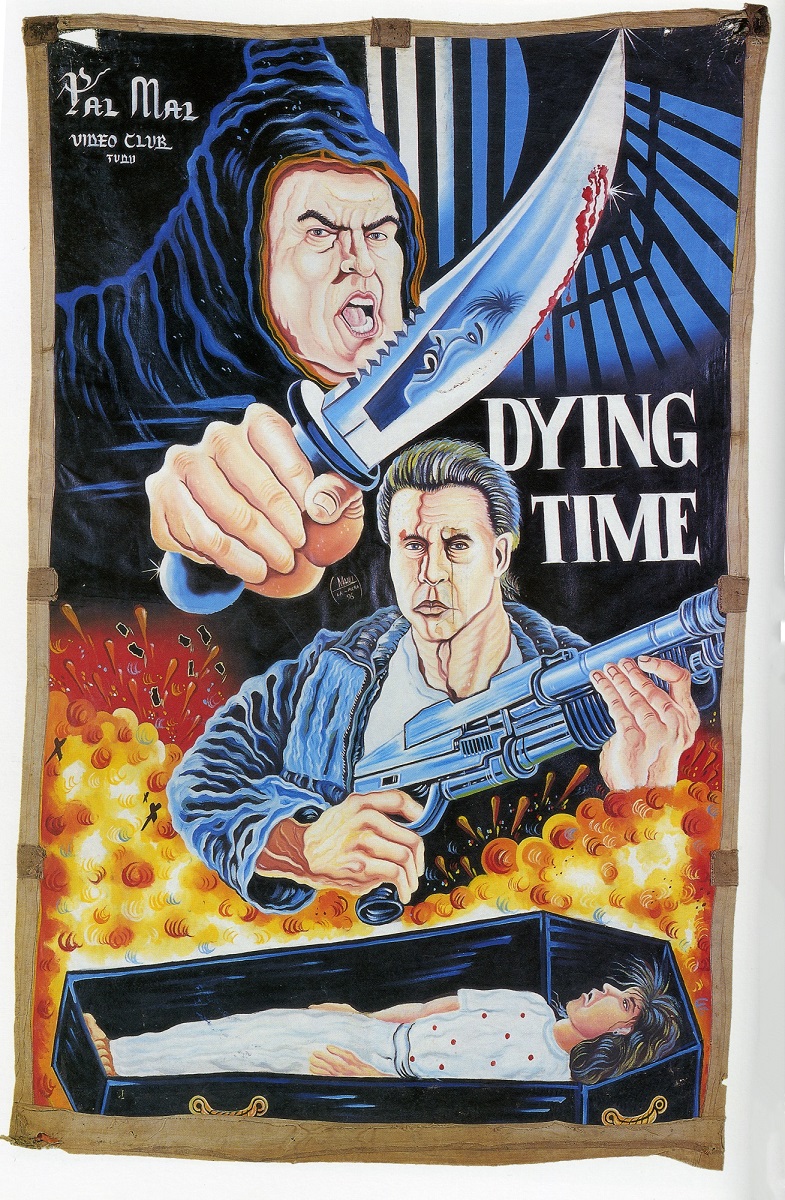
'Dying time' poster (Allan Kuskowski, 1990).
More activities around Extreme Collision at the Filmoteca
The exhibition is complemented by a program of activities that expands and contextualizes its visual universe, offering the public tools to delve deeper into the historical, aesthetic and conceptual aspects of the phenomenon of hand-painted posters in Ghana.
On the one hand, guided tours led by Jordi Costa, Head of Exhibitions at the CCCB, have been scheduled to take place on January 21, 2026 at 6:30 p.m. in the exhibition hall. This guided tour proposes a critical reading of the works on display and their production context, emphasizing the connections between popular culture, cinema and the global imaginary.
On January 8, 2026 at 7:00 p.m., the exhibition hall will host the activity The Action of Conserving , led by Marta Freixa and Núria Expósito. This session reflects on the challenges of conserving works initially conceived as ephemeral and functional materials, and opens a debate on the preservation of popular visual heritage and its museum implications.
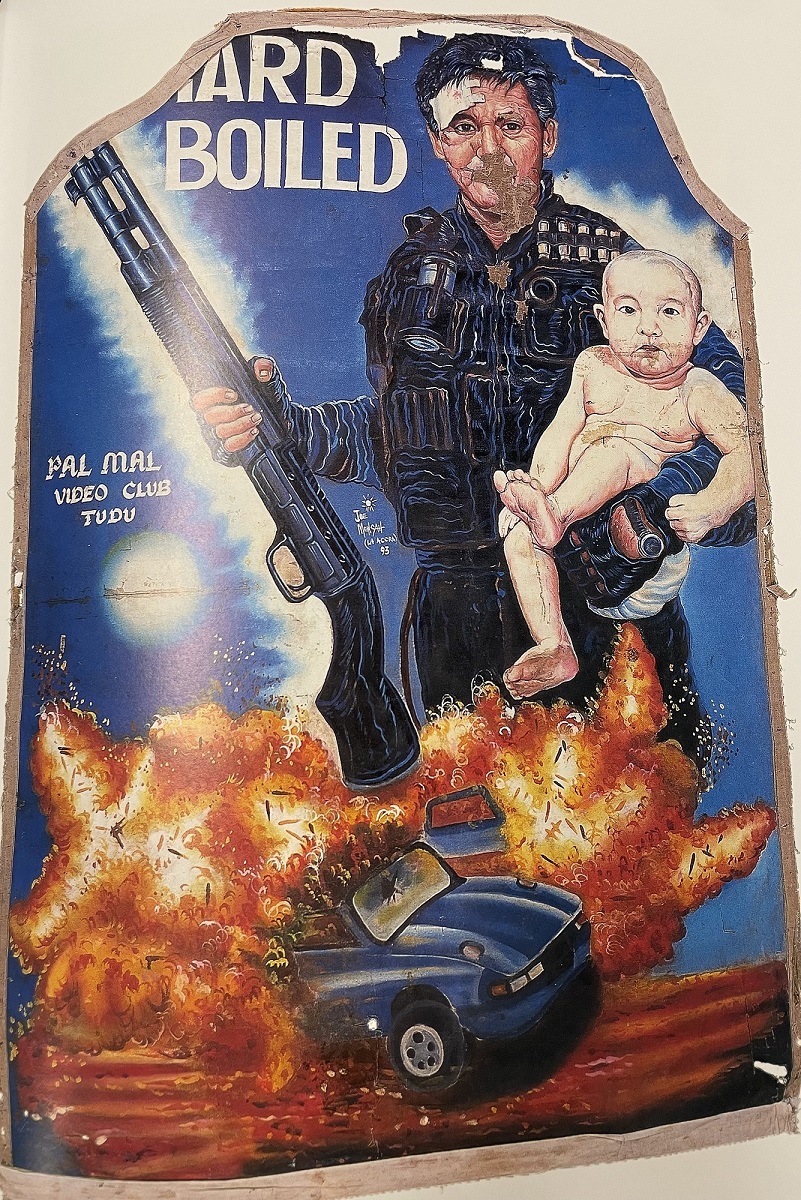
Poster for 'Hard Boiled' (John Woo, 1992).
The program is completed with several sessions with presentations that establish bridges between the exhibition and the history of cinema. On January 16, 2026 at 7:00 p.m., in the MACBA Auditorium, Testament (John Akomfrah, 1980, Ghana) will be screened, in collaboration with MACBA and within the framework of the exhibition Projecting a Black Planet. The Art and Culture of Pan-Africa. This screening allows the exhibition to be placed within a broader narrative about the images, voices and narratives of the African diaspora.
Finally, on January 21, 2026 at 8:00 p.m., the Sala Chomón will host the screening of Back in Action (Steve DiMarco and Paul Ziller, 1994, Canada), accompanied by a presentation by Jordi Costa. A session that directly dialogues with the excessive and transgressive spirit of the posters on display, and that highlights the global circulation of genres, aesthetics and cinematic imaginaries that fueled this singular visual phenomenon.
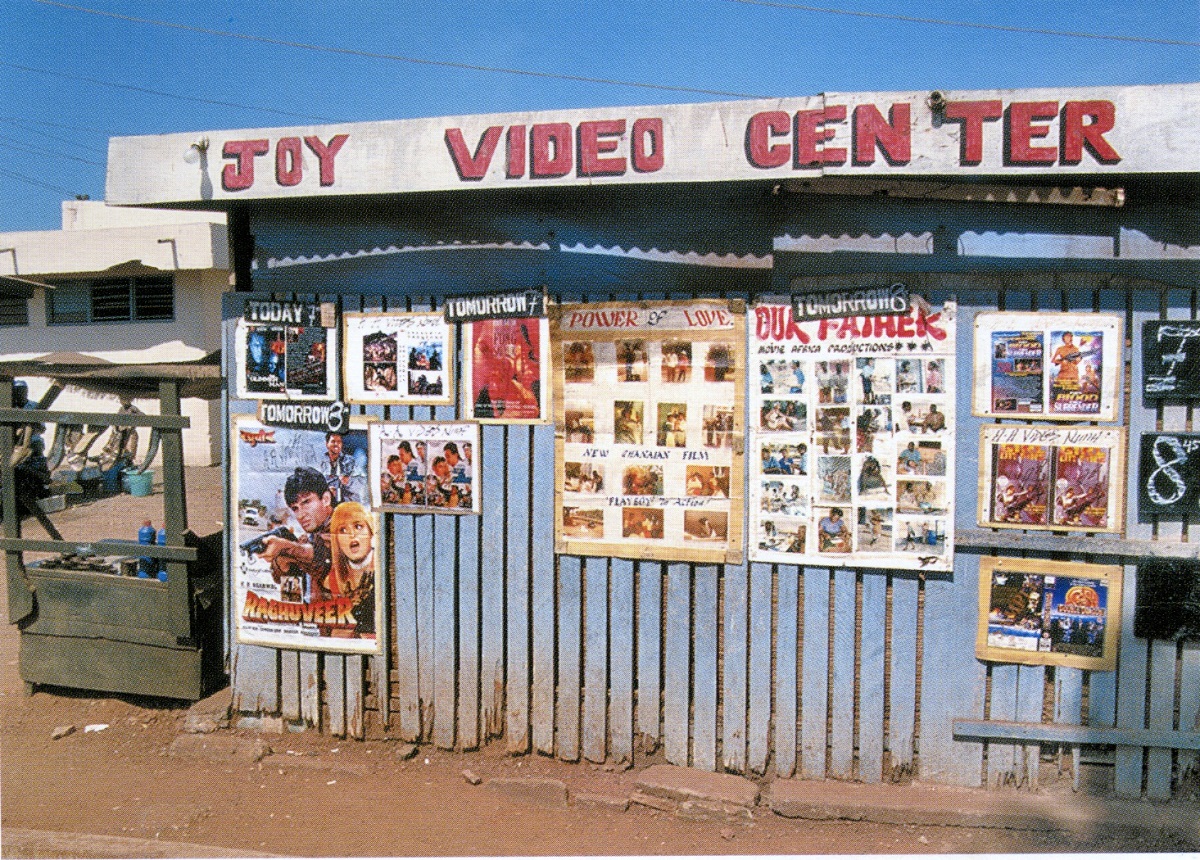
Video club Joy Video Center. Accra, Ghana, 1998. Photo Ernie Wolfe III.
You may be
interested
...