Exhibitions
Oliver Laxe brings the ritual of cinema to the Reina Sofía Museum with HU/هُوَ. Dance as if nobody's watching.
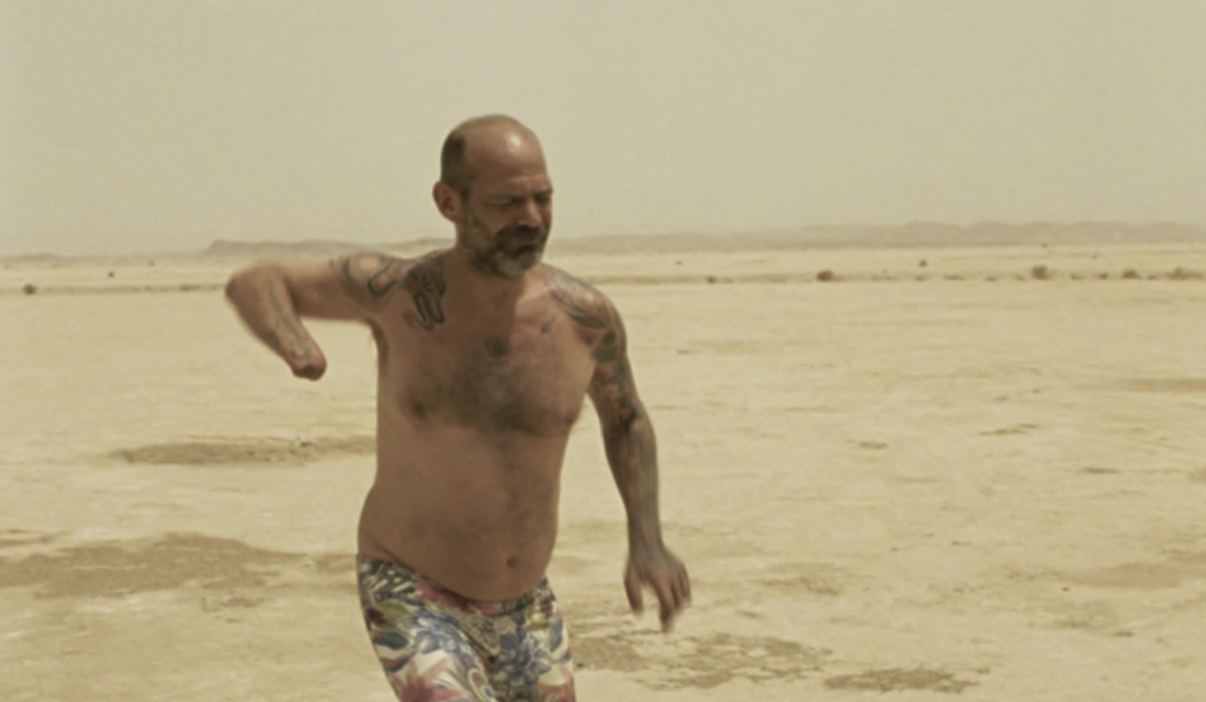
The audiovisual installation HU/ هُوَ . Dance as if no one is watching was conceived specifically for the Reina Sofía Museum by the Galician filmmaker Oliver Laxe, and is structured as an extension and reinterpretation of the creative process, research, and recordings that culminated in his film Sirāt . Far from functioning as a mere exhibition complement, the work proposes an immersive experience that engages with the artist's origins and his particular way of understanding cinema as a space for spiritual, political, and sensory exploration.
The exhibition inaugurates the new programming of Space 1, a section of the museum dedicated to exhibition cinema and contemporary audiovisual practices. In this context, HU/ هُوَ is presented as a key piece that places the body, movement, and community at the center of the aesthetic experience, inviting the visitor to inhabit a time and space of their own, separate from the conventional narrative logic of cinema in theaters.
The exhibition project is accompanied by a parallel program at the Reina Sofía Museum Cinema, which will include a complete retrospective of Oliver Laxe's filmography, as well as a carte blanche screening in which the filmmaker has selected four films that are especially significant to his career and creative vision. This dialogue between installation and projection reinforces the project's cross-disciplinary nature and allows the work to be contextualized within a broader exploration of contemporary cinema.
The installation, curated by Julia Morandeira Arrizabalaga and Chema González, has a limited capacity of 40 people, with entry changing every half hour, which underscores its intimate and experiential nature. It will be open to the public from December 17, 2025, to April 20, 2026.
In the words of the museum's director, Manuel Segade, "we couldn't have started the new program for Space 1, dedicated to exhibition cinema, in a better way than with this installation, in which Oliver Laxe returns to his origins." This statement encapsulates the spirit of the project: a return to the filmmaker's roots, understood not as a nostalgic gesture, but as a renewed search for meaning through image, sound, and the collective act of watching—and dancing—as if no one were observing.
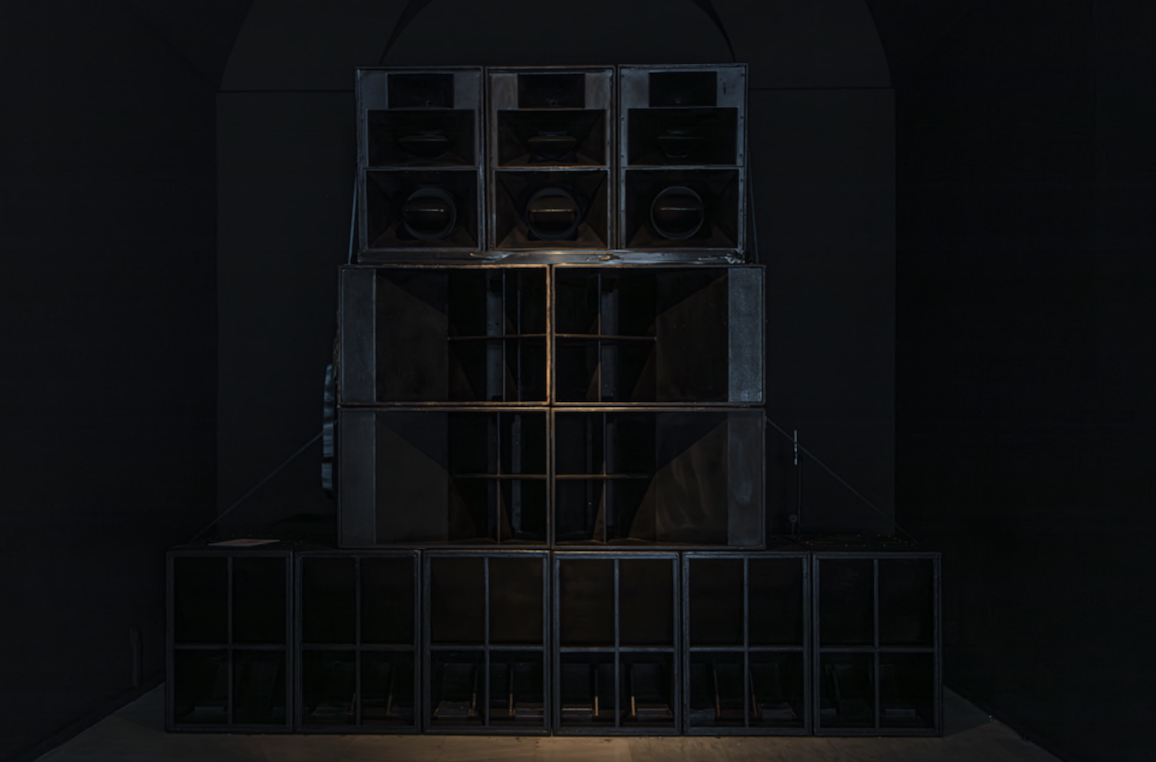
The installation unfolds across the two rooms that comprise Space 1, articulating a progressive journey that engages both the body and the visitor's senses. In the first room, the public is confronted by an imposing pyramid of speakers, a device characteristic of rave culture, which here takes the form of a totem nearly three meters high. Bathed in semi-darkness, the structure emits a constant vibration, devoid of melodic variations, perceived more through the body than the ear. This space functions as a ritual antechamber, reminiscent of the vestibules of ancient temples: a place of transition designed to prepare the senses before accessing the central experience of the work.
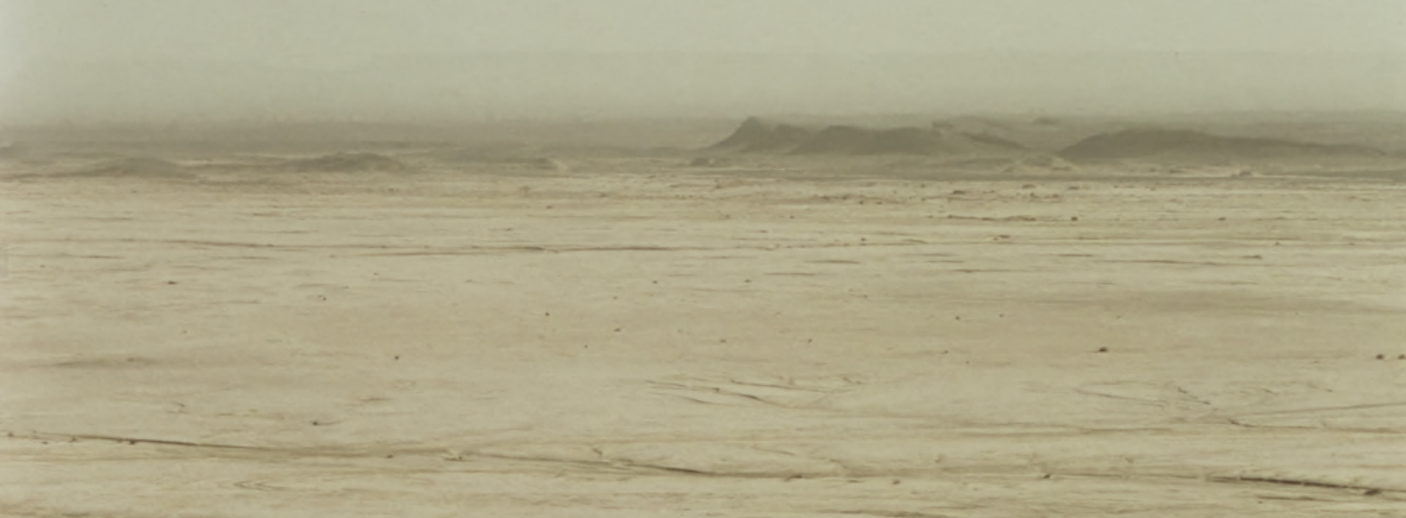
The adjoining room houses the visual core of the installation. Three simultaneous projections show vast desert landscapes bathed in sunlight, against which silhouettes of temples, speaker structures, and human figures engaged in dance are etched. These images were filmed by Oliver Laxe a decade ago in Iran, using ancient religious structures as a starting point, and reappear here reinterpreted as settings for a contemporary spirituality in which ritual is embodied in collective movement and shared listening.
Taken as a whole, HU/ هُوَ . Dance as if no one is watching proposes an immersion in a spiritual universe where the search for transcendence begins with the body itself—which dances, vibrates, and remembers—and with the presence of the sacred inscribed in the natural, architectural, and sonic landscape. The sound, the backbone of the experience, was created by Kangding Ray (David Letellier), who approaches this exploration from the very materiality of audio, working with frequencies and layers that permeate both spaces.
The projection, lasting approximately 15 minutes, is played on a loop, while the sound unfolds in an immersive way between the two rooms, generating a sensory continuum that invites contemplation, reflection and, ultimately, the physical participation of the viewer within a contemporary ritual of images and vibrations.
“I’ve spent years working with images and experimenting with these alternative communities, observing their sacred aspects, the ceremonial nature of dance, and their relationship with the wound. The work begins today; we’re going to see what it is, we’re going to feel it, because each person will have a different experience,” Oliver Laxe.
Oliver Laxe has established himself in recent years as one of the most unique and recognizable figures in contemporary cinema, winning over audiences and critics internationally thanks to a body of work marked by intense expressive sensitivity and a profoundly personal artistic vision. His films, unconventional in their approach, have found their way onto the major festival and award circuits, placing him at the heart of the global cinematic landscape.
His latest film, Sirāt , has marked a new turning point in this upward trajectory. The film was chosen as Spain's entry for the Academy Awards just a few months after winning the Grand Jury Prize at the Cannes Film Festival, one of the most prestigious awards in international cinema. This dual endorsement—both institutional and critical—confirmed the scope and relevance of Laxe's work beyond national borders.
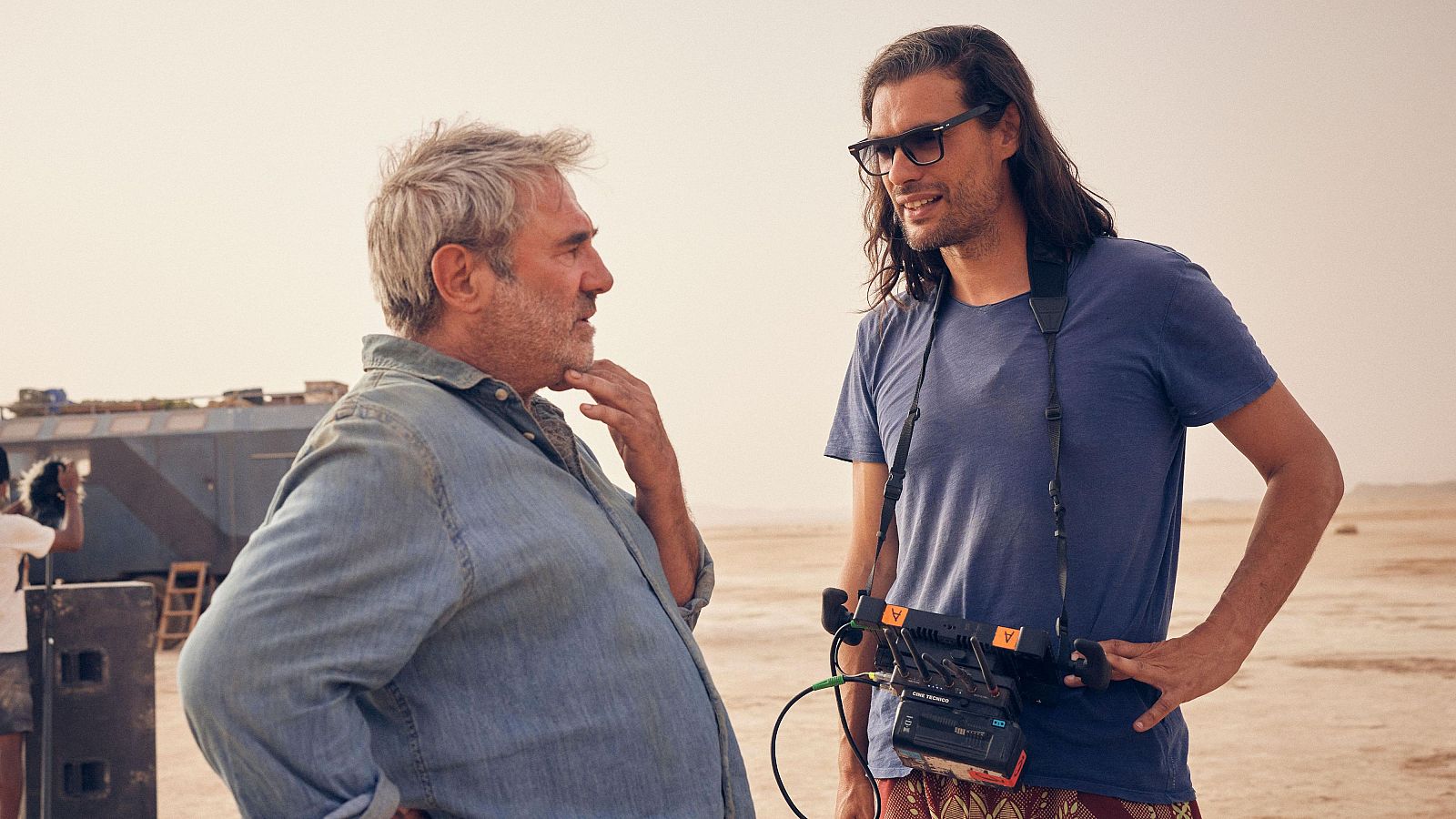
Since then, Sirāt has been a prominent presence at major awards ceremonies. Internationally, the film received two Golden Globe nominations—Best International Feature Film and Best Original Score—further increasing its visibility within the American film industry. Domestically, although it ultimately did not win any awards at the Forqué Awards, held this month, its nominations further underscored the project's significance within recent Spanish cinema.
More recently, it was announced that Sirāt continues its journey toward the Academy Awards, vying for a possible nomination in up to five categories: International Feature Film, Music, Sound, Casting, and Cinematography. This recognition not only highlights the film's artistic coherence but also its technical and ensemble excellence, and reaffirms Oliver Laxe as one of the most influential and stimulating voices in contemporary cinema.


You may be
interested
...