library
Isabel Pruna: Life and work
The biographical book has been skillfully written by Francesc Miralles, a renowned university professor, teacher of teachers and art critic, author of over sixty books on Catalan art and artists of the 20th century. The presentation became an intimate encounter enlivened by music genuinely performed by the duo formed by Jordi Paulí (saxophone) and Giuseppe Costa (accordion) in the Lolita Miravent room of the Santiago Rusiñol library. Its current director, Marta Sánchez, wished that the walls would be wider to accommodate all the people summoned to pay tribute to Isabel Pruna i Andrée, born Henriette Andrée on November 17, 1929 in Paris and who died in Sitges on March 8, 2024.
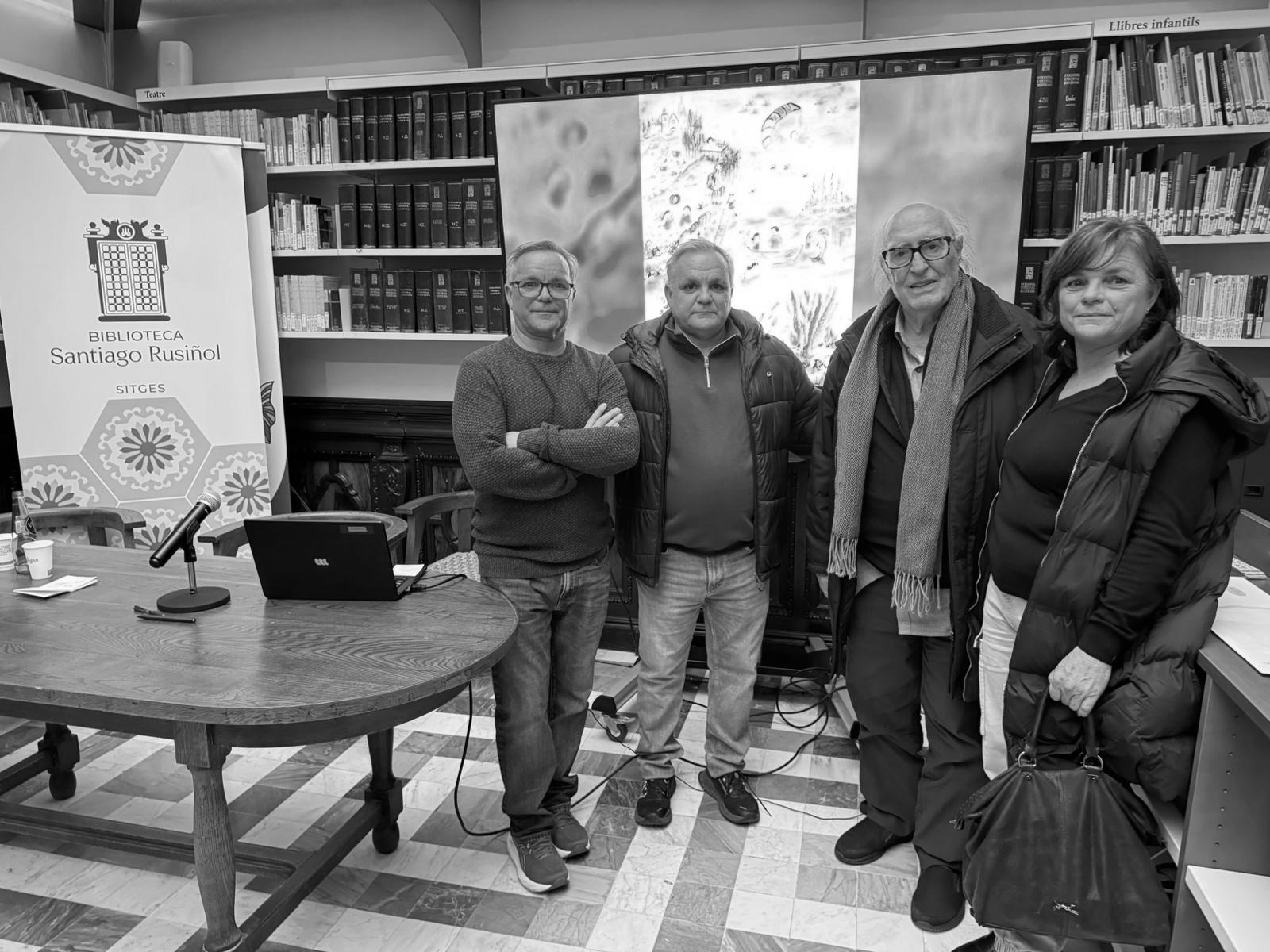
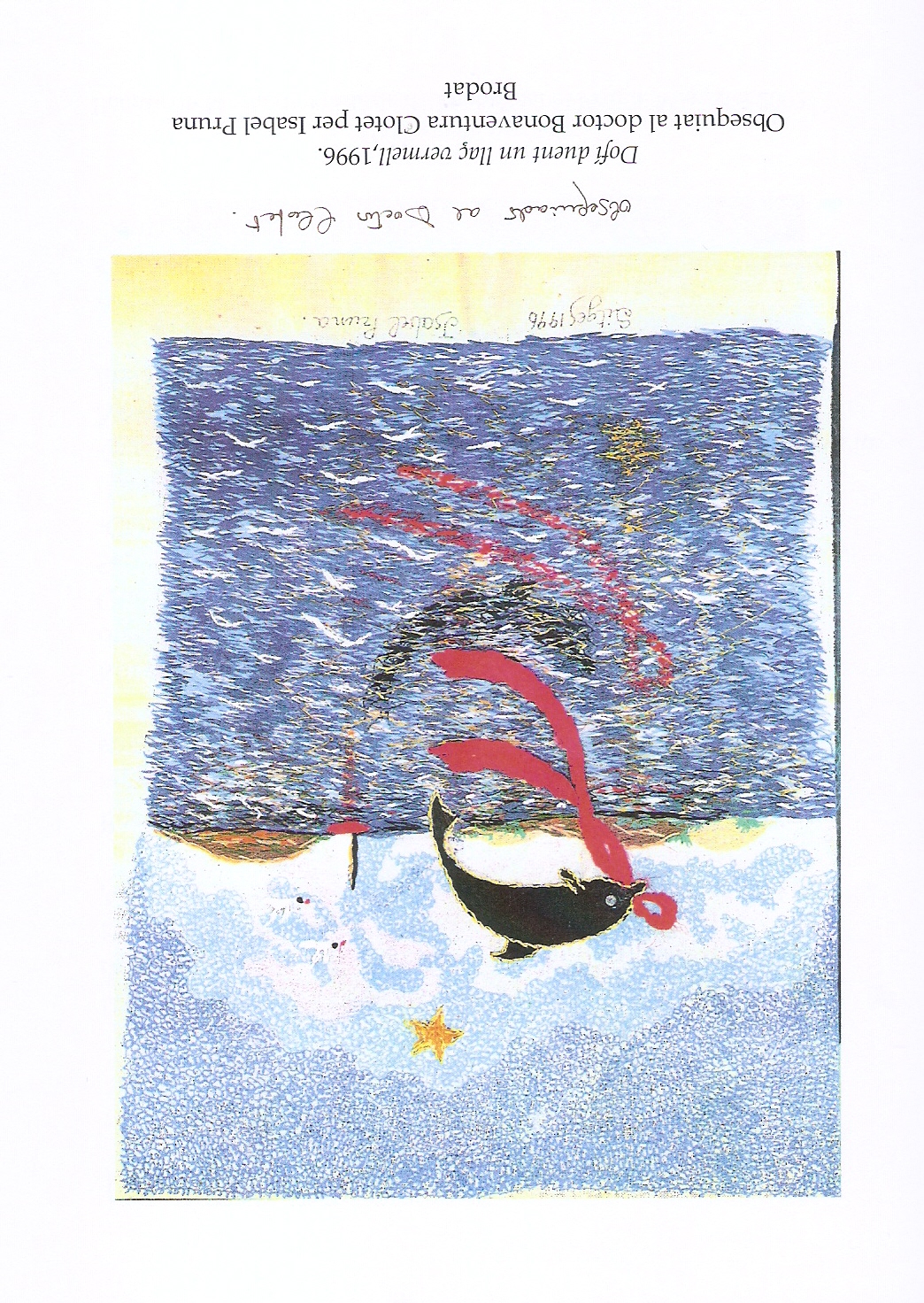
The entire Brull Pruna family, headed by Rodolf, have ensured that the memory of Isabel's life and work is remembered in this volume that contains the narrative collected by Miralles in an autobiographical manner, based on Isabel's own notes, in its first chapters and expanded with sections dedicated to her plastic work, embroidery on fabric and naive style drawings, in addition to highlighting and valuing the social and humanitarian work of which Pruna was a leader and standard-bearer. The tapestries that she sewed and embroidered are part of the collective memory and the fight against discrimination and stigma due to causes, fundamentally HIV infection. But she also made tapestries in favor of cancer research and a tapestry with a large olive tree dedicated to people who suffered from the covid pandemic, hung in the CAP in Sitges.
Isidre Roset introduced the author of the book that has been published by the Sitges City Council. Miralles in turn highlighted the social work carried out tirelessly by Isabel Pruna throughout her life by mentioning the journalist Montse Lago, who passed away on December 7, 2024 at the age of 80. In a chronicle published in the Diari de Vilanova, retrat de dama, she explained that Víctor Hugo had fallen in love with Isabel and had made her the protagonist of one of his novels; born in Paris, abandoned in a nursery, adopted by the then famous painter Pere Pruna and his wife Henriette Sacher-Lefevre. Francesc Miralles has arranged the events chronologically with the invaluable help of Rodolf Brull Pruna who we can consider a co-author or necessary collaborator, since he did the design and layout of the book. The illustrations of the work round out this work, which is a sample of Sitges' memory, but also recent history in the country and of European scope, given the importance of the painter Pere Pruna and the social relevance that his goddaughter, Isabel Pruna, imprinted on her embroidered tapestries.
Many of the people attending the event are witnesses to this unconditional affection, Isabel Pruna fought in many areas for the integration of all people willing to help. The Sitges per Sitges association, with Pere Ros as co-founder, is the greatest exponent of this but also the Pintors de Sitges and the Art contra la Sida exhibitions. Fernando Fuster Fabra with the Sitges Voluntaris Social team, Gerard who, among other things, contributed to keeping clean an urban forest called the witches' forest in the Sant Crispí neighborhood where Isabel Pruna had her castle, the house with the memories of her father who at the time of his death confessed his gratitude to her, are also heirs. The poem by Maria de Frederic, Maria Salesas Ribas (1931-2024), accompanies the embroidery dedicated to Dr. Bonaventura Clotet entitled The orgy of dolphins, marine mammals that follow Apollo, god of medicine, male beauty, music and poetry in Greek mythology.
The Sitge sky now has a new constellation in the firmament in the shape of a bow and an enormous heart that continues to beat, that of HAIP (Henriette Andrée Isabel Pruna).

You may be
interested
...