interviews
Antoni Perna: 23 years at the Tecla Sala leave a legacy of consolidation and visibility of Catalan art
After two decades at the helm of the center, Perna reflects on exhibitions, cultural projects and the relationship with artists and institutions, while giving way to new perspectives on contemporary art.
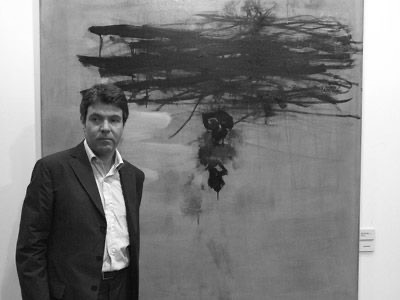
After 23 years at the helm of the Tecla Sala Art Center in l'Hospitalet de Llobregat, Antoni Perna is leaving the management, putting an end to a key stage in the consolidation of the center as one of the most relevant spaces for contemporary creation in Catalonia.
Since 2002, Perna has combined cultural management, curatorship and his career as an artist to place the Tecla Sala on the map of contemporary art in the state, establishing links with institutions such as the Montserrat Museum or the Vila Casas Foundation. During these years, the center has hosted temporary exhibitions by leading artists such as Laurent Jiménez-Balaguer, Jordi Alcaraz and Joaquim Sancho, while promoting projects to give visibility to emerging creators and local Catalan artists.
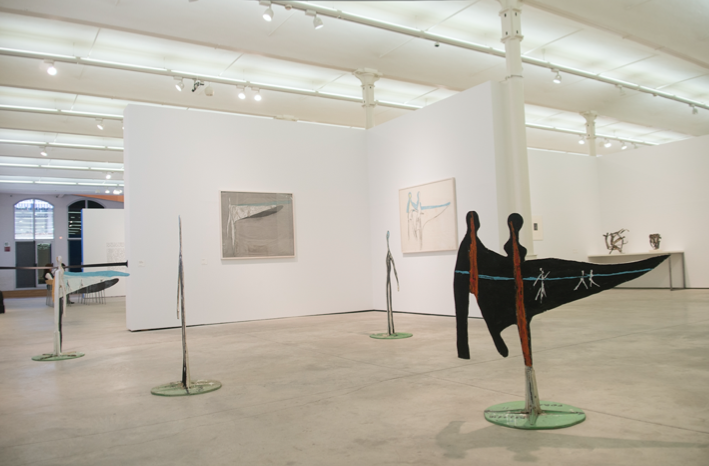
You have been directing the Tecla Sala Art Center since 2002. How would you summarize these years at the helm of the facility?
Yes, I have been at the helm of the Tecla Sala for over twenty years. During this time, my priority has been to consolidate the Centre as a recognised artistic facility within the network of museums in Catalonia. We have built a framework that supports research, education, the production of publications and, in general, everything surrounding contemporary art. We can say that we are quite satisfied with what we have achieved so far.
Do you have a summary of the exhibitions you have organized? Are there any that you would highlight?
I haven't counted them exactly, but our line has always been to produce our own exhibitions, rather than being part of external circuits. We wanted to give special prominence to Catalan art, with projects like the Josep Guinovart retrospective that we did in 1989. We have also organized international exhibitions like Gilbert Garcin's in 2006, which we combined with national artists, including some from Madrid, to have a broader view. But the base has always been Catalan artists, both consolidated and emerging.
Of the latter, which ones would you highlight?
We have balanced artists from younger generations with established careers that have not always had such visibility. For example, we have worked with Joaquim Sancho and Alfons Borrell, among others. We have also created smaller and experimental projects such as the “Observatori Tecla Sala”, to give visibility to emerging talents, and the “Districte Tecla Sala” cycle, which promotes artists from Hospitalet de Llobregat and promotes contemporary culture in the region. In addition, the center has a library and a multipurpose room where other cultural activities are developed.
How has the relationship been with other cultural institutions?
It has been very positive. Collaborations have become increasingly natural, both with other art centers and with institutions in different fields. This network has allowed us to enrich our proposals and expand the dialogue with the public.
What would be the lines of work that the new management should follow?
It is still being defined, as the selection process will be long and rigorous. Tecla Sala already has a path mapped out and a solid structure that will need to be consolidated and reinforced. Each new management will bring its own perspective and prioritize different topics, but the foundation is already in place.
And what about human resources and teams?
The teams of art centers are usually small and they need to be strengthened to be able to develop all the projects that a facility like ours can offer. In terms of economic resources, we have gone through difficult times, but we currently have stability and the support of the Generalitat. The challenge is to efficiently manage projects within a complex and slow administrative framework.
And for your personal future, do you have any projects in mind?
I didn't plan to continue in the sector after I left. I think it's positive that new perspectives are coming to the Center, neither better nor worse, just different. Personally, I now want to take some time to rest and think about what I'll do next.


You may be
interested
...