Exhibitions
Juan Uslé. That ship in the mountain: a journey between memory, rhythm and light
The Reina Sofía Museum presents Juan Uslé. That Ship in the Mountain , a major retrospective dedicated to the Cantabrian artist born in Santander in 1954. Throughout his career, developed between New York and Cantabria, Uslé has established himself as one of the most important figures in contemporary Spanish art, with an international presence sustained for decades.
The exhibition, curated by Ángel Calvo Ulloa, offers a journey through more than forty years of pictorial research, marked by a lyrical abstraction in which gesture, pulse, and memory construct an intimate and vibrant language. In his work, painting acquires an almost musical character, oscillating between the rhythmic and the geometric.
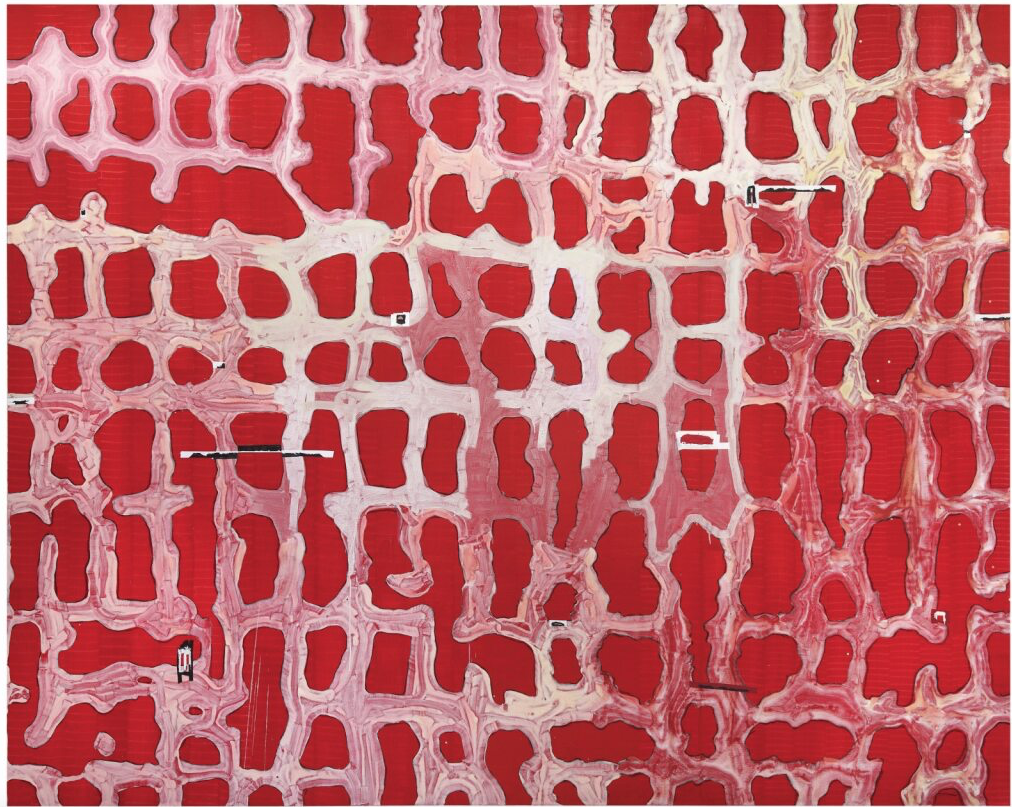
Juan Uslé, Amapola, 1991, Museo Nacional Centro de Arte Reina Sofía. Depósito Colección Soledad Lorenzo, 2014, © Juan Uslé, VEGAP, Madrid, 2025.
The exhibition will be open from November 26, 2025 to April 20, 2026 on the 1st floor of the Nouvel Building. It brings together nearly one hundred pieces from public and private collections, as well as the collection held by Uslé himself and the artist Victoria Civera, thus offering a broad and nuanced view of his creative career.
The relationship between Juan Uslé (Santander, 1954) and New York City is a fundamental axis for understanding the evolution of his work. Since the late 1980s, the artist has divided his time between the rural tranquility of Saro, in Cantabria, and the urban intensity of Brooklyn, where he maintains one of his studios. This constant movement between the two places has generated a hybrid creative territory in which the American city acts not as a mere backdrop, but as a profound source of sensory resonances.
New York imprinted a recognizable pulse on Uslé's painting, especially visible in series like "I Dreamed You Revealed," where the repetitive brushstrokes follow an almost heartbeat-like rhythm. The artist has explained on several occasions that he often works at night, when the city dims and his own heartbeat becomes the guide for the painting process. From this atmosphere emerge compositions that combine rigor and vibrancy, order and breath, geometry and emotion.
The city also played a decisive role in his international projection. In New York, Uslé found an open artistic context, a dialogue with contemporary abstraction, and exhibition opportunities that helped consolidate his profile within the global scene. His painting, without abandoning the poetic and sensory charge that characterizes it, acquired a more expansive tone there, attentive to the rhythms of urban life and the plurality of experiences offered by a constantly transforming metropolis.
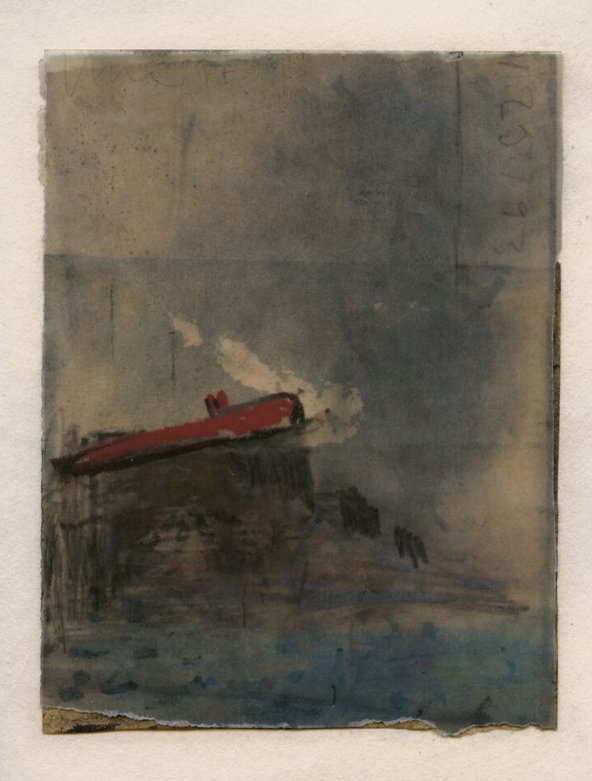
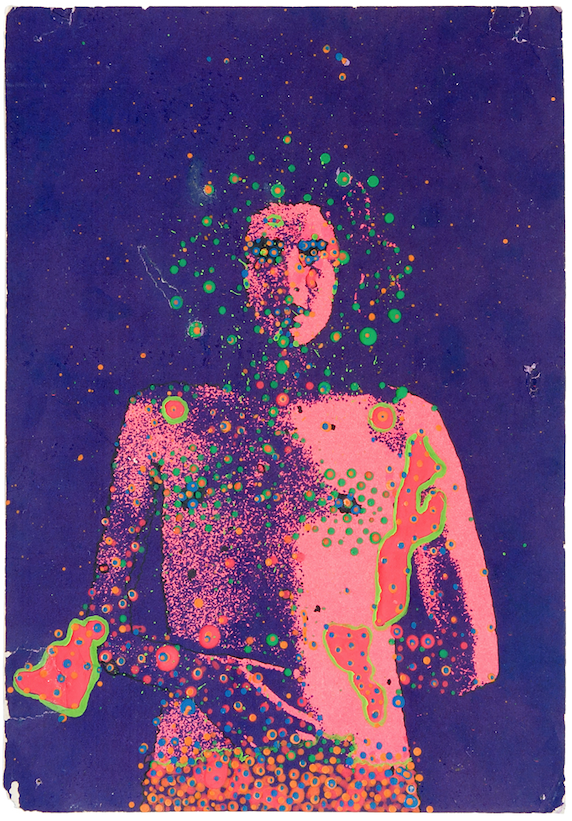
Juan Uslé, Untitled, 1987, Uslé-Civera Collection, © Juan Uslé, VEGAP, Madrid, 2025.
That Ship in the Mountains is the second exhibition that the Reina Sofía Museum has dedicated to Juan Uslé. The first, Open Rooms (2003), was presented at the Velázquez Palace and subsequently traveled to several international institutions. More than two decades later, this new look at his career stems from a memory deeply rooted in the artist's mind: the sinking of the ship Elorrio in 1960 off the coast of Langre (Cantabria), very close to the family home where Uslé grew up.
The exhibition unfolds as a chronological journey, a continuous thread tracing the different periods of Juan Uslé's work and linking them to the exhibition venues that have marked his career from the 1980s to the present. It all begins in 1987 at the Galería Montenegro in Madrid, where his first pictorial constellations found a space for revelation. From there, the map expands: in 1991, the galleries of the Palacete del Embarcadero and the Nave Sotoliva in Cantabria hosted works that already heralded a voice in full ascent; a year later, Uslé would take his characteristic style to documenta IX in Kassel, becoming part of one of the great stages of contemporary art.
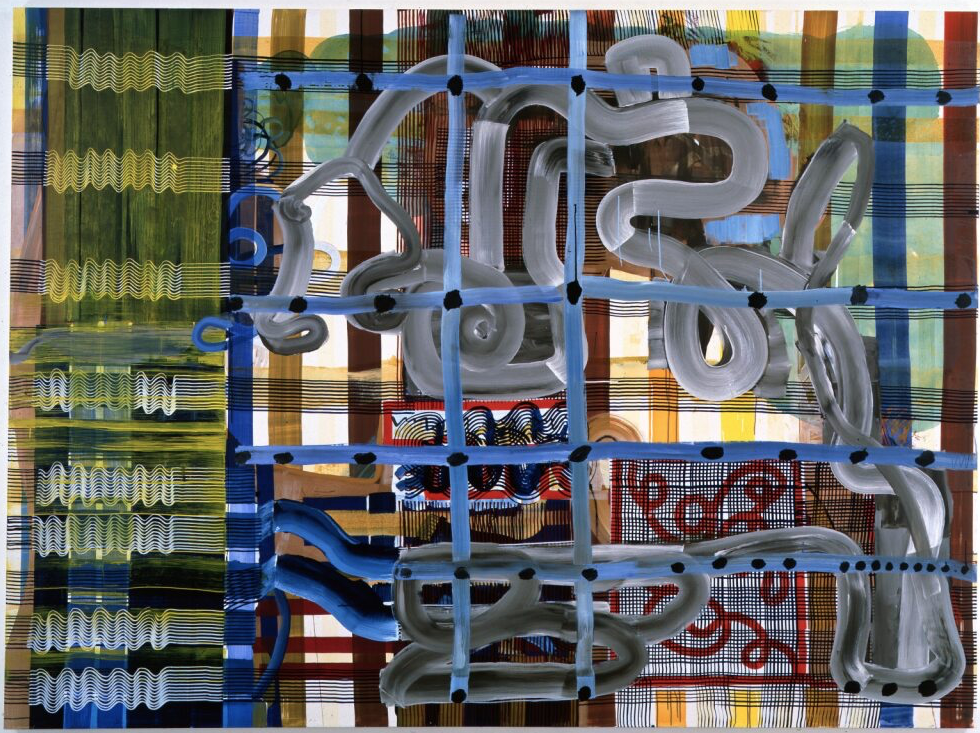
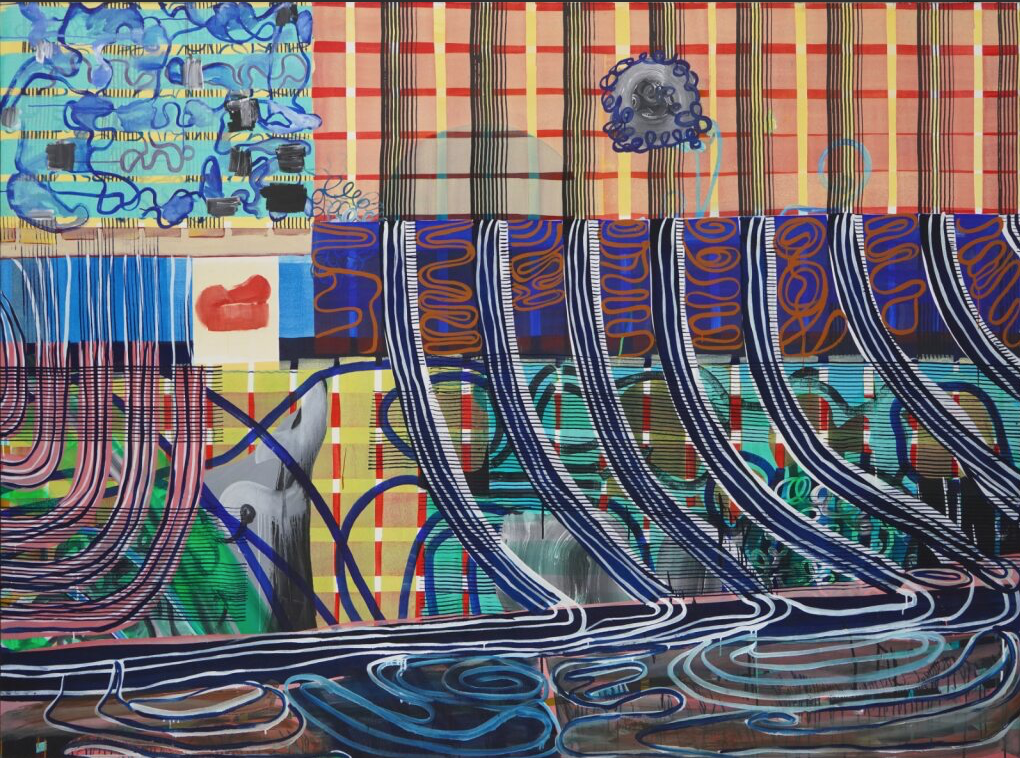
Juan Uslé, Manthis, 1998-1999, Helga de Alvear Museum Collection, Cáceres, © Juan Uslé, VEGAP, Madrid, 2025.
The journey continues with significant stops: the IVAM in 1996, where his artistic language opened up to new resonances, and the Palacio de Velázquez, that space within the Reina Sofía Museum that had already dedicated the Open Rooms exhibition to him and which once again engaged with his painting through an architecture bathed in light. Among all these milestones, a central current emerges that structures his career: the series "I Dreamed You Revealed," that pictorial pulse which, for the last three decades, has been the firm trunk from which branches, silences, rhythms, and shifts have sprouted.
Thus, New York's presence in Juan Uslé's career is not limited to a biographical period, but rather forms part of a pictorial imaginary that combines movement, light, and memory, as well as metropolis and village, or in other words, isolation and integration. His work, situated between two worlds, reveals how an urban landscape can become an intimate and silent impulse, and how this continuous dialogue with the city has shaped one of the most unique trajectories in contemporary Spanish art.



You may be
interested
...