
Exhibitions
Jordi Isern and the Incerta Via project
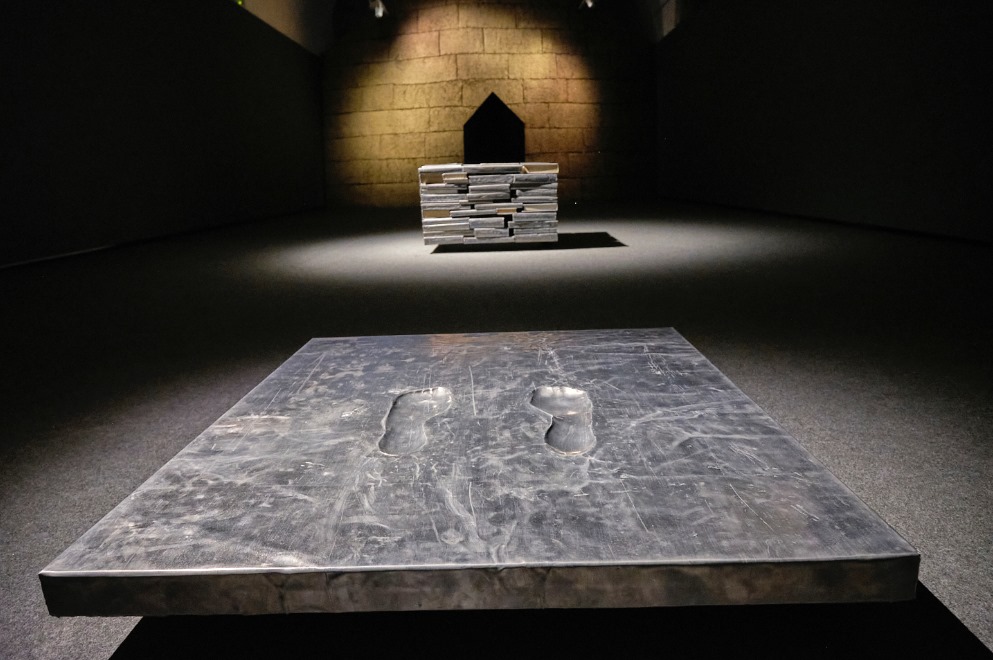
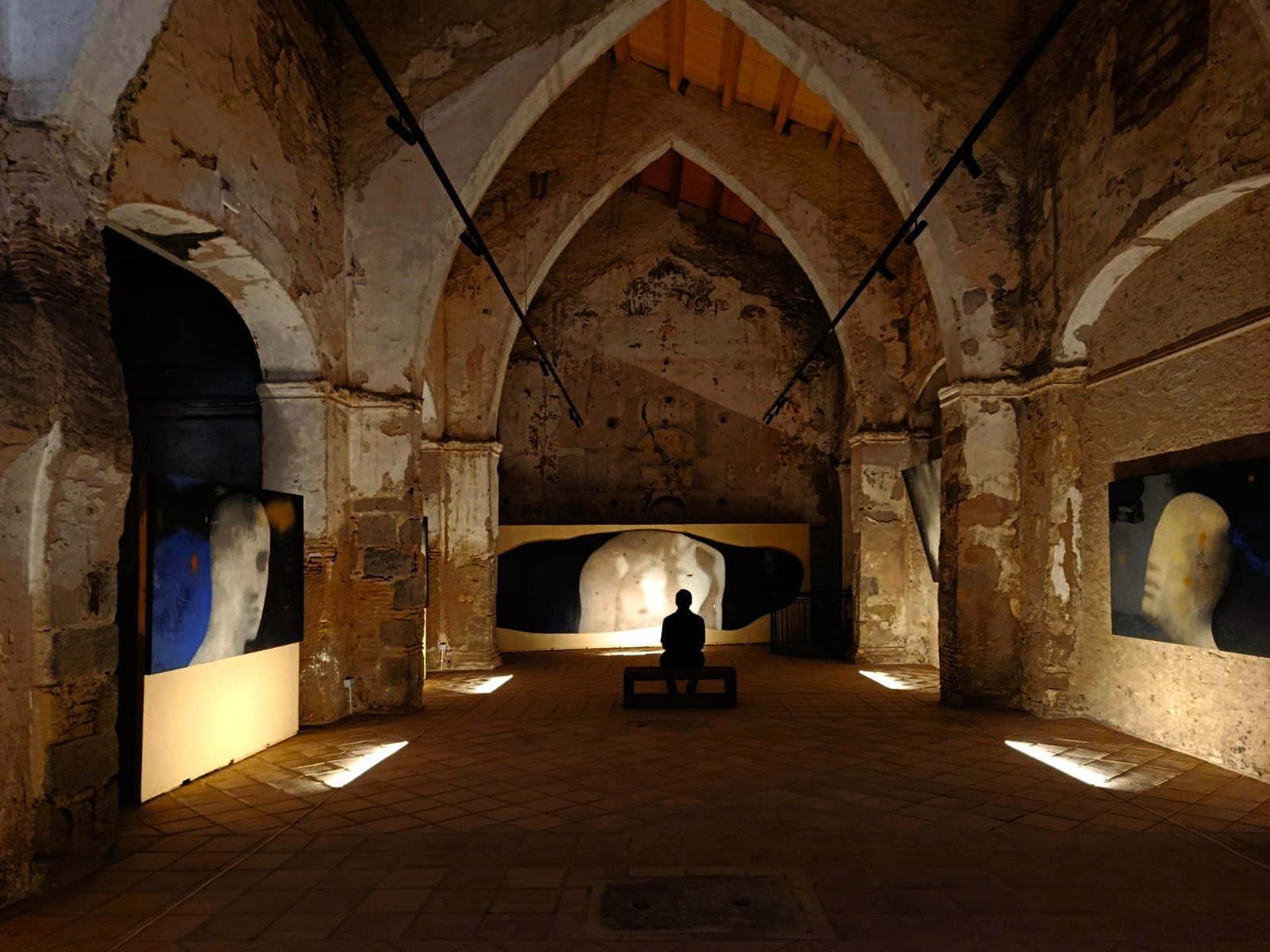
Bonart magazine has provided complete information about the exhibition Anagnorisi by Jordi Isern at the Convent of Sant Agustí in Castelló d'Empúries in the months of July-August, curated by Enric Tubert.
I visited the exhibition accompanied by the artist himself and it was a complete experience of double anagnorisis, that is: a Re-knowledge in the literal sense of the Greek word. On the one hand, the immediate recognition of the identity of the artist and his work, a kind of verification of what I already knew and on the other, it made it easier for me to better understand his participation in the Incerta via project, one of the most interesting artistic proposals that has taken place in recent years between 2013 and 2025 in the Girona region.
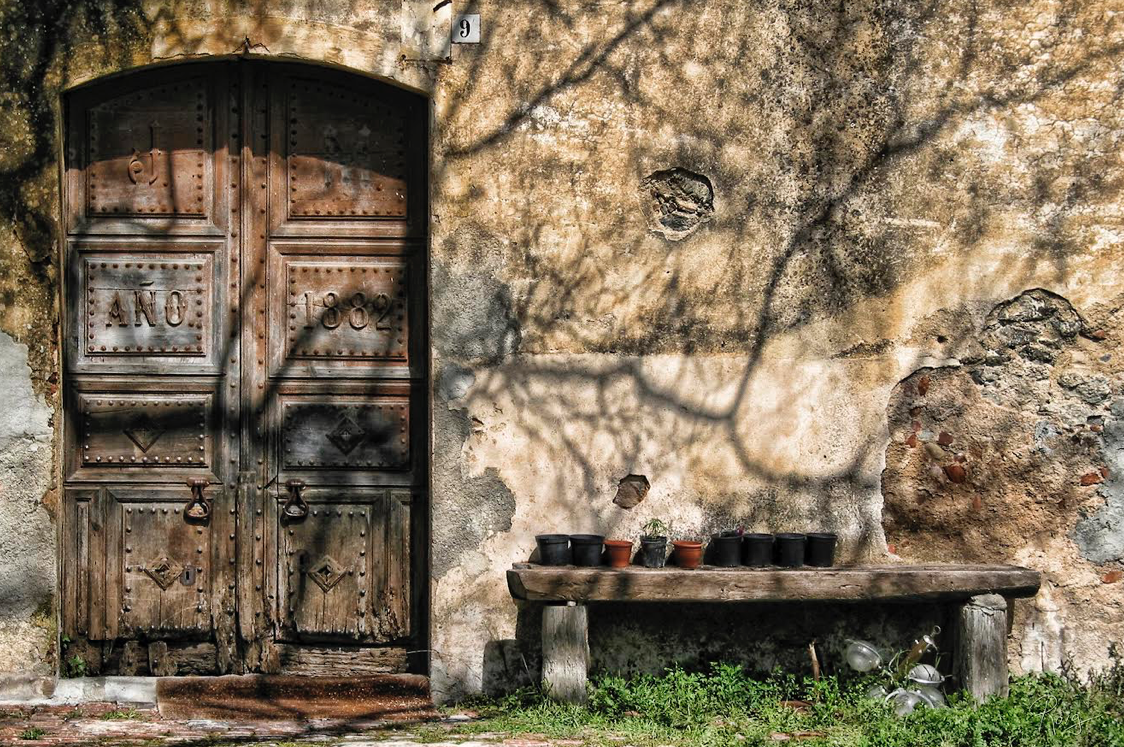
A black curtain separated the bright exterior of an Empordà summer morning where reality was crystalline and the air clean, from the gloomy and dimly lit interior. Thus appeared the plot of this chronicle, the duality between light and darkness, between the reality of things and spiritual abstraction.
Isern's work and the Incerta Via project are marked by a spiritual and transcendental search through art. Jordi Isern tells me that it was José Corredor Mateos, a poet well versed in spiritual matters, who described his work with this apparent oxymoron of "abstract realism". In all his and the group's works he projects a realistic and at the same time abstract and spiritual sense.
Isern starts from a well-defined and precise work to empty it and search for what reality does not show. It seems that the duality sacred versus profane is inevitable and yet there is something that unites them. The concept of reality together with abstraction tells us that it is possible to represent recognizable forms, but in a simplified or distorted way, capturing the essence of reality, while exploring the expressive possibilities of abstraction. Instead of a faithful representation, he focuses on subjective interpretation and emotion, using abstract forms to express the essence of reality emphasizing emotion that mysteriously becomes a source of spirituality.
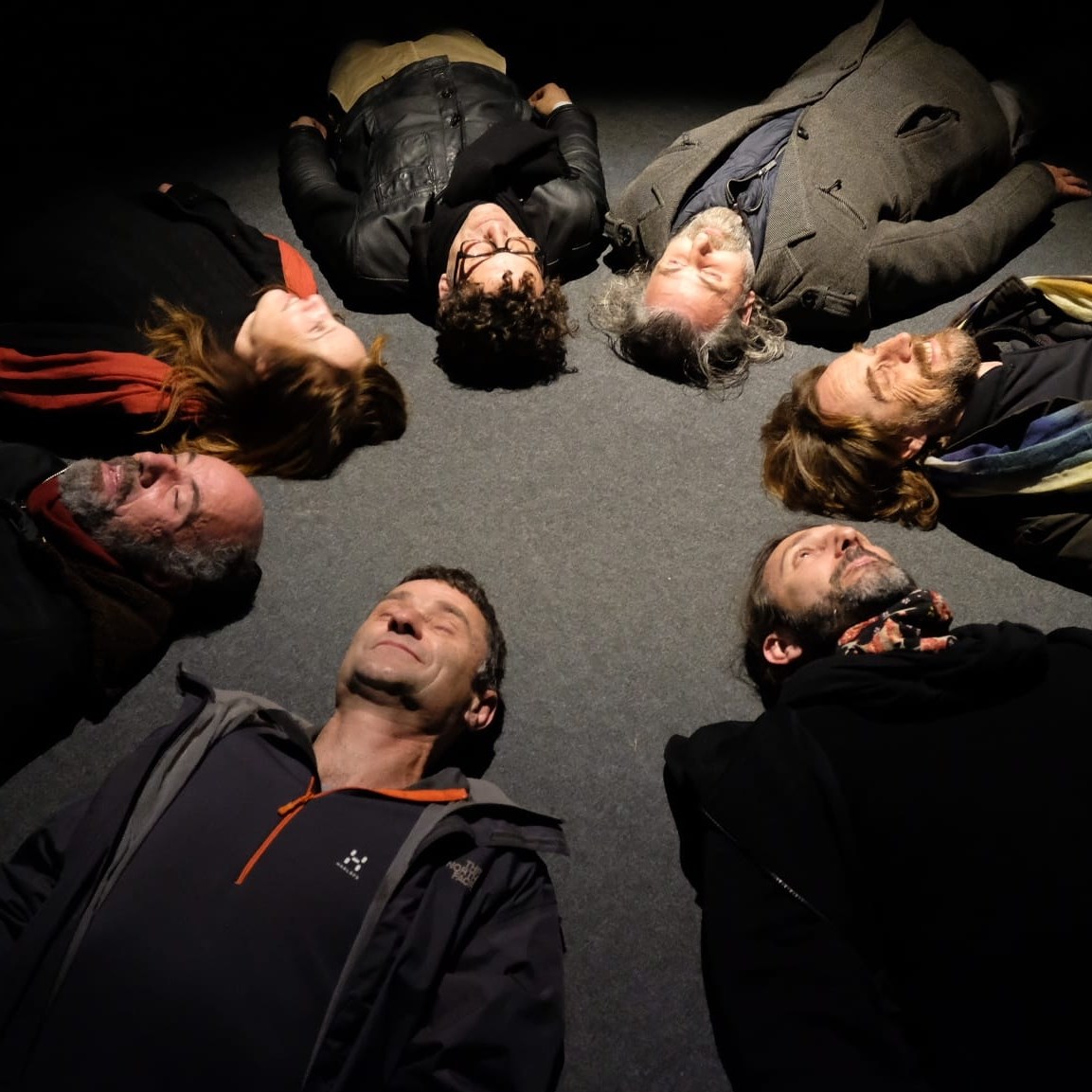
Isern supported and was part of the group that carried out the Incerta Via project, an artistic action of co-creation of a large installation that was held at the Casa de Cultura de Girona in 2021, together with an Ágora of reflections that brought together the best theoretical arguments in favor of spirituality in art: Xavier Melloni, Raimon Arola, Mapi Rivera, Joserra Blanco, Xavier Perarnau, Josep Maria Jori. An unusual proposal for its transcendent and spiritualist background and for attempting something that seems impossible in the 21st century, such as bringing together seven artists in the same project.
The places in both cases are chosen with great care, they are an essential part of the ritualization, like this old convent of Sant Agustí. The space already defines the character of his works. In the case of Isern, places such as: the Monastery of St. Miquel de Cruïlles, Girona, the Old Church of Castellfollit de la Roca, the Monastery of Vila Bertran are fundamental. These artists want to verify with the use of space their longing for silence, penumbra and recollection. This was already the case in the first indications of the Incerta Via group with the project of “El Jo i l'Altre” by Pep Aymerich and Jordi Esteban, a seven-year work (2013-2019) with actions in different chosen spaces of Girona.
The members of the Incerta Via project propose the symbol as the only path to access the universal mystery, and at the same time I see in them that there is a search for real, concrete aspects, such as: Pep Aymerich, Oriol Teixidor, and Jordi Esteban do so through their corporeal representation and nature, Jordi Martoranno through Form, the cosmos of Maria Mercader, the nature of Torrent Pagés, and Jordi Isern the body and the universal cosmos.
The body, nature, form seem more typical of the poetics of hedonistic proximity, epicureanism and the taste for well-adjective reality, the faculty to express in detail, what is recognizable of reality. I am well convinced that there is a spirituality behind concrete and material things and that this idea of truth in which it seems that it is only a matter of finding the subject, the verb and the predicate: the door is green, contains lyrical elements that bring it closer to this “abstract realism”. There is a certain materialistic spirituality when someone asks: what is this, and the other answers that this is this.
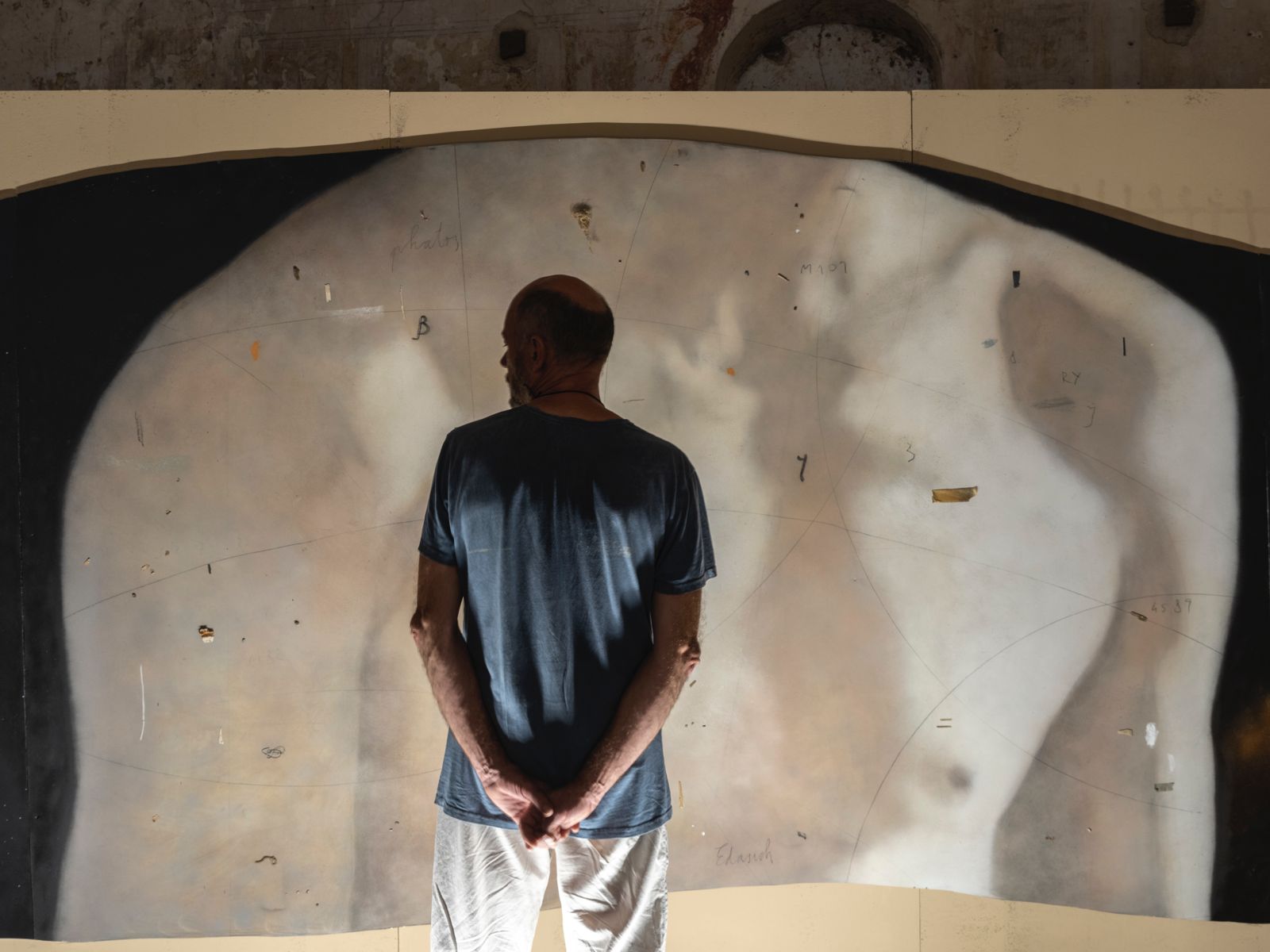
Paul Valéry's lucky phrase: "the deepest part of man is his skin" indicates the same thing. This is the case in one of the works exhibited by Jordi Isern called Cosmos II, in which on the torso of a woman, on her skin, we observe numbers that correspond to star formations or galaxies, the human microcosm in union with the macrocosm.
You could conclude that I see in these artists an interest in the simple gaze, in reality and what is immediate that nature and especially the body offer. By cultivating both positions, that of real light and abstract darkness, one accesses distant universes. This is how one finds the essence of true spirituality. The group dissolved prematurely without, in my opinion, having fully appreciated the interest that this authentic artistic manifesto had. A powerful trend to which, with all certainty, other Empordà artists would have joined. Perhaps we still have time to continue walking along this Uncertain Path.

You may be
interested
...