Exhibitions
Jeffrey Gibson at The Broad: Art, Identity, and Indigenous Resistance
The Broad museum in Los Angeles presents until September 28, 2025, the exhibition Jeffrey Gibson: The Space in Which to Place Me , a vibrant tour that brings to the city the project with which the artist became the first Indigenous person to represent the United States with a solo exhibition at the 2024 Venice Biennale.
The exhibition brings together more than 30 pieces—paintings, sculptures, murals, flags, and audiovisual installations—that invite you to explore a colorful and kaleidoscopic space. Gibson interweaves Indigenous artisanal tradition with elements of pop culture, music, LGBTQ+ history, and the founding texts of the United States, building a critical dialogue charged with energy and visual beauty.
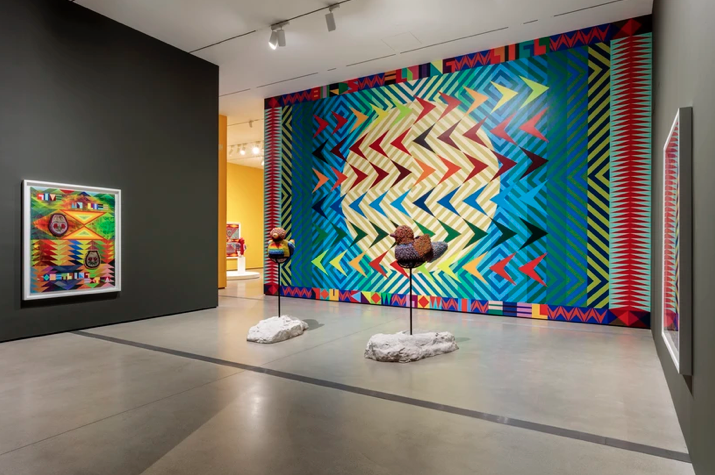
Among the standout pieces is "We Want to be Free ," a human sculpture decorated with multicolored beads that connects the Civil Rights Act of 1866 with current struggles for equality. Another highlight is a bronze sculpture featuring moccasins embroidered with the inscription "I'm gonna run with every minute I can borrow," transforming a symbol of defeat into a gesture of resilience and hope.
The exhibition's title comes from the poem "Ȟe Sápa" by Oglala Lakota poet Layli Long Soldier, evoking notions of identity and belonging through a shared poetic and visual language. The exhibition thus becomes an invitation to rethink memory, representation, and the future from an aesthetic that celebrates the collective. The Space in Which to Place Myself is Gibson's first solo exhibition at a museum in Southern California.
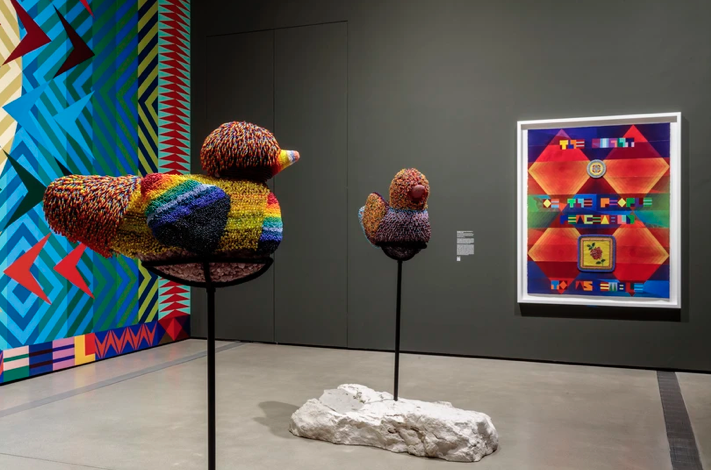
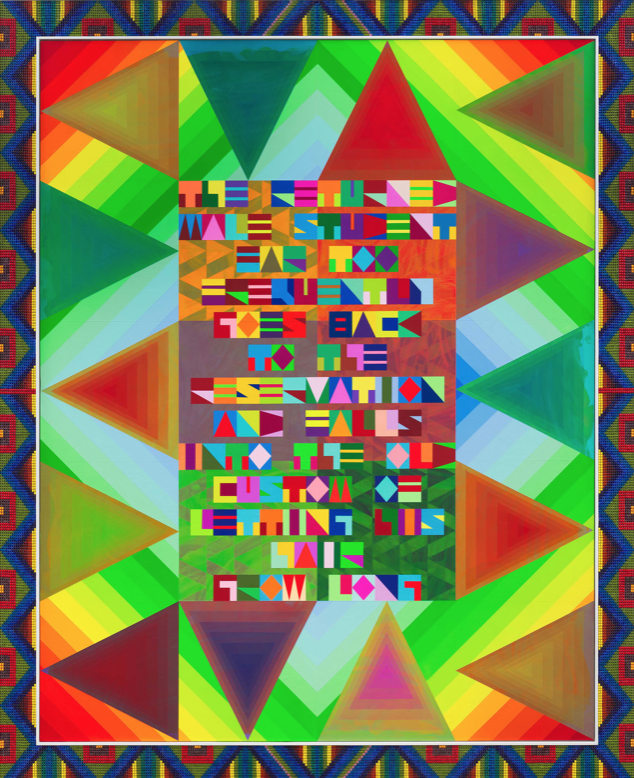
The Broad has added Jeffrey Gibson’s 2024 painting, The Returned Male Student Too Often Returns to the Reservation and Falls into the Old Habit of Letting His Hair Grow Long , originally presented at the Venice Biennale, to its collection. The work combines Gibson’s signature use of patterned text, vibrant colors, and glass beads and is directly inspired by a 1902 letter written by the Commissioner of Indian Affairs to a school superintendent in Central California, instructing Indigenous children to cut their hair and adopt Eurocentric standards of dress and appearance. The painting transforms this history of oppression into a manifestation of resistance in the face of tyranny and, at the same time, a celebration of Indigenous cultural identity.


You may be
interested
...