interviews
Íñigo Navarro: "I believe in vocational gallery ownership, and that's what the Leandro Navarro Gallery is all about."
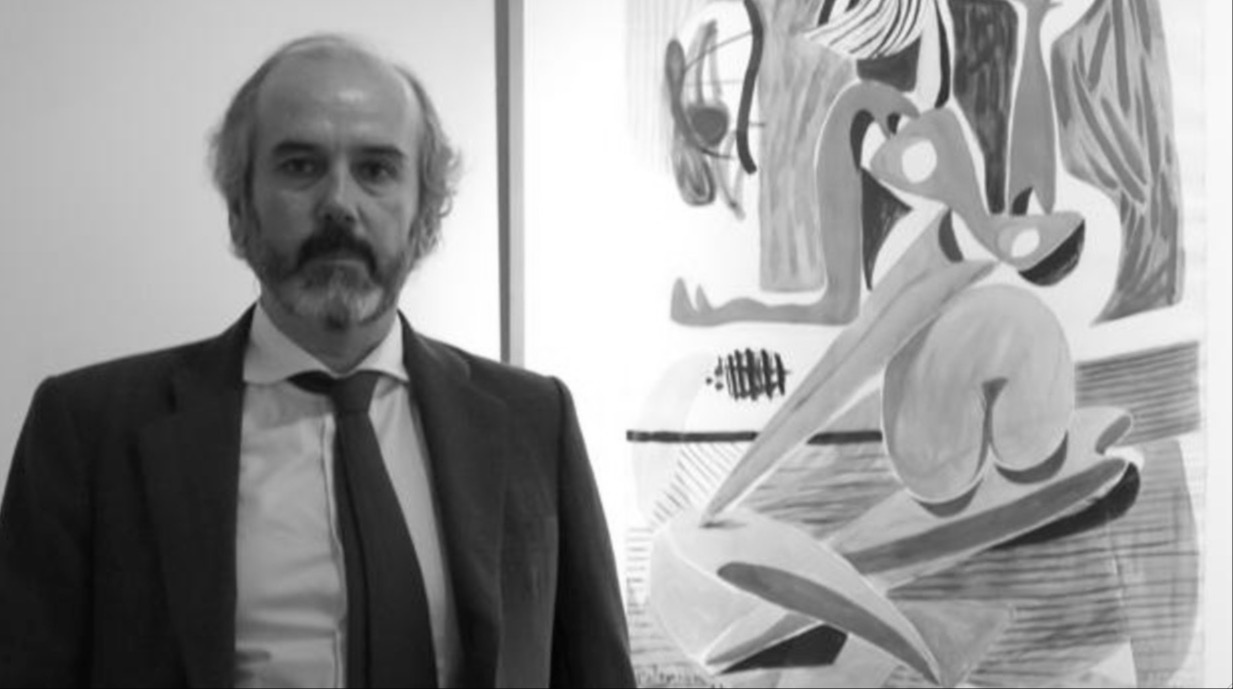
Located in the heart of Madrid, the Leandro Navarro Gallery opened its doors in 1978 and has occupied an elegant 18th-century building at 1 Amor de Dios Street since 1983. With a solid track record focused on Historical Avant-garde and Modern Art, the gallery stands out for its curated annual exhibition program and its presence at top-tier art fairs such as ARCO. It is currently managed by Íñigo Navarro, the founder's son, who joined the family project in 1987 and has continued to consolidate its prestige on the national and international art scene.
Ricard Planas Camps: What are the main factors currently influencing the gallery scene in Spain, and what aspect would you highlight as the most significant right now?
Íñigo Navarro . The gallery sector in Spain is in good health. There's a generational shift; a number of galleries have closed due to age, but the number of galleries opening at the same time is truly significant. There are even entire areas that are being nourished by gallery activity in areas where it was previously unthinkable, such as Carabanchel, where a truly promising emerging gallery neighborhood is emerging with very significant offerings.
RPC Is there any difference with international gallery ownership?
LN Unlike the international world, in Spain, the gallery scene remains dominated by professionals, vocational artists, small businesses, and small companies that set up their galleries to offer a different perspective or a different path. In other countries, a world of tremendous macro-enterprises with extraordinary capital, possibly from investment funds, is emerging.
RPC Are galleries with a different profile emerging now?
For some time now , the personal touch of galleries based on vocational professionals has been lost, and large businesses are emerging, large companies with immense capital that are recruiting the most cutting-edge artists in pursuit of absolutely global promotion for this global world, with exhibitions around the world. Here in Spain, that factor is slowly arriving, although there are some cases of mega-companies already establishing themselves, but it's moving more slowly, and a vocational gallery industry remains, which is what I believe in, along with the Leandro Navarro Gallery.
RPC The issue of VAT is a recurring issue. It's considered that we're not competitive enough because art and culture are viewed as luxury goods. Is that correct?
IN It is a key and important moment because, before the end of the year, there is a European directive that must designate what the reduced VAT rates will be, and that is where we are working by all means so that art is considered within the reduced VAT segments, and if that is not truly achieved, we will be in a very complicated situation compared to markets such as France, with 5.5%, Germany, with 7%, and England, with 5%.
If this isn't formalized, even though there's still a reduced VAT rate that's only the commission, not the full amount, if the 21% VAT rate were maintained, we would have real difficulty competing in the international market. This is a crucial moment in which we must denounce the urgency and absolute necessity of change.
RPC: There was a protest action at Arco this year, where Spanish galleries turned off their lights, and it gave a sense of unity to be able to push harder in this regard. Was there a lack of cohesion in key aspects?
Spanish galleries are constantly holding meetings with the ministries of both Culture and Finance to raise awareness and make them see that this requires support and that we cannot be left behind in an entire European market that is organizing itself toward a much lower and more flexible VAT rate.
Now it's up to our politicians to understand that this country's art and culture attract, among other things, 100 million tourists who come not only to the beaches, but undoubtedly to see a country with an extraordinary historical heritage. If we want all of this to continue thriving and to continue having a voice in the international art world, we must have support and not be against what's happening in the world.
RPC: Why is there this perception that cultural commitment is an antisocial or elitist commitment, when it is a social cohesive force and also contributes to social mobility?
IN There are a number of direct and indirect jobs, all based on the culture of this country, the businesses in which we are immersed in the cultural sector, and which ends up being a high percentage of the Spanish GDP.
We are galleries located in city centers with free public spaces, no entry fees, and an extraordinary exhibition program, both in Madrid, Barcelona, and, of course, in some Spanish cities. We are constantly promoting the dissemination of art, supporting collecting, and, of course, supporting artists and such. It's hard to understand why we are repeatedly portrayed as a more elitist sector.
RPC Is it possible that it is because of the concept of a cultural enterprise?
The key is that fantastic combination of the public and the private. We have to join forces together, positioning Spanish art and Spanish culture at the top. If we're pitted against each other, and we think it's an elitist sector, that no concessions can be made, that subsidies are extremely scarce and insignificant enough to undertake international projects, if at the same time we have a truly weak patronage law, which doesn't in the least encourage major Spanish collectors to build collections and then be able to deduct taxes based on all the collecting they've created, then we will continue to be in a very different situation than the one surrounding us, and that has consequences.
RPC After the emergence of many collectors in Madrid, there's another wave of people embracing Spain, the capital, and other cities as well. How do you see this? How do you identify it? What opportunity does it open up for us?
This whole Latin American world settling in Spain is giving a lot of life to the sector, because large Latin American collections have come to Spain, there have been agreements between these collections and national museums so that they can be exhibited and we can all learn about Latin American art we weren't familiar with. At the same time, there's enormous interest among these collectors in expanding their collections with art by Spanish artists. All of this only expands our market. We're also starting to be welcomed at Latin American fairs, at Latin American biennials, that natural bridge that is Spain and Latin America.
RPC Any present or future dreams, challenges, or wishes for the Gallery?
IN Feeling like we are completely immersed in the great world market, that we are on equal footing with countries like France, Germany, Italy, Switzerland or England and that our artists are also beginning to be valued in international markets, that international auctions have as a reference the production of what is also being done in Spain as a value, that there is an international collecting community that also supports our artists instead of always being a little behind all these economic movements.
RPC: Do we have complexes having this capital of first-class artists?
The complex we have is that, despite having an extraordinary artistic level and generations of first-class artists, they haven't reached as high or been as highly regarded as they should have been, and that artists of the same generations from other nationalities are much better positioned. This is something that deserves reflection and an understanding of why this has happened, why we haven't been able to stimulate international collecting enough to invest in great Spanish artists, with a few honorable exceptions, and why we are more excluded from top-level fairs with few Spanish participants. I think my wish would be for all of this to subside and for us to be fully integrated again.

You may be
interested
...