Exhibitions
Yves Klein in Palma with a journey towards the infinity of color
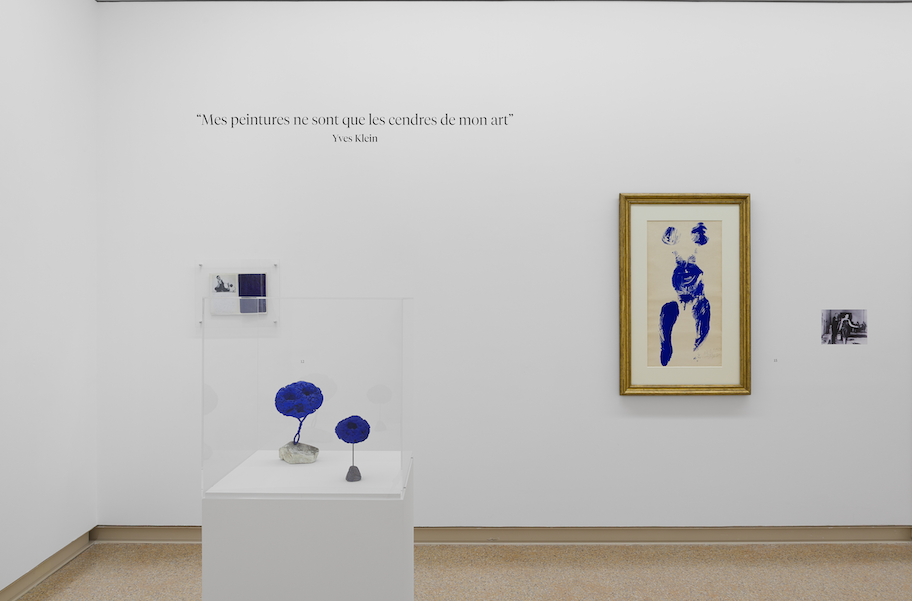
The Juan March Foundation in Palma presents, from June 2 to September 26, the exhibition Yves Klein: a bit of infinity , a small but intense retrospective dedicated to the French artist Yves Klein (Nice, 1928 – Paris, 1962), one of the most influential and radical figures in 20th century art.
The exhibition brings together some twenty works from institutions such as the IVAM, the Museo Nacional Centro de Arte Reina Sofía, and various private collections, offering a condensed overview of Klein's career through some of his most emblematic series. These include his celebrated monochromes, the anthropometries created with models as "human paintbrushes," and his iconic exploration of the ultramarine pigment, International Klein Blue, which has become a symbol of an artistic experience understood as physical, sensory, and spiritual intensity.
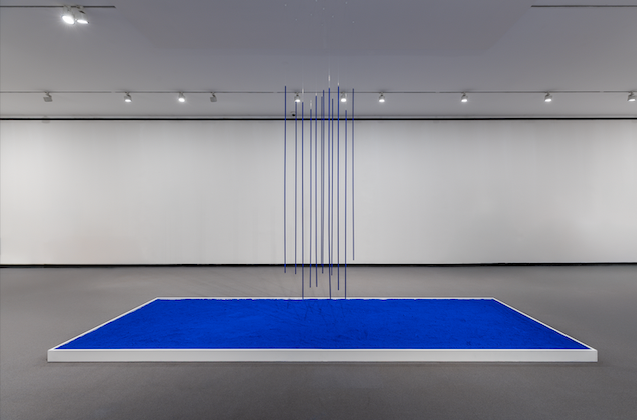
Yves Klein, Pluie bleue [Blue Rain], (S 36), 1957, posthumous edition 2018, © The Estate of Yves Klein c/o ADAGP, Paris / VEGAP, Madrid, 2026.
The exhibition, curated by Cristina Carrillo de Albornoz, not only revisits the artist's work but also focuses on his relationship with Spain. Klein lived in the country twice during the 1950s, periods that proved decisive in the development of his artistic thinking. Documents such as his travel diary and his first artist's book allow us to reconstruct the beginning of his investigations into monochrome and color as a complete field of experimentation.
According to the curator, these early experiences were key to the evolution of her sensibility: during this period, Klein became interested in disciplines as diverse as jazz, literature, and Zen philosophy. However, her first great passion was judo, a martial art she practiced rigorously and which profoundly influenced her conception of the body, gesture, and discipline.
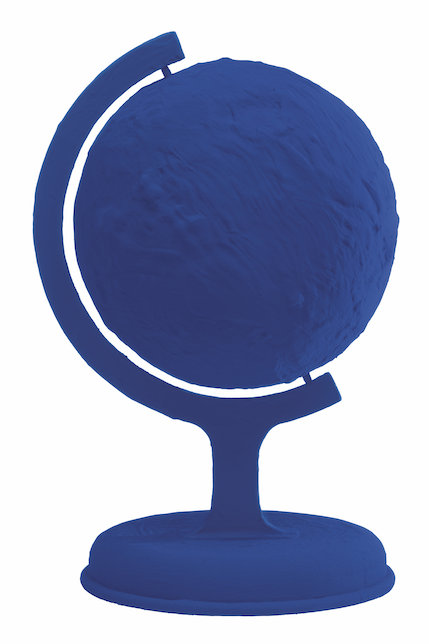
Yves Klein, Blue Globe, (RP 7), 1957, posthumous edition 1988, © The Estate of Yves Klein c/o ADAGP, Paris / VEGAP, Madrid, 2026.
This relationship between corporeality and aesthetic contemplation would become one of the central themes of his work. The body as an instrument, color as a total experience, and art as access to the absolute articulate a quest that, in the words of the exhibition project itself, transforms creation into a form of approaching the infinite.
You may be
interested
...