Exhibitions
Fragile architectures of the everyday with Anastasia Douka
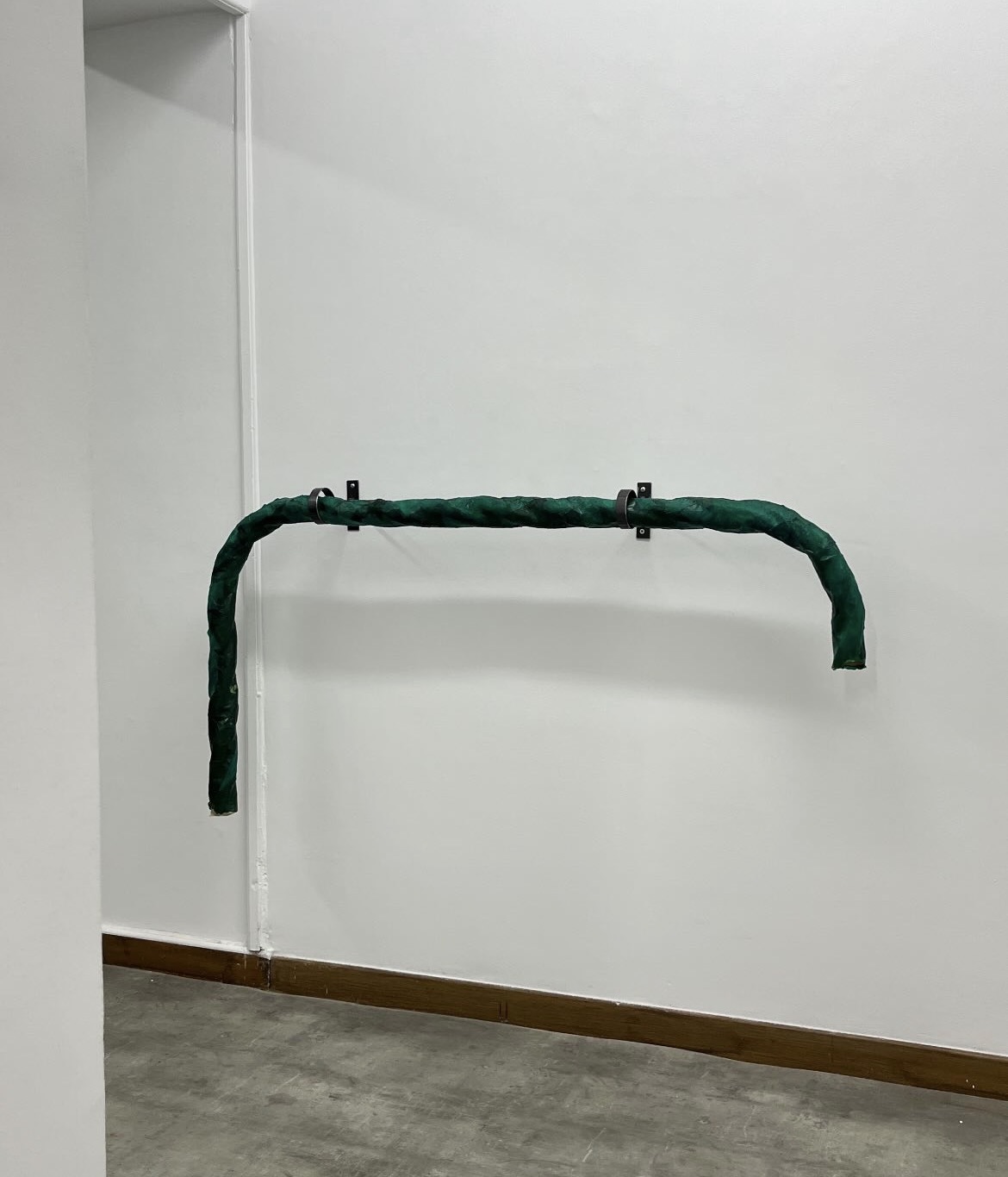
The Callirrhoë Gallery in Athens presents Anastasia Douka's solo exhibition, Ta paida rouphan , an installation that unfolds as a journey through fragments within the exhibition space. Far from constructing a linear narrative, the artist proposes an environment where objects—a railing, a coffee waste drawer, a shoe-sewing machine, or a drill with tape—appear as remnants or traces of actions, all rendered in paper. This inherently fragile material becomes the conceptual axis of the exhibition: what we normally understand as stable or functional is revealed here as vulnerable, provisional.
Douka's sculptural practice lies at the intersection of the domestic and the strange. Starting with everyday gestures and recognizable routines, the artist deconstructs forms and reconfigures them in unexpected relationships, generating a landscape where functionality loses its certainty. At the heart of the exhibition—which can be seen in Athens until May 16—emerges the cylinder as a structural form: an element that acts as a conduit, support, and link between the different objects, articulating a system of connections as unstable as it is suggestive.
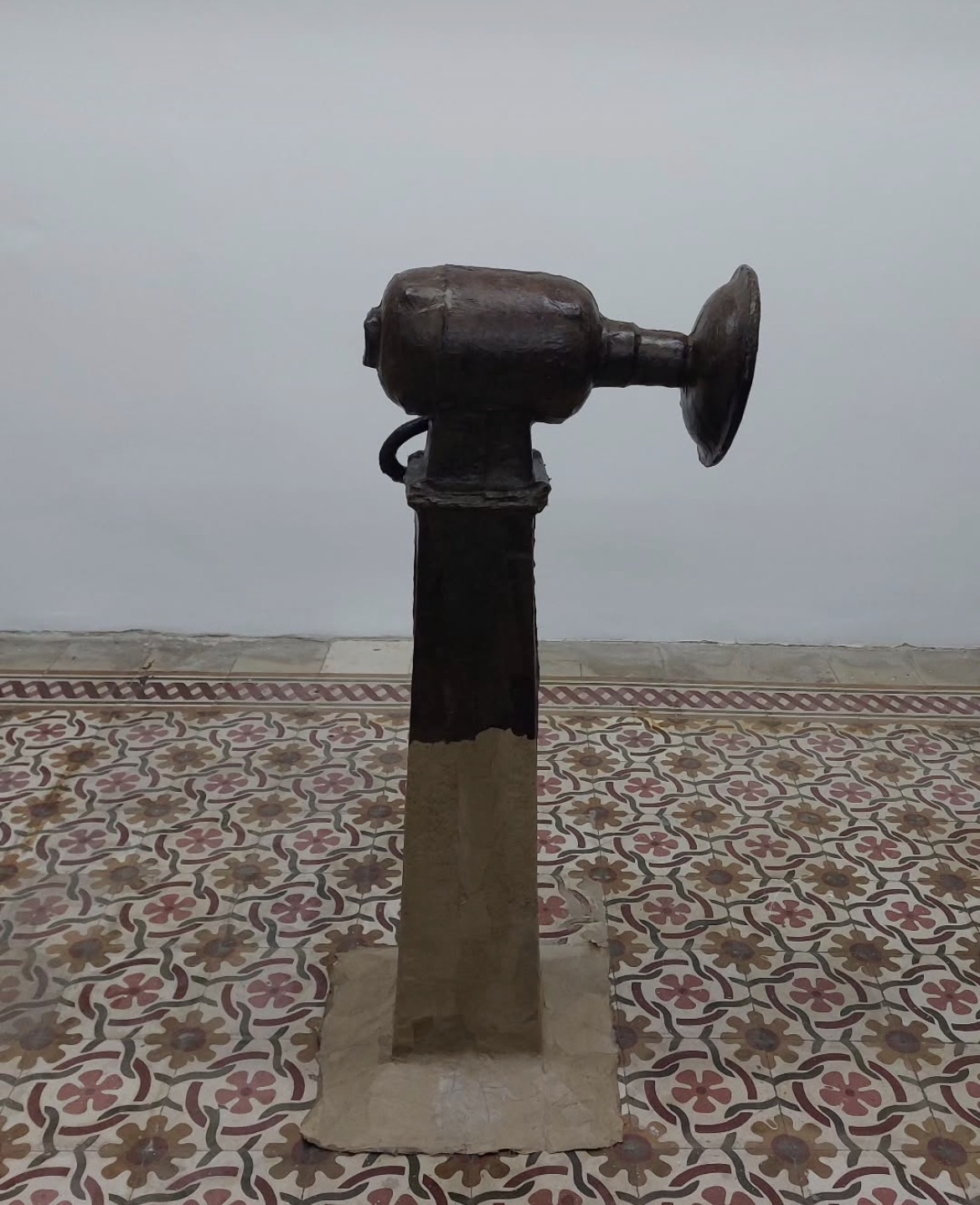
This open and process-oriented nature is deeply linked to the artist's working logic. Douka has noted that when she knows exactly how to create a work, she loses interest in making it. Her practice is therefore based on uncertainty and the constant possibility of transformation: "everything that is built can be broken, rebuilt, and broken again." In this sense, the pieces exist not only as objects but also as transitory states, marked by an internal tension between the desire to persist and the inevitability of their decomposition.
This tension is also evident in the tone of the works, which seem to challenge themselves with a playful, almost ironic gesture. As if they were “sticking their tongues out,” they question their very status as objects constructed before engaging the viewer. Within them coexist an intense drive for existence and an awareness of their potential disappearance. The emotional analogy is unavoidable: as in human relationships, where attachment coexists with the possibility of loss. In this sense, Douka's work also evokes the experience of raising children: children who grow up in close proximity only to inevitably separate.
Within this framework, the railing acquires a significant presence. Positioned along the right side of the exhibition space, it appears as a form of support, a functional element that alludes to the adult body and the anatomy of the hand. However, its interpretation extends beyond the utilitarian. The railing can be understood as a timeline, segmented by colors that suggest different stages of life. Its meaning is also revealed through experience: objects that once seemed secondary or merely decorative—like this type of support—become essential with the passage of time. Perspectives change with age, and with them, the perception of what is necessary.

You may be
interested
...