Exhibitions
From Monet to Warhol: a fascinating journey through the evolution of modern art in Athens
The Basil & Elise Goulandris Foundation presents the temporary exhibition "From Monet to Warhol: Three Generations, One Collection" at its museum in Athens from December 6, 2025, to April 11, 2026. The exhibition offers a journey through the evolution of modern art. Curated by Marie Koutsomallis-Moreau, Head of Collections at the B&E Goulandris Foundation, and Marina Ferretti Bocquillon, Scientific Director Emerita of the Musée des Impressionnismes Giverny, the exhibition brings together an exceptional selection of 83 masterpieces by 45 artists who have defined the course of modern and contemporary art, offering visitors a visual panorama of extraordinary richness and diversity.
Throughout the exhibition, more than a dozen artistic movements unfold, from the early impulses of Impressionism to the most current proposals, in a carefully designed journey that allows visitors to observe the evolution of forms, languages, and perspectives over more than a century of artistic creation. Each work engages in dialogue with the next, creating an itinerary that not only traces the history of European and American art but also invites reflection on the connections, ruptures, and continuities that run through different generations of artists.
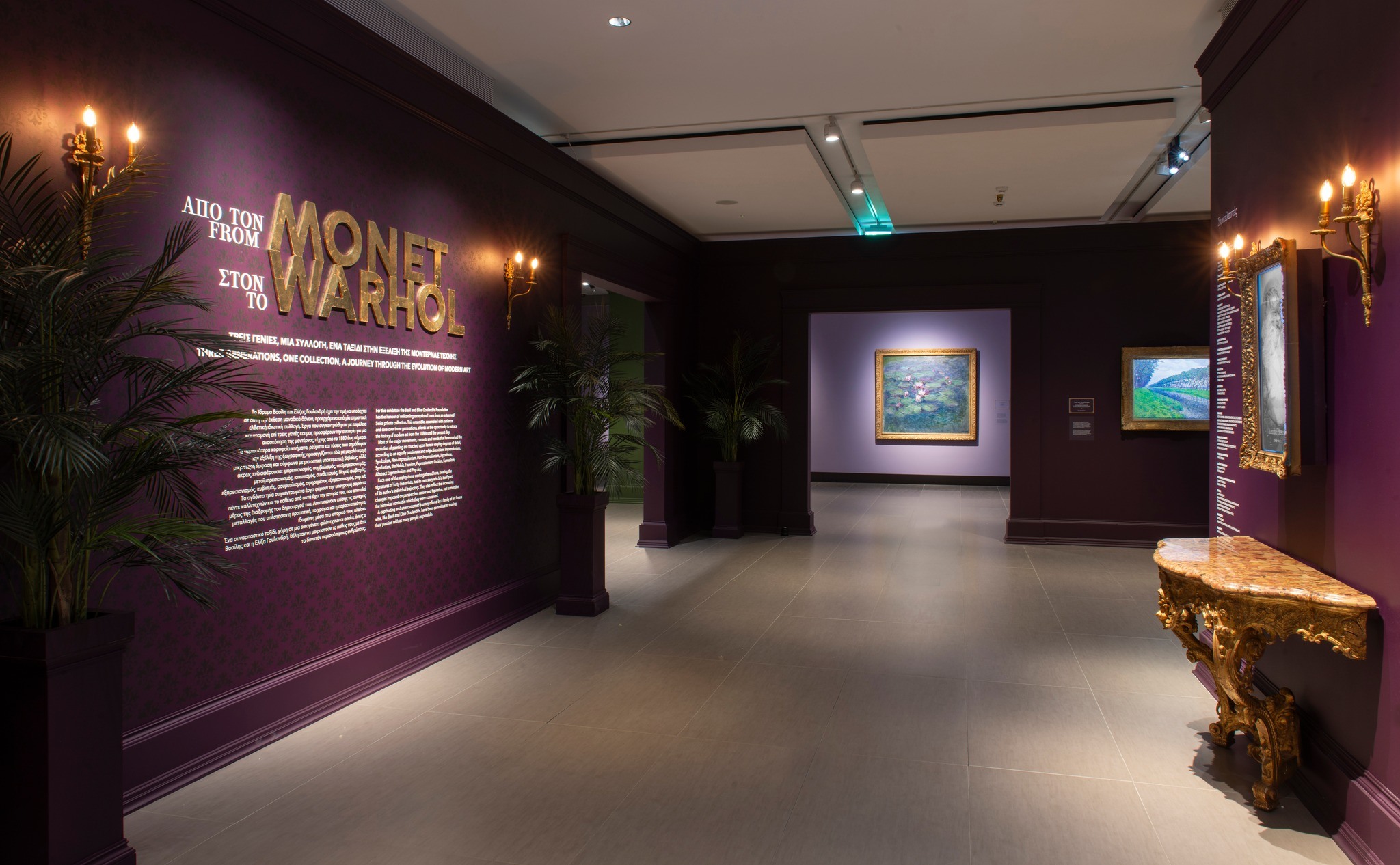
Among the exhibited pieces are some of the most representative masterpieces of modern European art, drawn from a collection built over three generations. This selection not only includes established names that have shaped the history of art, but also highlights lesser-known artists—true hidden gems that bring unexpected nuances and perspectives to the exhibition. The juxtaposition of major figures and less visible talents creates a dynamic and enriching dialogue, allowing visitors to appreciate not only the evolution of styles and movements, but also the depth and diversity of European artistic creation.
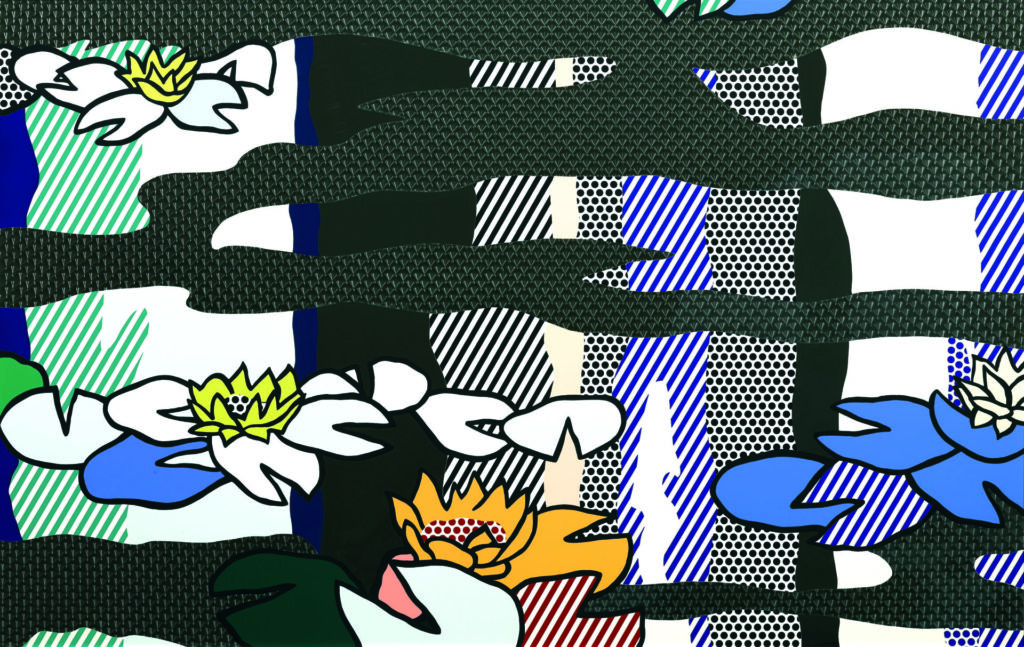
Roy Lichtenstein (1923–1997), Lake with Water Lilies and Reflections, 1992.
The exhibition also highlights the work of iconic figures such as Monet, Degas, Gauguin, Matisse, Kandinsky, Picasso, Munch, Lichtenstein, and Warhol, but also gives space to lesser-known artists who are fundamental to understanding the complexity of modern art. Impressionism is presented through two of its most emblematic exponents, Claude Monet and Edgar Degas, and is enriched by the presence of Berthe Morisot, whose work illuminates an aspect of the movement that has often been overlooked. Morisot's inclusion serves as a reminder of the essential role women played in the construction and development of Impressionism, offering the public a more complete and diverse view of this period.
Pablo Picasso is also represented in the collection by an extraordinary print, The Frugal Repast , which depicts weary, destitute bodies alongside simple pieces of bread. The piece was created during a period when the artist was exploring new printmaking techniques in Paris while facing personal and financial hardship, which lends the work a unique intensity and humanity, making it a powerful testament to Picasso's ability to transform adversity into artistic creation.
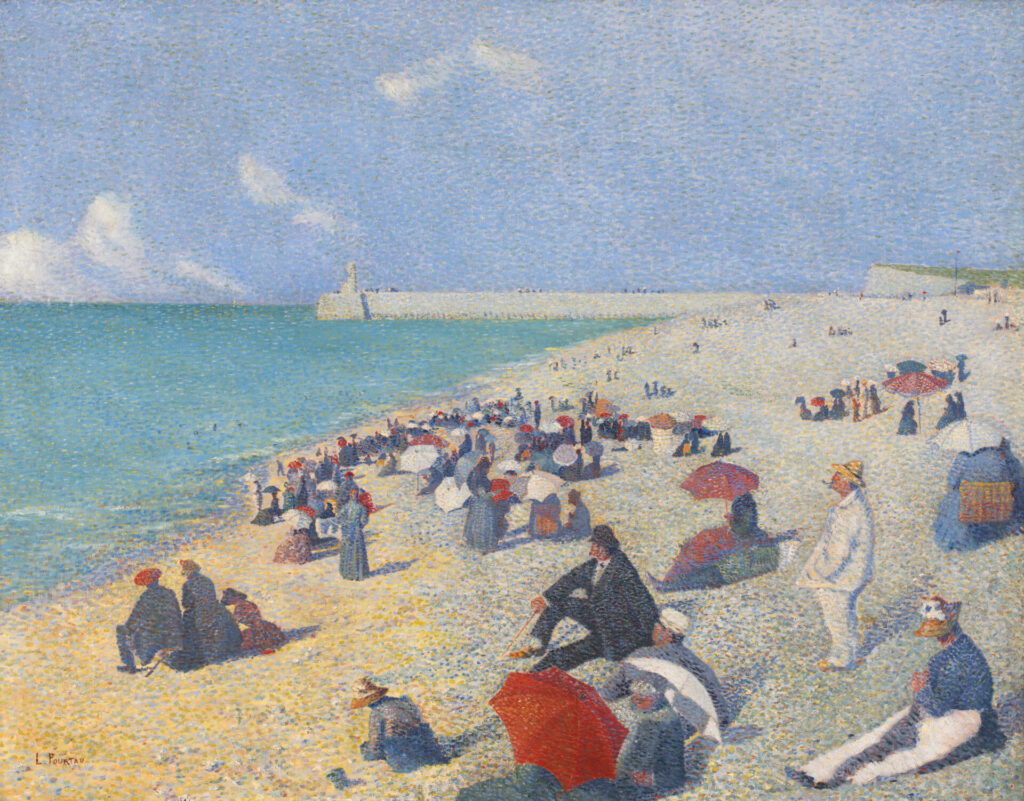
Léon Pourtau (1868–1898), Beach Scene, 1890–1893.
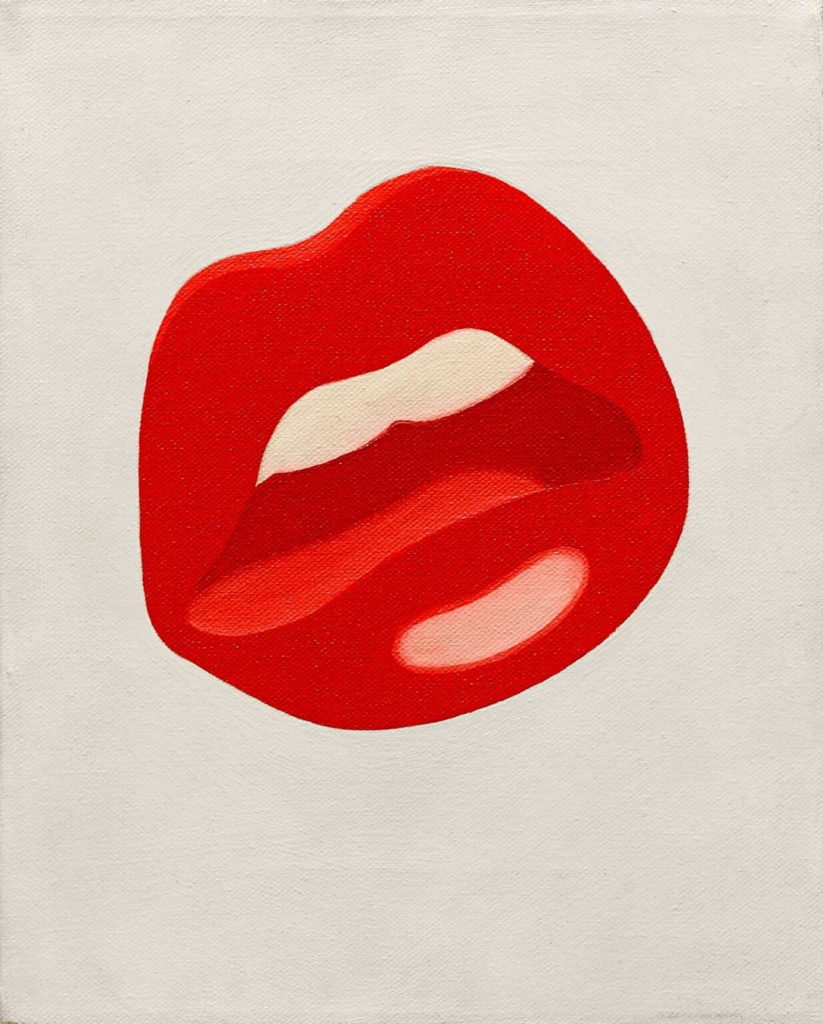
Towards the end of the exhibition, American Pop Art emerges as an evolution of European visual language, taking as its starting point a concept that originally arose in the United Kingdom. In this transition, Andy Warhol coexists with Man Ray, Tom Wesselmann, and Sam Szafran, whose works display distorted perspectives and an almost cinematic approach that redefines how we see the everyday world. The exhibition demonstrates how these artists managed to transform the trivial into the monumental and how, through color, form, and irony, they expanded the boundaries of what could be considered art, offering a critical and playful perspective on the society of their time.
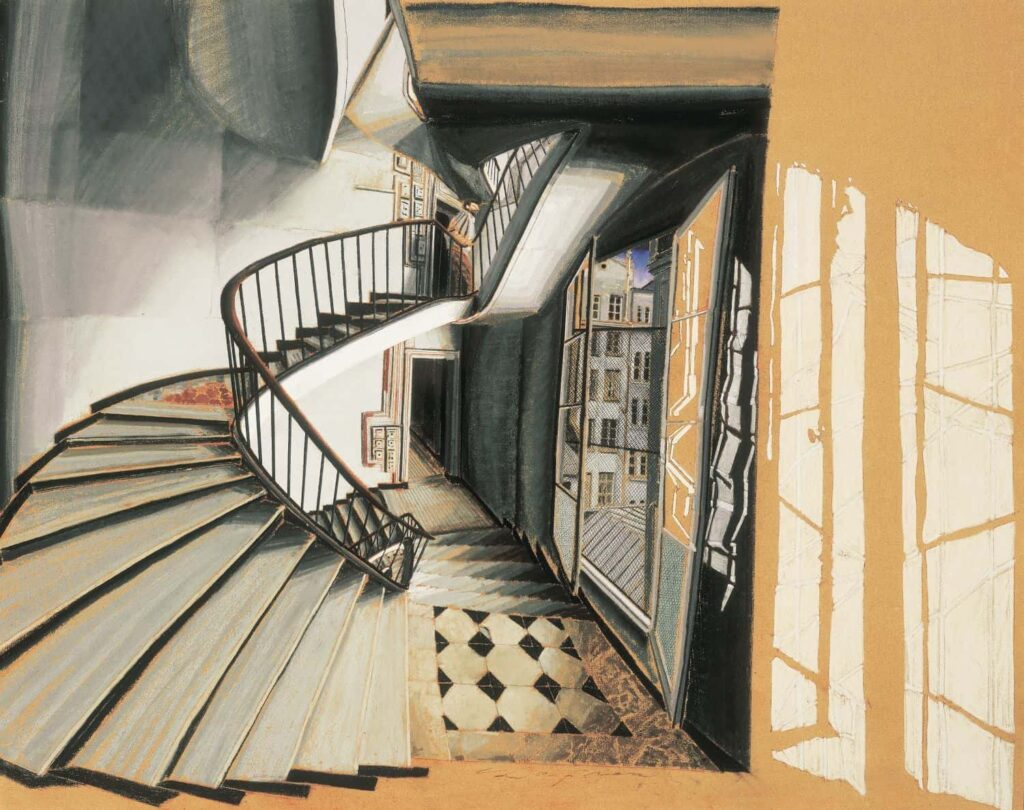
Sam Szafran (1934–2019), Staircase, 2002.

You may be
interested
...