Exhibitions
'Luso-Portuguese' redefines memory and identity in the work of René Tavares
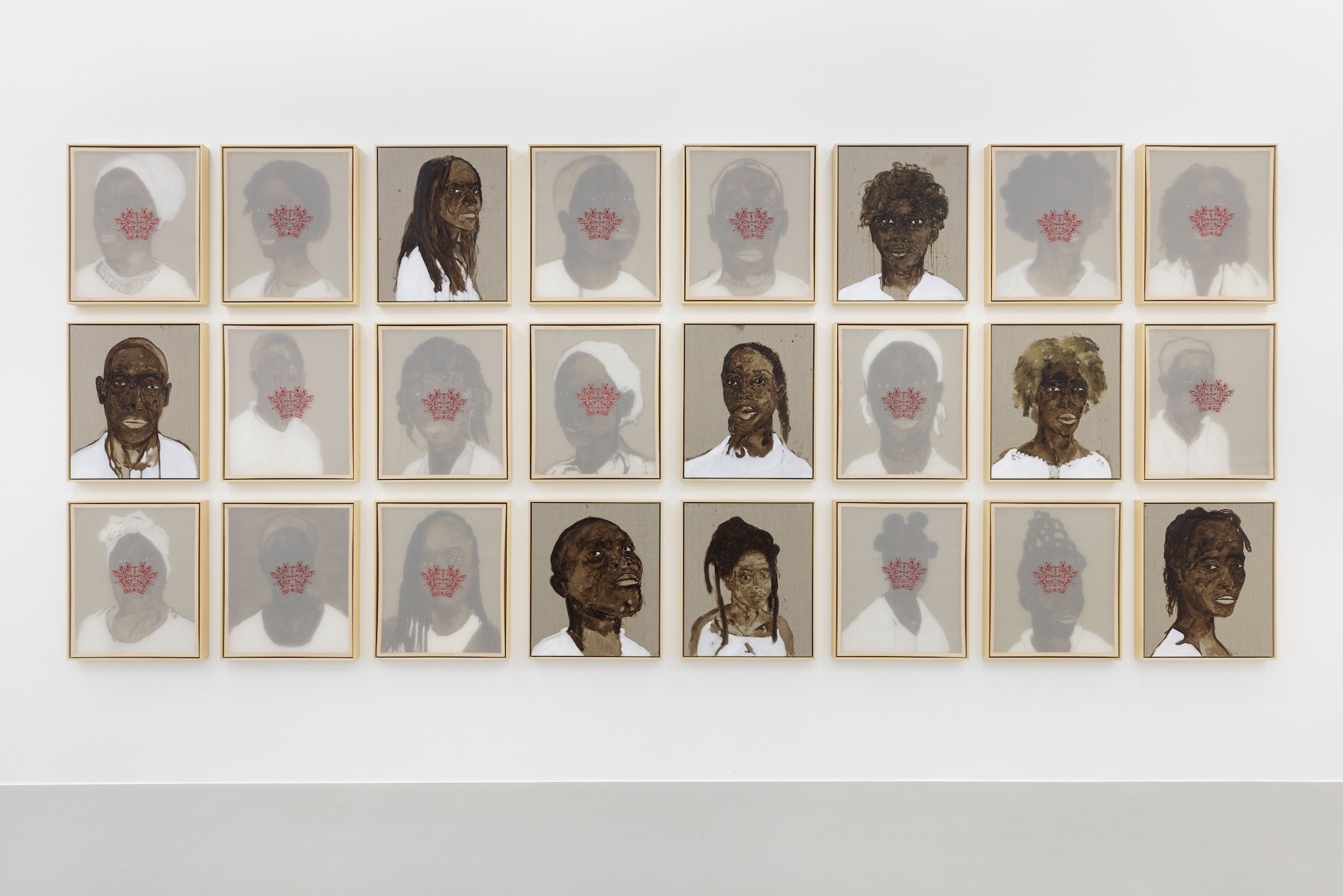
Luso-Portuguese , the new solo exhibition by São Tomé-born visual artist René Tavares, brings together a collection of works created specifically for Kunsthalle Lissabon. The exhibition delves into Tavares's research on historical memory and the sense of belonging, exploring different ways of representing presence, hierarchy, and memory. The pieces invite the viewer to reflect on how history is transmitted and transformed through images, bodies, and spaces.
On display from December 10, 2025 to February 28, 2026, Luso-Portuguese brings together a collection of works developed specifically for Kunsthalle Lissabon.
Luso-Angolan, Luso-Santomesse, Luso-Brazilian, Luso-Cape Verdean, Luso-Mozambican, Luso-Guinean, Luso-Timorese… But why not simply Portuguese? The exhibition begins with this linguistic irony to question the historical, colonial, and identity-related boundaries hidden in the very act of naming, in the very idea of the prefix “Luso,” and to ask who has the right to inhabit that category. Connected by histories of domination and circulation, territories in other latitudes were marked by a prefix that pointed to the “other”: the “almost,” the “not quite,” the “hybrid,” the “outside the norm.” A simple accent ceases to be a distinctive feature and becomes a marker of exclusion. In this context, “Luso-” becomes a critical tool: who can call themselves “Luso”? Who has permission to bear that prefix? And, above all, what does this uneven distribution of names, categories, and accents reveal?
René Tavares's practice articulates memory, identity, and diaspora through painting, drawing, photography, and textiles. His work reflects on the processes of cultural creolization, colonial legacies, and forms of resistance present in contemporary Afro-diasporic narratives. Through overlapping gestures and fields of color, Tavares creates compositions where figuration and abstraction intertwine, evoking both the cultural heritage of São Tomé and Príncipe and the hybrid and shifting realities of a postcolonial world.
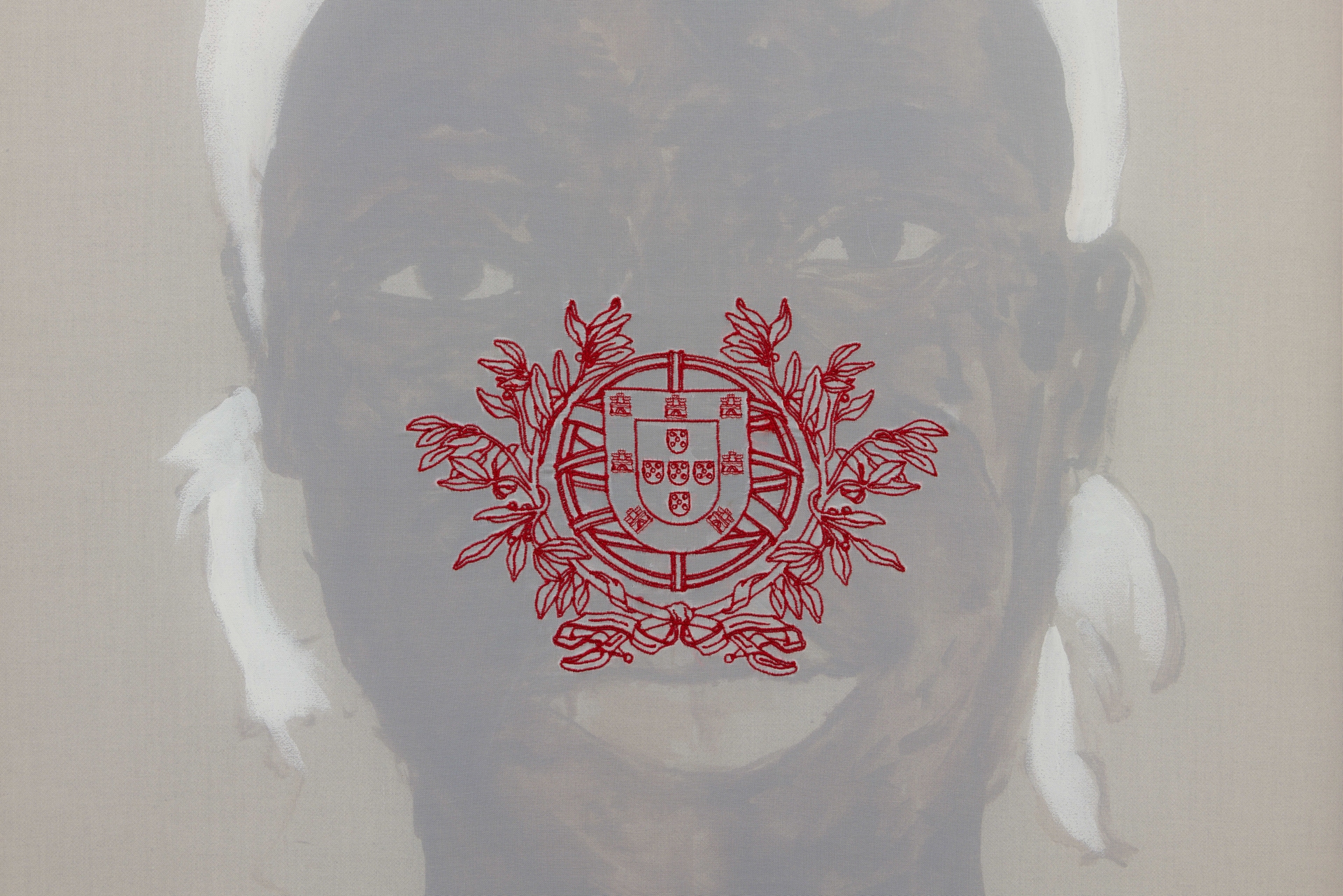
At Kunsthalle Lissabon, the artist presents a new group of works that delves deeper into his research on historical memory and the sense of belonging. Several figures appear superimposed with the Coat of Arms of Portugal, a gesture that raises essential questions: What does it mean to bear a coat of arms? Who has the right to it and who is excluded? What vestiges of power, heritage, or lack of recognition are inscribed in such a symbol?
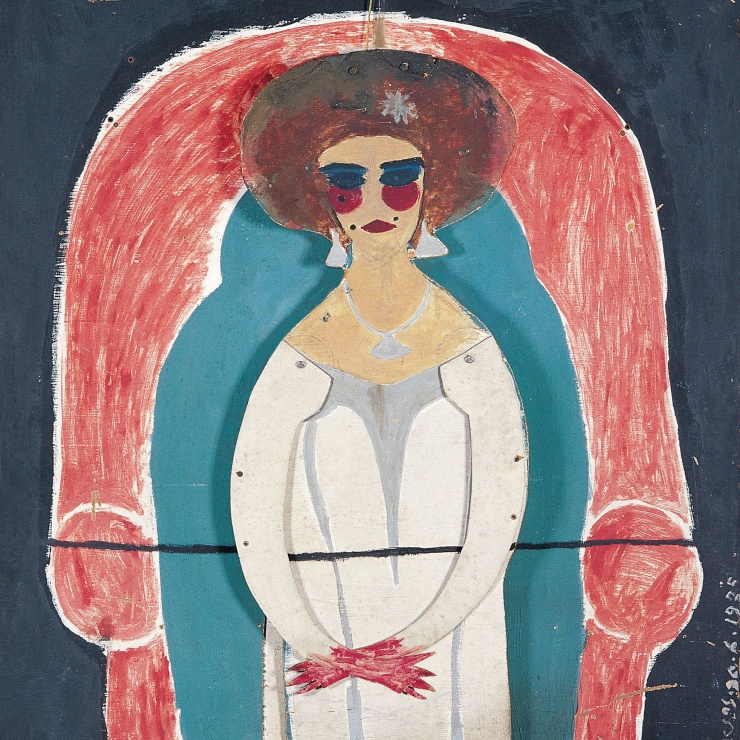
Among the new paintings, figures set in domestic interiors stand out, an unusual theme for the artist. In one work, a family poses in what could be their living room, surrounded by a collection of Vista Alegre porcelain that evokes a sense of Portuguese identity and how signs of prestige and belonging circulate and are reconfigured. In another portrait, a woman seated in a green armchair looks at the viewer with a firm and defiant posture, asserting her presence and agency.
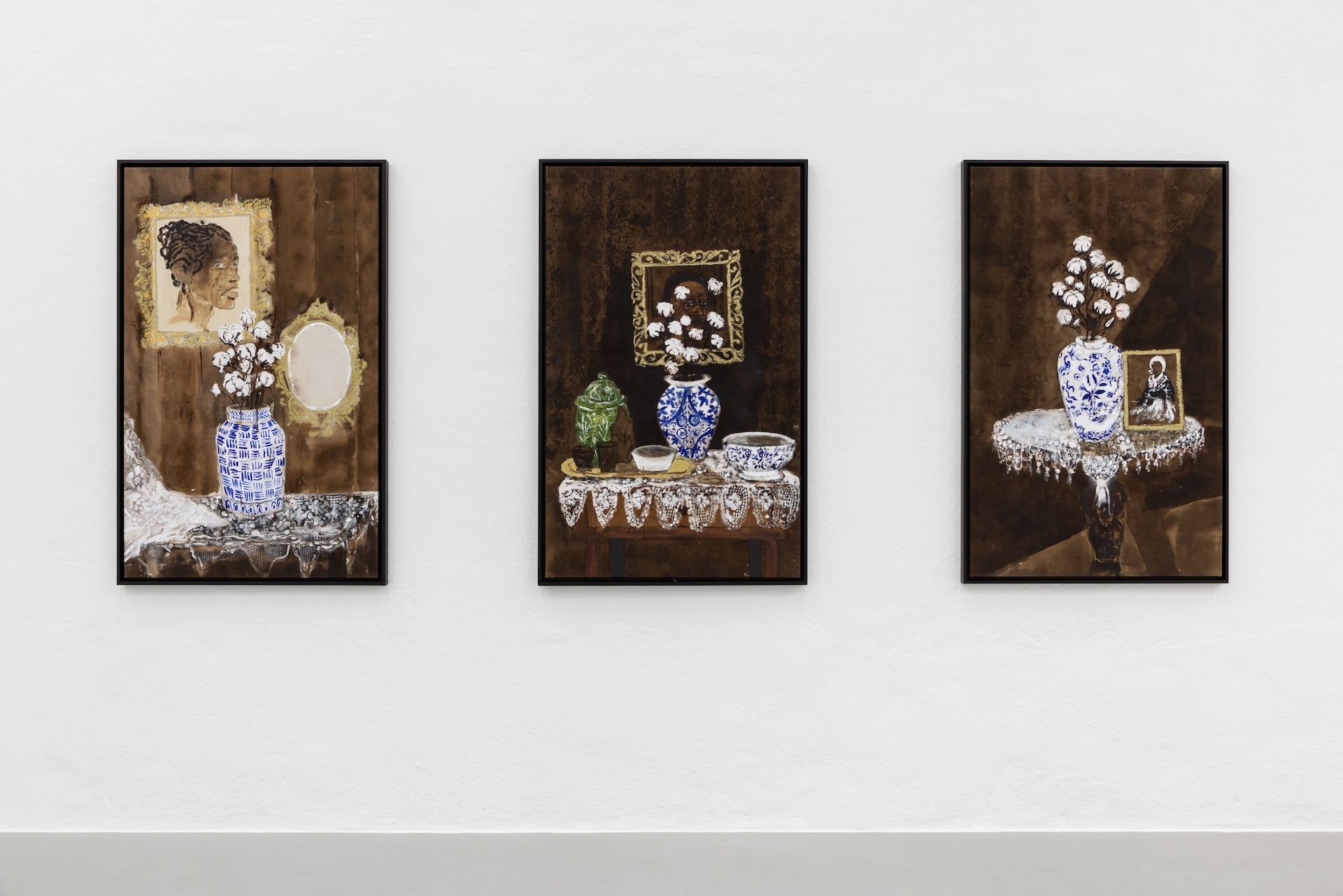
Alongside the portraits, a triptych of still lifes presents branches of cotton—material linked to colonial economies and historical violence—as domestic decoration, in blue and white porcelain vases on lace-trimmed wooden furniture, creating a tension between decorative beauty and stories of exploitation.
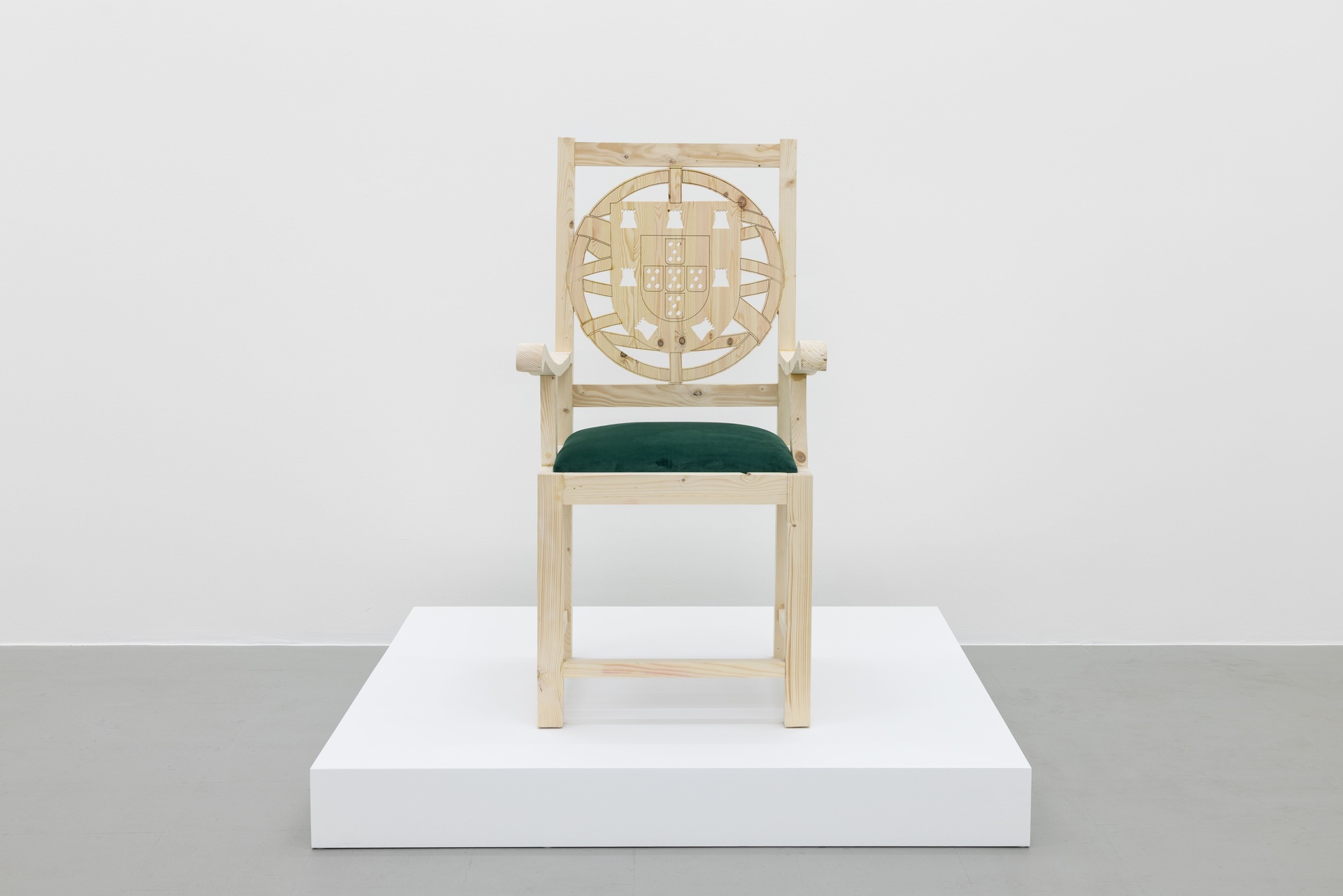
Completing the ensemble, an armchair alludes both to the Portuguese monarchical throne and to the presidential Cadeira dos Leões , currently part of the State Cabinet. This object raises questions about authority, representation, and legitimacy: who has the right to occupy that seat? How is the right to be in a position of power constructed or denied? In this dialogue, the seated woman becomes even more compelling: what body can claim that place, and what history permits or prevents such a claim?


You may be
interested
...