Exhibitions
'Earth Arts': contemporary art that engages with ecology and sustainability
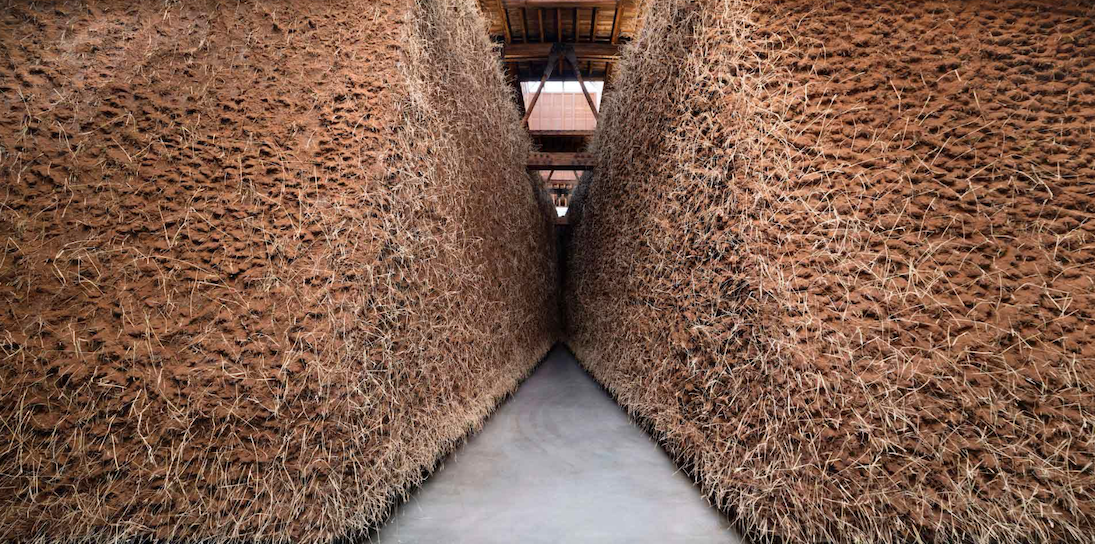
Manuel Cirauqui, curator of Earth Arts , describes the new exhibition on the second floor of the Guggenheim Bilbao as a challenge to the traditional museum model, historically associated with conservation: “The aim is to eliminate the organic evolution of materials.” The exhibition is presented as a collection of small clusters of works and artists that, circumstantially, come together. There is no intended homogeneity—nor was there ever—because imposing it would have meant manipulating the works themselves.
Artists from different generations and backgrounds have explored how to engage with the land when it most needs care and restoration: how to recognize and give back its gifts, how to learn from what it offers even when it seems to have lost its original richness. In Arts of the Earth , these works, projects, documents, and objects of ancestral knowledge are combined with a museography that prioritizes local, recyclable, and compostable materials, as well as an innovative approach to exhibition logistics. The result not only showcases the artists' creativity but also reaffirms and expands the Guggenheim Bilbao's commitment to sustainability.
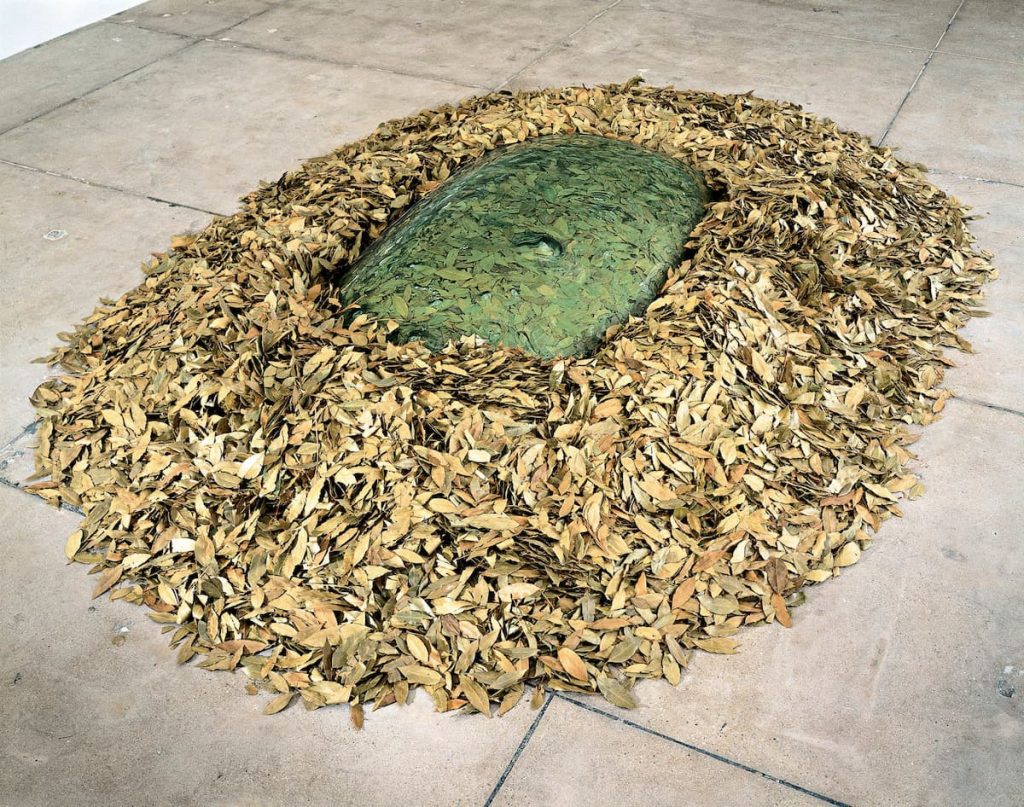
Giuseppe Penone, Nail and Bay Leaves (Unghia e foglie di alloro), 1989.
The temporary exhibition, which will be on view until May 3, 2026, brings together around one hundred works by more than 40 artists—sculptures, installations, drawings, archival materials, textiles, botanical interventions, and models. Its aim is ambitious: to explore the relationship between contemporary art and the earth, understood as a physical, symbolic, and ecological territory. The exhibition offers a broad perspective on artistic practices that, from the mid-20th century to the present, have worked with elements such as earth, leaves, branches, roots, and textiles, not as mere materials, but as sensitive allies within a shared ecosystem.
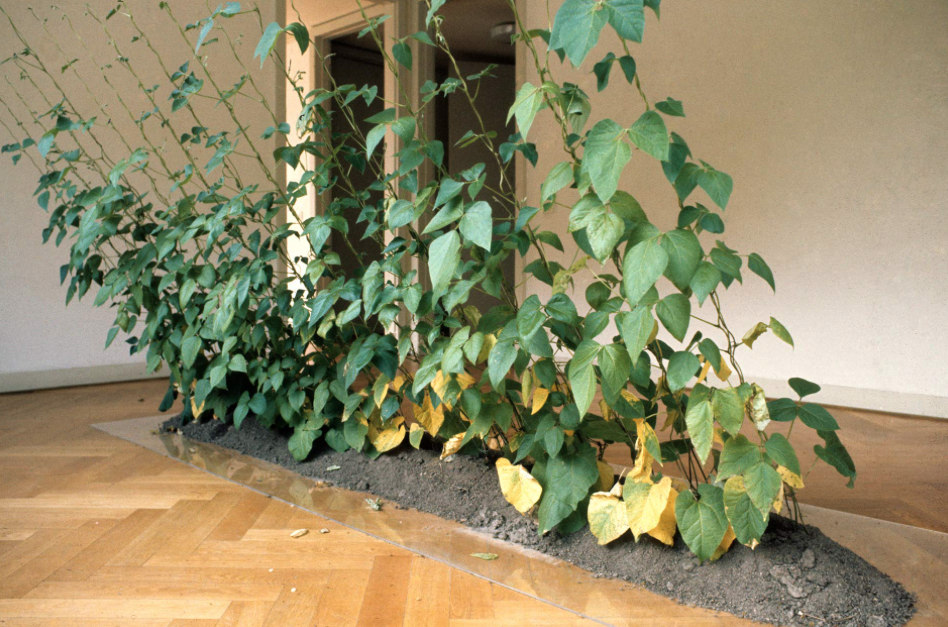
Hans Haacke, Directed Growth, 1970/72, Courtesy of the artist and Paula Cooper Gallery, New York, © Hans Haacke, VEGAP, Bilbao, 2025.
The works engage in dialogue through material, emotional, and symbolic affinities, without being divided into chapters or compartments. The exhibition unfolds like a living organism, featuring works by artists such as Delcy Moreles, Gabriel Orozco, Richard Long, Fina Miralles, Ana Mendieta, Joseph Beuys, Giovanni Anselmo, and Agustín Ibarrola, among others, where the connections emerge directly from the material itself. This methodology, closer to ecopoetics than to conventional museography, allows the pieces to form constellations of meaning around the soil, the earth, and its capacity for regeneration.
The exhibition's conceptual focus is the soil, understood not as landscape or surface, but as the stratum where life is generated, chemical transformations occur, metabolic cycles and regeneration processes are activated… and where wounds are also inflicted. At a time when soil degradation has become one of the most urgent—and simultaneously most invisible—ecological problems, the exhibition presents it as a living matrix: fertile, sensitive, and vulnerable.
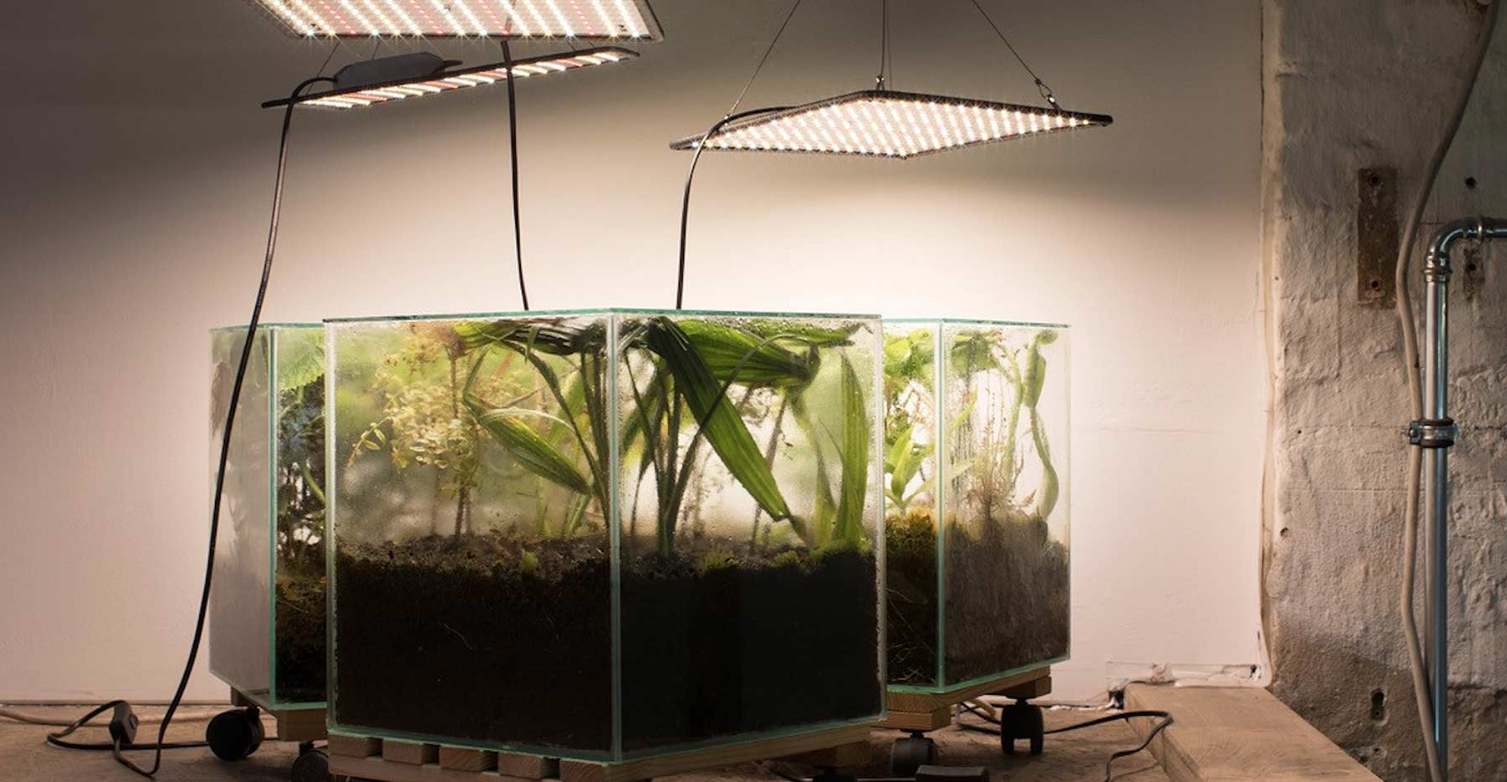
Isa Melsheimer, Wardian Case, 2023, Courtesy of the artist and Galerie Jocelyn Wolff, Paris, © Isa Melsheimer, Bilbao 2025, Photo: Studio Isa Melsheimer.


You may be
interested
...