News
Frank Gehry, the architect who transformed architecture into emotion and movement, has died.
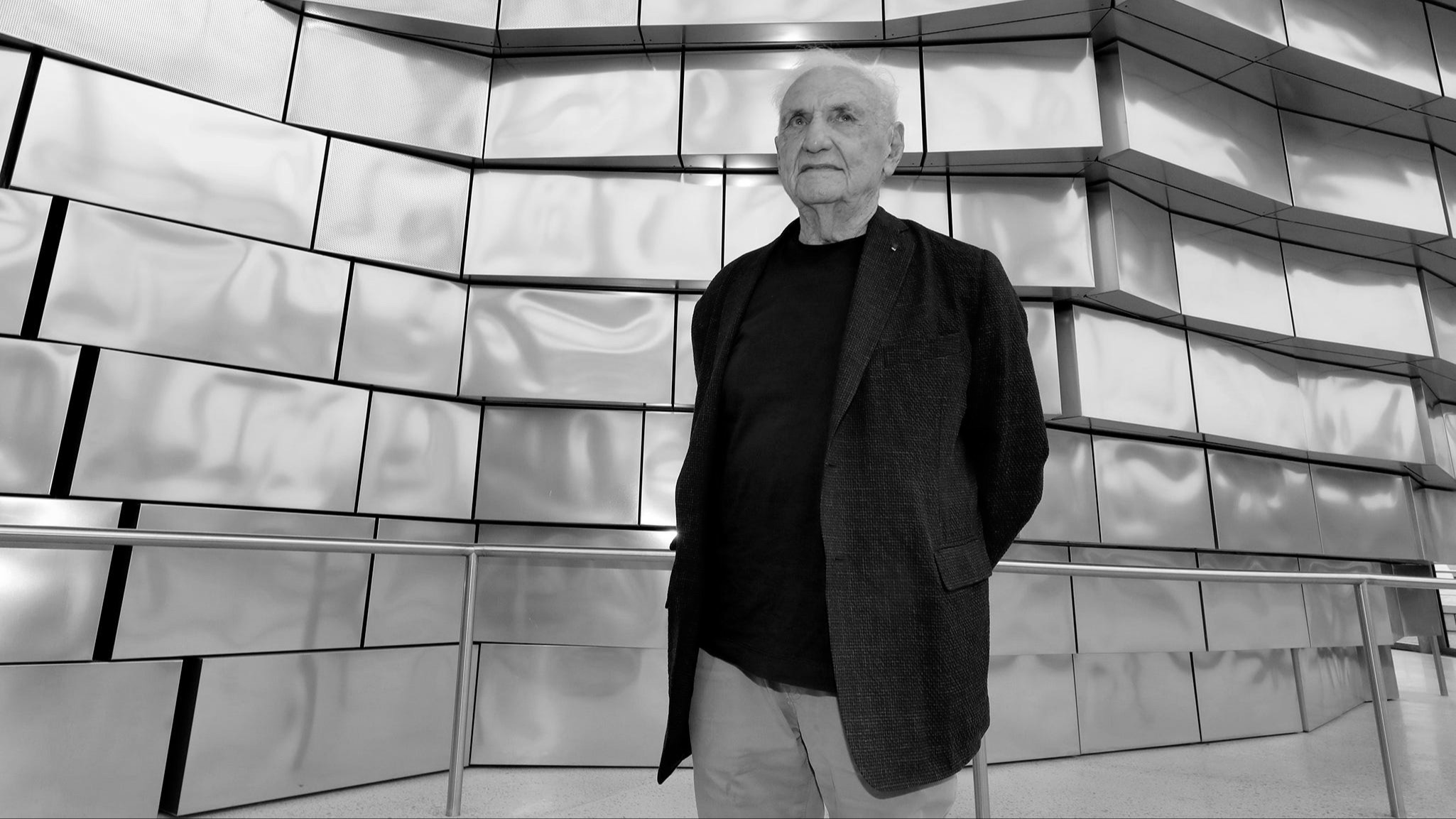
Contemporary architecture has lost one of its great visionaries with the death of Frank Gehry, a creator who transformed the relationship between city, art, and built space. His legacy remains in a constellation of buildings that, more than engineering feats, are sculptural gestures that redefined the aesthetic sensibility of the late 20th and early 21st centuries.
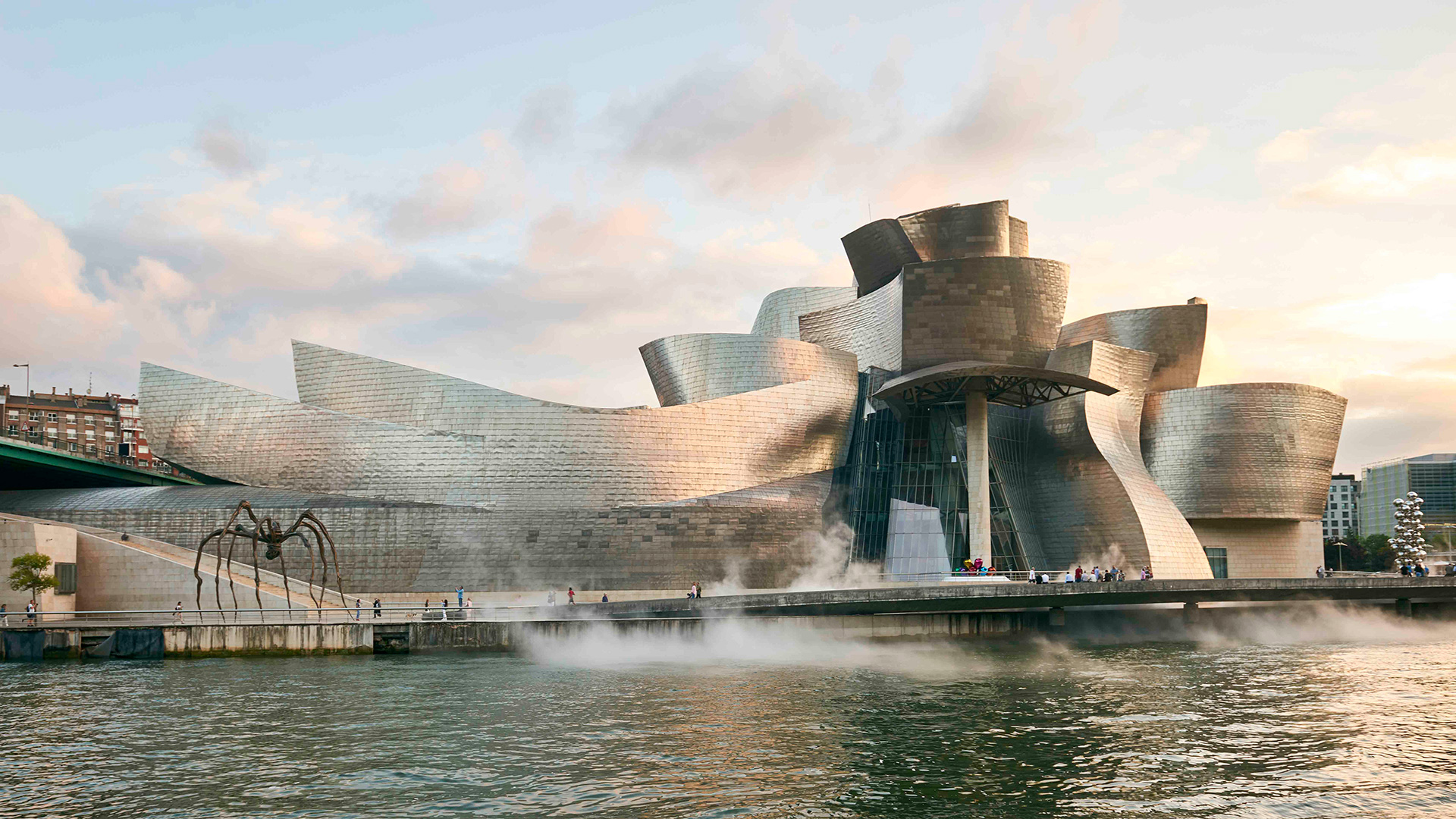
Among them, the Guggenheim Museum Bilbao stands out, inaugurated in 1997, a landmark that not only revitalized a city but also forever changed the way architecture is understood as a cultural force. Its titanium volumes, curved and shifting with the light, became a symbol of a new, emotional urbanism.
In the United States, the Walt Disney Concert Hall in Los Angeles cemented its mastery by transforming stainless steel into pure visual music. Its undulating surfaces envelop a concert hall celebrated for its acoustics and the warmth of its interior, which contrasts with the vibrant energy of its exterior.
Europe is also home to some of his most evocative works, such as the Dancing House in Prague, a building that seems to move thanks to the dialogue between curves and angles, or the Gehry Tower in New York — also known as 8 Spruce Street — where the undulating facade gives the skyscraper an unexpected softness.
In Paris, the Louis Vuitton Foundation rises like a glass ship in the heart of the Bois de Boulogne, an exercise in monumental lightness that demonstrates Gehry's ability to tame complex materials without losing poetry.
Frank Gehry, one of the most awarded architects of recent decades—winner of the Pritzker Prize in 1989 and the Prince of Asturias Award for the Arts in 2014—left an unmistakable mark on Barcelona with The Fish, a monumental sculpture with which the City Council sought to redefine the city's waterfront. In the heart of the Olympic Port, next to the two towers, stands this colossal piece, 56 meters long and 35 meters high, whose dynamic and luminous metal structure seems about to dive headfirst into the waters of the Mediterranean directly opposite.
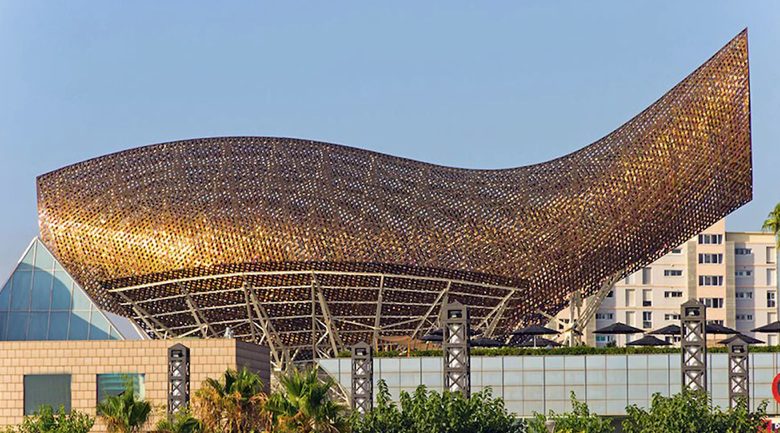
Fish from Barcelona.
In other latitudes, the Biomuseo in Panama displays intense colors and disarmed geometries that celebrate the biodiversity of the isthmus; while institutions such as the Weisman Art Museum in Minneapolis or the MIT Stata Center in Cambridge show the architect's more experimental side, capable of challenging traditional grammar to create dynamic, almost theatrical spaces.
Even in museum projects such as the expansion of the Denver Art Museum, Gehry demonstrated that he could engage with different scales and contexts without abandoning his unmistakable formal identity.

Neuer Zollhof, Dusseldorf, Germany.
As a child, he enjoyed art and building miniature cities, but, according to Gehry, it wasn't until his twenties that he considered pursuing architecture, after a university professor recognized his talent. "It was the first time in my life that I was truly good at something," he said.
In 1954 he enrolled at the University of Southern California to study architecture, an institution where he would later also become a professor. He also taught at Yale and Columbia University.
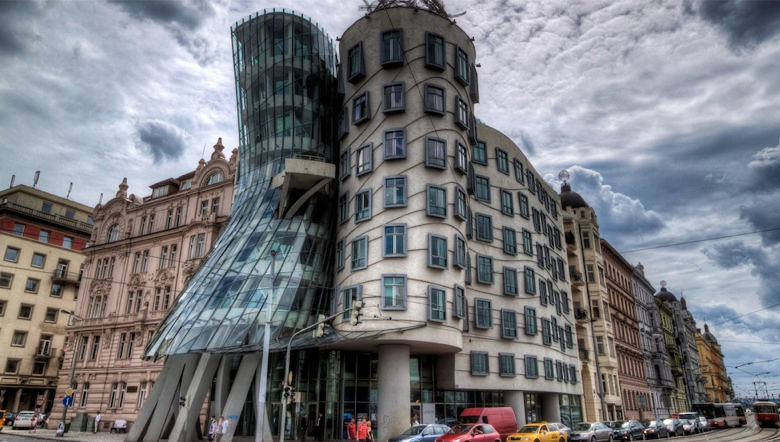
House of Dance, Prague, Czech Republic.
Together, these works form a map of imagination and creative risk. Gehry didn't just design buildings: he proposed a different way of inhabiting the world, inviting us to see architecture as a force capable of inspiring emotion, surprise, and beauty. Today, with his passing, a legacy remains that will continue to shine in each of those metallic surfaces that still seem poised to move with the wind.
“Your best work is an expression of yourself. You may not be the best at it, but when you do it, you are the only expert.” – Frank Gehry


You may be
interested
...