
Exhibitions
Jonas Forchini exhibits at Société Interludio and the Musée national de la Marine in Paris the poetics of the depths
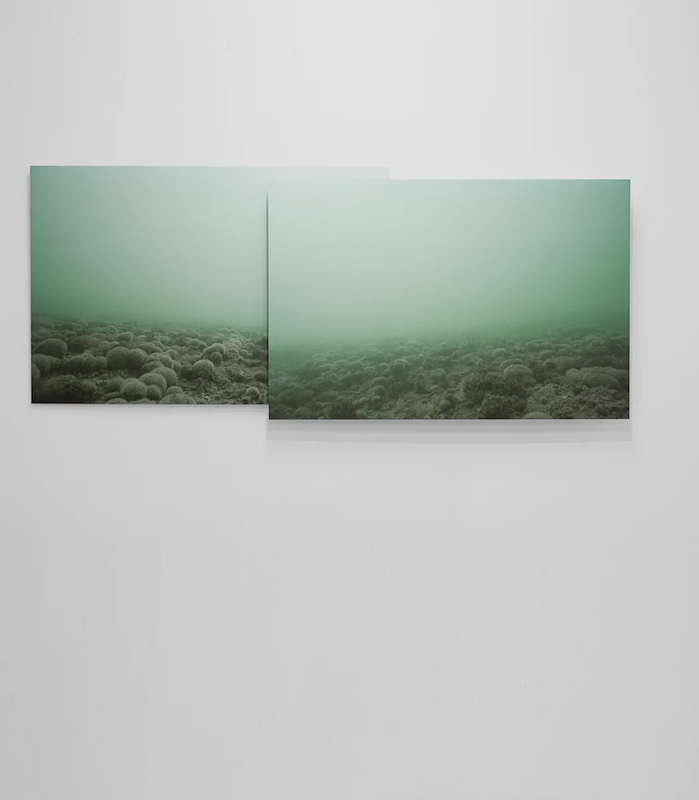
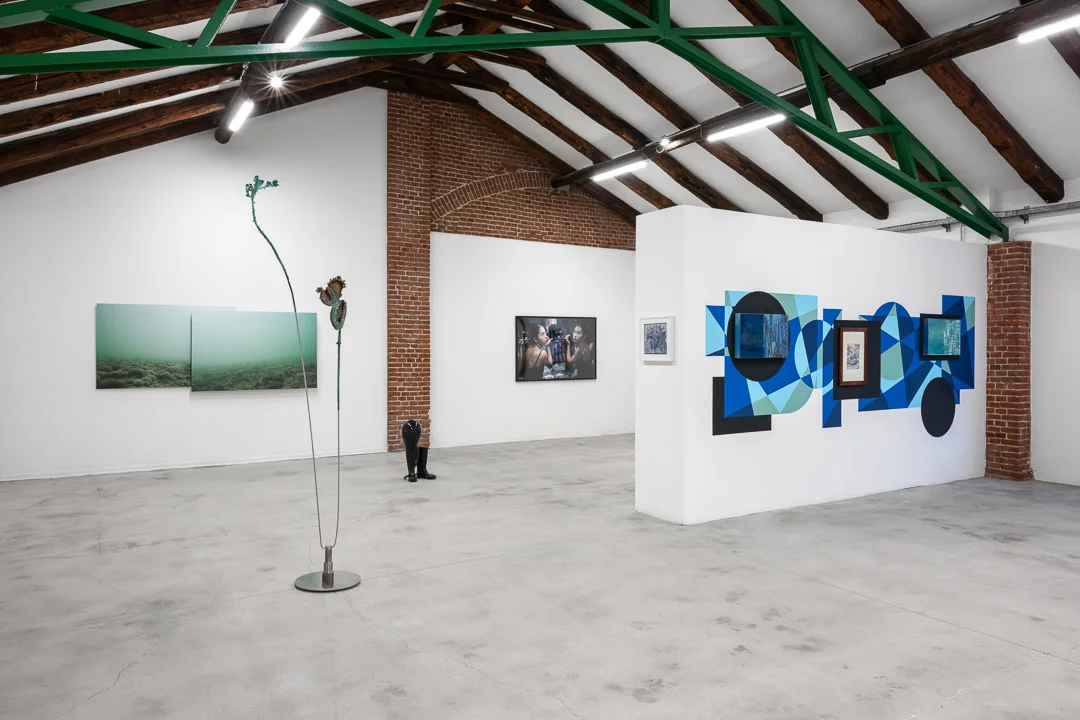
The ocean depths constitute one of the last unknown territories on the planet. A space where perception changes, usual references disappear, and the horizon ceases to offer certainties. It is within this territory of uncertainty that Jonas Forchini’s work is located, whose underwater photographs are part of DESIDERIO | Atto Terzo, the third and final chapter of an exhibition project presented by Société Interludio that explores desire as an impulse toward the unknown, as an opening to other places, and as a possibility to transcend the limits of immediate reality. The exhibition, curated by Giulia De Giorgi, brings together works by Francesco Carone, Albrecht Dürer, Jonas Forchini, Nan Goldin, Maggi Hambling, Anne Imhof, Sebastiano Impellizzeri, Andrea Mantegna, Erik Saglia, Leonor Serrano Rivas, Enrico Tealdi, and Kiki Smith, and is on view until January 17, 2027.
The title DESIDERIO, etymologically derived from the Latin de-sidera, alludes to the absence of stars and the waiting for what has not yet arrived. An absence that generates longing, expectation, and the need to seek a different horizon. This idea runs through the exhibition and finds in Forchini’s images a particularly suggestive expression. His photographs, taken dozens of meters below the sea surface, transport the viewer to an environment where bodily orientation, distance perception, and outline definition progressively dissolve. The stability that characterizes our daily experience gives way to disorientation, unease, and darkness.
The immersion thus becomes a physical and also mental experience. Forchini does not merely propose a visual approach to the underwater landscape but makes a transformation of perception tangible. Underwater, the body loses its usual references and must learn to relate to a space that escapes its ordinary mechanisms of understanding. The proposal connects with the French notion of Apprentissage du trouble, understood as a learning of uncertainty and the capacity to accept disorientation. In a world saturated with images and where the boundaries between reality and representation become increasingly permeable, the photographs invite developing other tools for looking and understanding.
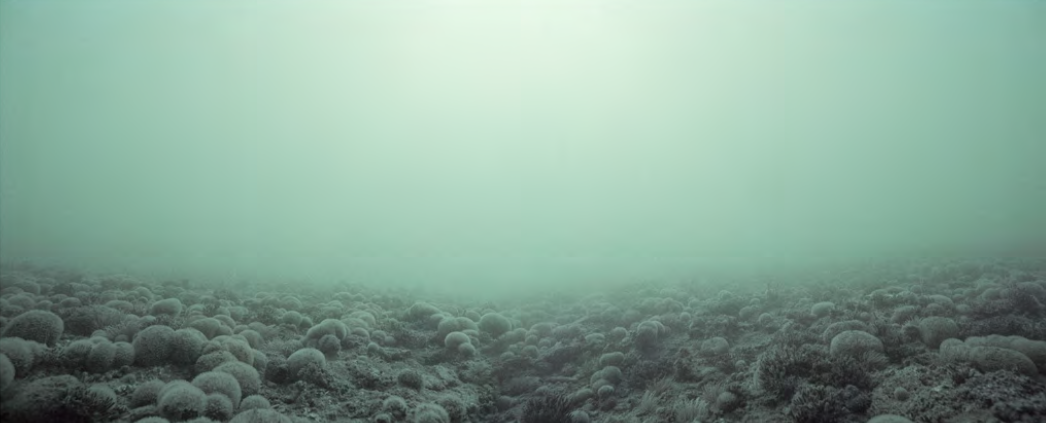
Un apprentissage du trouble, “Panoramique sous‐marin. Longue exposition sous l’eau, zone industrialo‐portuaire de Fos‐sur‐Mer,” 2025, Jonàs Forchini.
This exploration finds a particularly significant echo in the major exhibition that the Musée national de la Marine in Paris dedicates to the call of the depths. In 2026, for the first time, the museum deploys across the five sites of its network — Brest, Paris, Port-Louis, Rochefort, and Toulon — an exhibition program centered around a single thematic axis: the exploration of the seabed. The Paris site presents the largest project, a historical and transversal journey that gathers around 280 pieces in over 800 square meters, from Antiquity to the present day.
Through art, literature, science, technology, and popular culture, the exhibition reconstructs human fascination with a universe that remains largely inaccessible. Mythological creatures, scientific instruments, archaeological objects, manuscripts, diving suits, naval models, paintings, photographs, sculptures, and contemporary installations form a narrative about successive attempts to overcome the physical and symbolic limits of the underwater world. From sea monsters to installations by Monira Al Qadiri, through the explorations of Commander Cousteau, the research of oceanographer Marie Tharp, Jean Painlevé’s films, or the practices of Japanese Ama divers, the exhibition gathers different ways of approaching the depths.
However, the ocean does not appear solely as a stage of adventures and discoveries. It is also a territory crossed by contemporary contradictions. Despite technological advances, much of the ocean floor remains unknown: only a fraction of its surface has been visually explored and accurately mapped. At the same time, the oceanic subsurface concentrates mineral resources of great strategic interest, essential infrastructures for communications and energy transportation, as well as plastic waste, hydrocarbons, and nuclear waste accumulated over decades.
The depths thus become a mirror of the tensions of contemporary society. They are simultaneously a space of knowledge, an economic frontier, a vulnerable ecosystem, and a place where the consequences of what the surface prefers not to see are deposited. The artists participating in this debate question precisely the vocabulary of conquest and exploitation, proposing a different relationship with the ocean, understood as a common heritage requiring knowledge and protection.



You may be
interested
...