
Exhibitions
Atomic Imaginary
Exhibition at the CCCB from November 25 to May 17 that traces the impact of nuclear imagery on art, culture, science, and society, from the first discoveries about matter to the questions of the future.
On August 9, 1945, Lieutenant Charles Levy, aboard the B-29 accompanying the Bockstar bomber, captured with his camera an image destined to become the most powerful icon of the 20th century: the explosion of the nuclear bomb over Nagasaki. Since then, the figure of the Mushroom Cloud, the supreme manifestation of horror and devastation, would indelibly mark the imagination of future generations. The profound impact this imagery left on the art and culture of the past century is the subject of The Atomic Era, an exhibition that, after its stop in Paris, is now held at the CCCB in Barcelona, from November 25 to May 17.
Beyond matter
This journey through the atomic imaginary begins at the turn of the century, with scientific advances that opened the way for nuclear physics and would inevitably lead to the fission of the atom and the bombs of Hiroshima and Nagasaki. The discovery of X-rays by Röntgen in 1895, the experiments with radioactivity by Becquerel and the Curie couple in 1896, and the discovery of the atomic structure by Rutherford in 1911 revealed that matter was an empty space contained by forces and fields of energy.
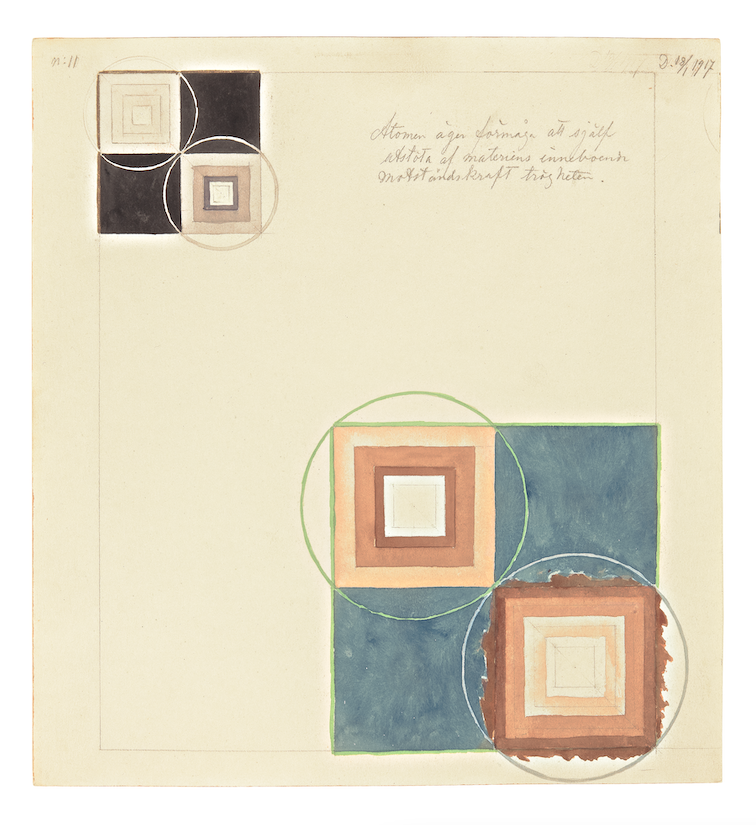
Hilma af Klint, ”The atom possesses the ability to reject sluggishness, the matter’s resistance." N° 11. From the The Atom series 1917, Courtesy of The Hilma af Klint Foundation, Stockholm.
The idea of disintegration of matter captivated the imagination of abstract artists, such as Hilma af Klint, who interpreted Rutherford’s models mystically and esoterically in her series Atom (1917); Vassily Kandinsky, dedicated to "dematerializing the visible" in his non-figurative compositions of the 1910s; or Mikhail Larionov and Natalia Goncharova, who, influenced by the concept of “radiant matter,” attempted, inversely, to “materialize the invisible” with their rayonist proposals.
At the same time, dancer Loïe Fuller, inspired by the Curie’s discoveries on radium, incorporated fluorescent salts and light effects in Radium Dance (1904).
And, from Dadaism, Marcel Duchamp, obsessed with the hidden interior of matter, developed an aesthetics of the inframince in the Boîte Verte (1934).
Theophany of horror
Philosopher Rafael Argullol defined the image of the Mushroom Cloud as the ultimate expression of sublime horror, a “theophany,” the “end of the world as a work of art.” “Everything is contained in this nothingness,” Argullol stated, hence its tremendous force: a “form without form” that would inspire postwar informalist tendencies.
Thus, among others, Jackson Pollock translated through dripping the moving energy of subatomic particles; and Barnett Newman illustrated the great void left by the bomb with his Pagan Void (1946). Meanwhile, on the other side of the hemisphere, Japanese anti-art creators responded to the trauma of war and atomic devastation with a neo-Dada aesthetics of destruction, violence, and the mistreated human body.
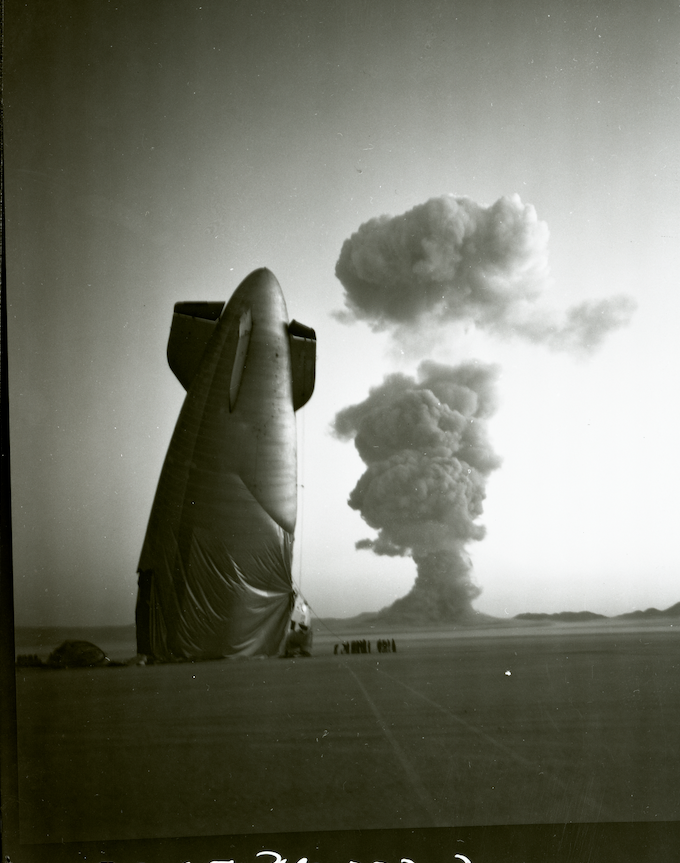
Anonymous, Operation Plumbob (Nevada Test Site) Detonation 1957, U.S. National Archives and Records Administration.
The persistence of the nuclear threat during the Cold War would end up integrating the atomic imaginary into daily life and even turning it into spectacle and consumer merchandise, when human beings, as the subtitle of Kubrick’s satire Dr. Strangelove (1964) says, “learned to stop worrying and love the bomb.” Postcards from Los Angeles or Las Vegas with “atomic dawn,” Miss Atomic Bomb (1957) beauty contests, or the “explosive” bikini (1946), named after nuclear tests in that Pacific atoll, showed the playful and sensual side of the bomb. Art also incorporated this more pop iconography of the atomic: Andy Warhol’s Mushroom Cloud screenprints (1963), Salvador Dalí’s “atomic mysticism,” or Enrico Baj’s “arte nucleare” (1951) are some examples.
A nuclearized future
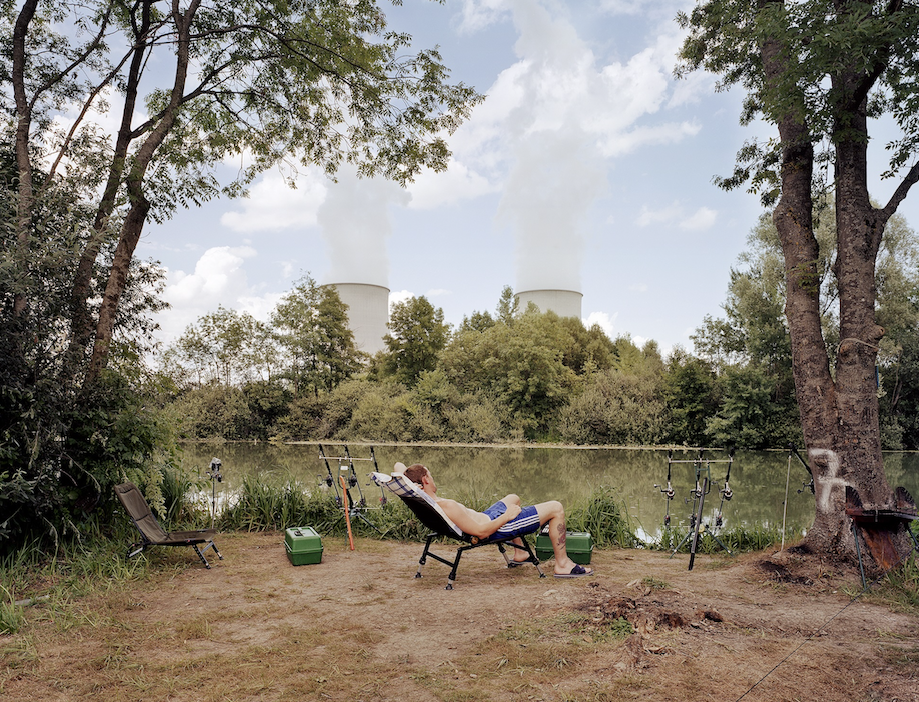
The exhibition concludes with a look at the challenges the future holds. Nuclear rearmament and the inclusion of new atomic powers, the energy crisis caused by armed conflicts and climate change, or the risk of catastrophic accidents in nuclear plants (Chernobyl, 1986; Fukushima, 2011), confirm that we are still in the atomic era.
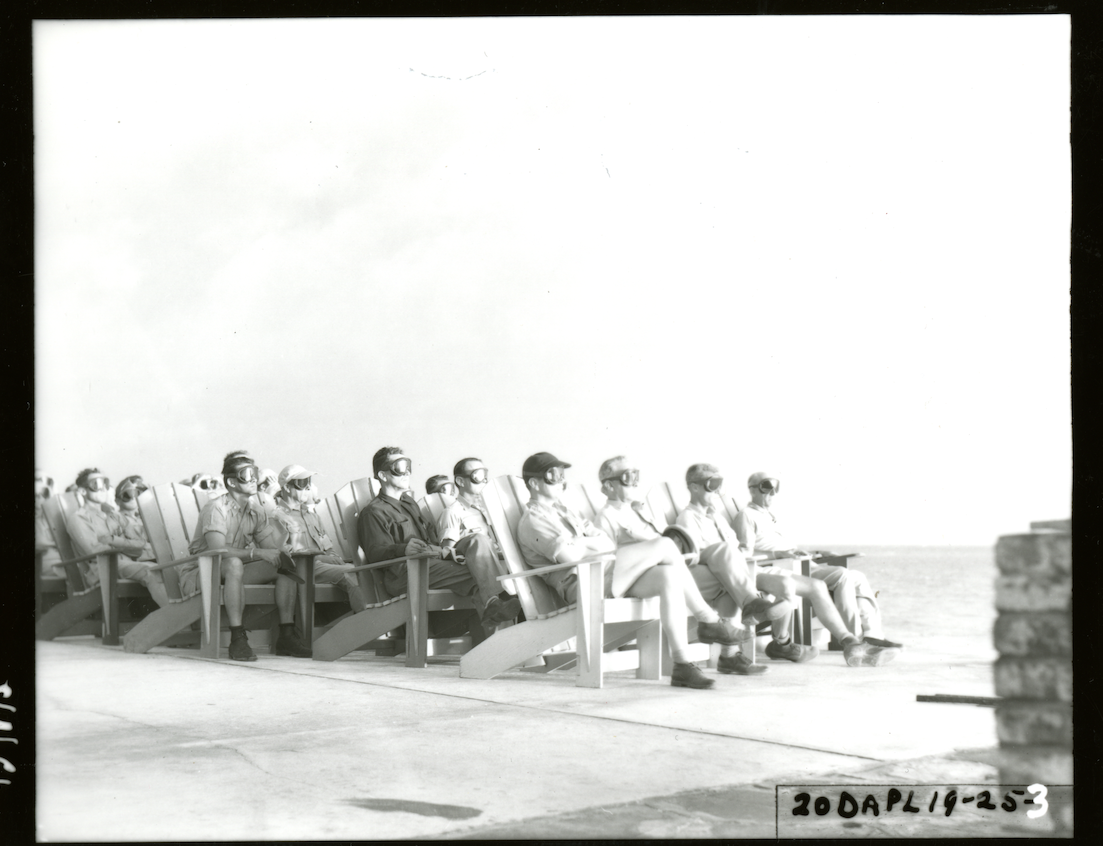
Dennis Brack, Operation Greenhouse (Enewetak) Test Activities 1951, U.S. National Archives and Records Administration.



You may be
interested
...