Exhibitions
Mueve Galería turns the old financial temple into an exhibition space to question authenticity
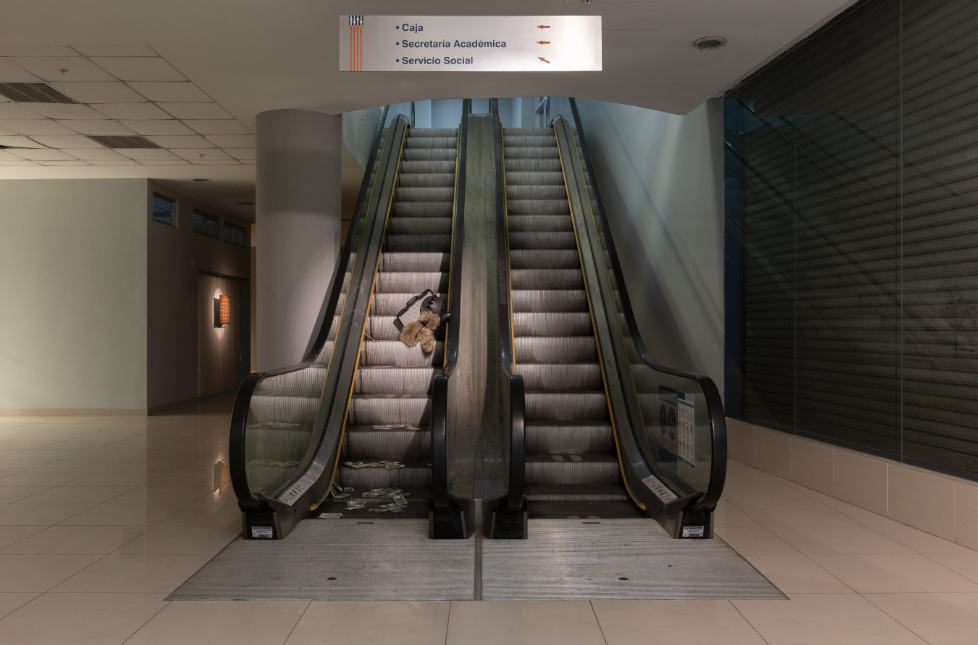
In an old bank building converted into an exhibition space, with all the symbolic weight of architecture that evokes financial power and its control structures, a group exhibition raises a question that goes beyond monetary counterfeiting: what determines that something is authentic? When the fake is indistinguishable from the legitimate, what is, in reality, the nature of the original? At Mueve Gallery in Lima, Miguel Aguirre, Jimena Chávez Delion, Emilio Martínez Poppe, Priscilla Benyahia, and Mykolas Valantinas articulate an artistic investigation into the mechanisms of belief, trust, and authority that support the economic system.
The starting point is a reality that for more than two decades has placed Lima on the international map of dollar counterfeiting. Far from being an isolated criminal phenomenon, this activity has developed a parallel economy of considerable size and sophistication. In 2012, the United States Secret Service opened a permanent office in the Peruvian capital to address this activity. In this context, ATM workers and money changers have acquired specialized knowledge: they examine each bill, interpret its details, and assess its authenticity. Each transaction thus becomes an exercise in verification where trust is subjected to permanent suspicion.
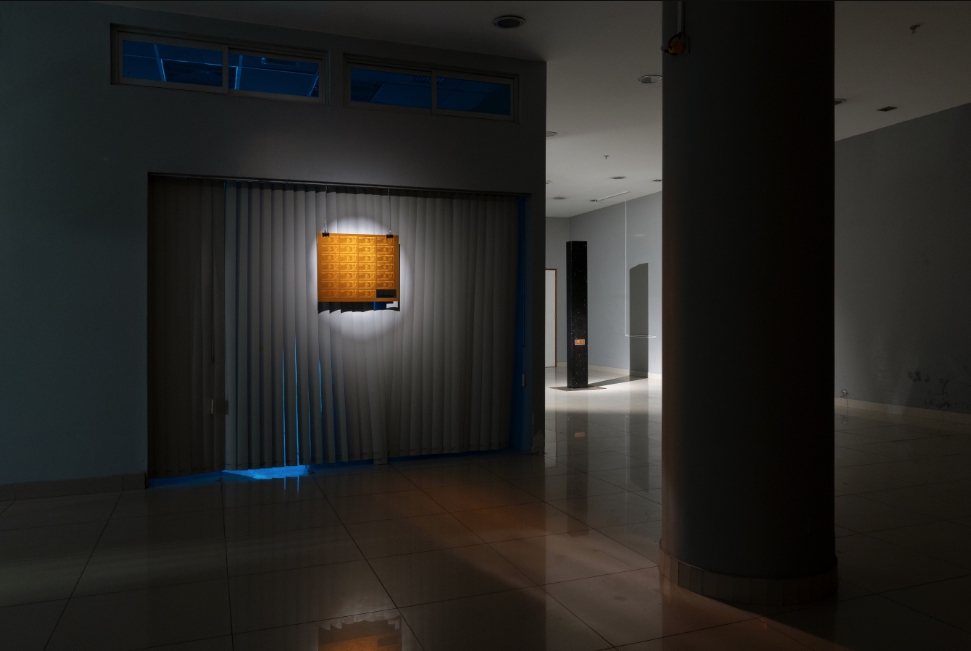
This reality opens a reflection on the nature of money and the power systems that legitimize it. Currency, often perceived as a neutral instrument of exchange, also rests on a political structure and a shared convention. Anthropologist David Graeber precisely questioned this apparent neutrality in his studies on debt, pointing out that monetary systems cannot be dissociated from coercive relationships and the force that have historically supported them. From this perspective, the dollar is not only a unit of value but also the expression of economic and geopolitical hegemony.
Anthropologist Julio Linares takes up and expands this perspective in Decolonizing Money (2026), where he proposes rethinking the dominance of the dollar and recovering the memory of other monetary systems displaced by the expansion of the Western economy. Among the examples he presents are cacao in Mesoamerica and cowrie shells in West Africa, forms of exchange linked to other conceptions of value, in which the symbolic dimension, transformation, and even impermanence played a central role.
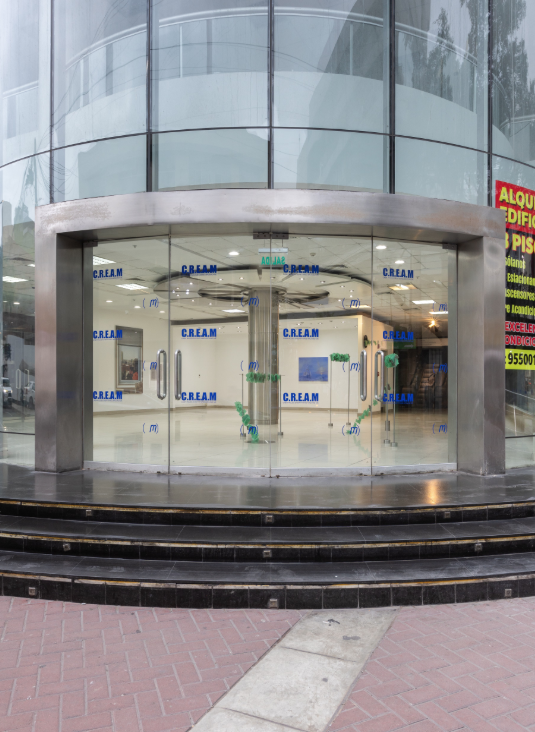
From this perspective, counterfeiting ceases to be merely an illegal practice to become a fissure from which to observe the conventions on which value is constructed. If a counterfeit bill can precisely reproduce all the signs that make it recognizable, the difference between the original and the copy depends not only on its materiality but also on the authority that grants them legitimacy. Money therefore appears as a form of collective fiction that needs to be constantly recognized and reproduced to maintain its efficacy.
Mueve Gallery's proposal places this contradiction at the center of an artistic and political reflection on trust, representation, and the devices that regulate the global economy. The gallery, which has also participated in the Mira Art Fair in Paris, develops a line of work that connects the Peruvian art scene with international circuits. In this project, the exhibition space, a former setting of financial activity, acquires a specially significant dimension: the architecture that once symbolized the authority of money now hosts an investigation that questions its foundations.

You may be
interested
...