Exhibitions
Zurbarán and the memory of a forgotten Extremadura
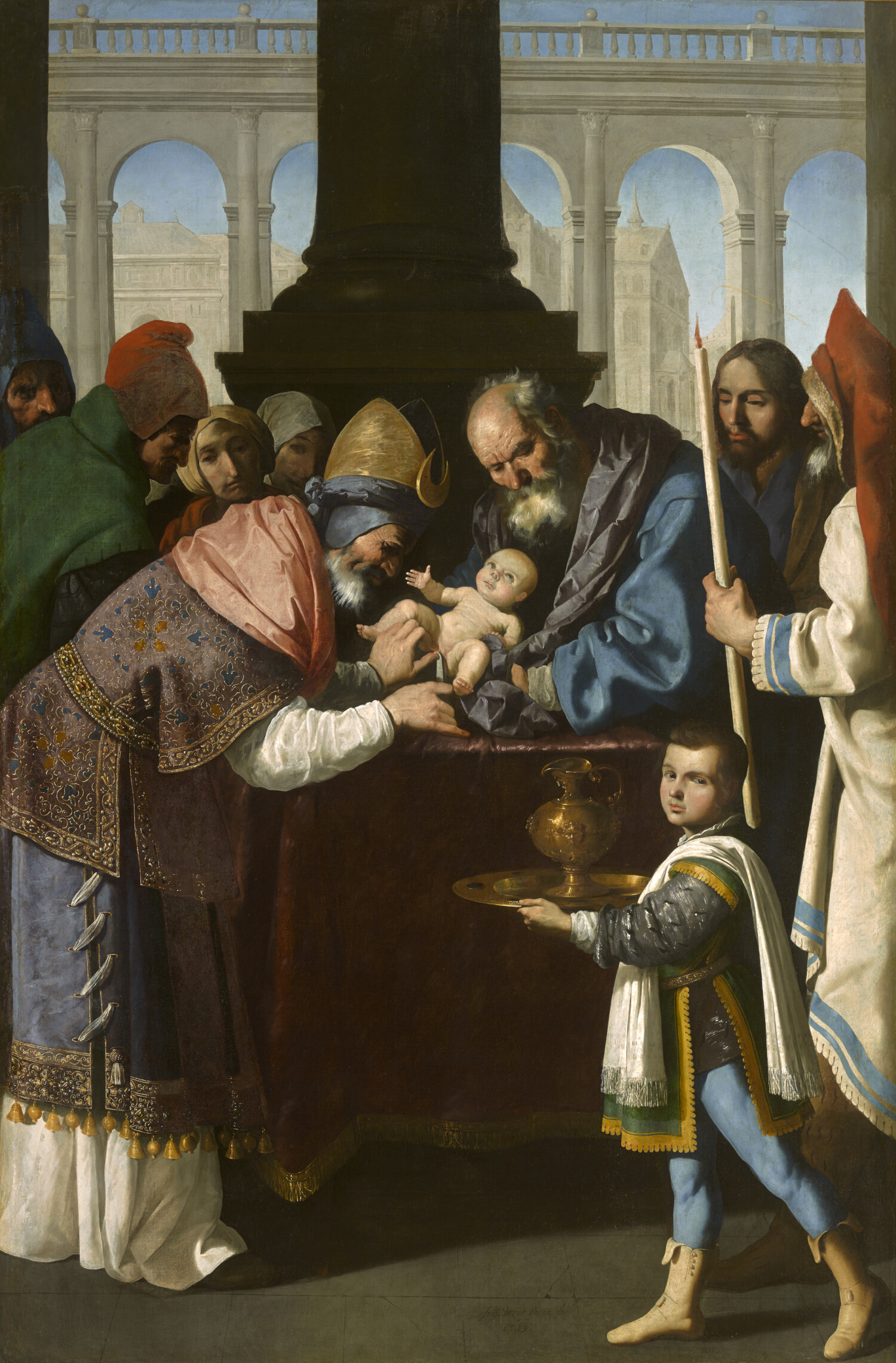
The international acclaim of Francisco de Zurbarán has traditionally been associated with Seville, the city where he consolidated his pictorial language and became one of the essential figures of the Spanish Golden Age. However, explaining Zurbarán solely from the perspective of the Andalusian capital limits our understanding of an artist who began to forge his professional and personal identity in Extremadura. The major exhibition that the Louvre Museum is dedicating to the painter offers an opportunity to turn our gaze back to this region and examine the extent to which his roots were much more than a mere biographical detail.
Born in Fuente de Cantos, in the province of Badajoz, in 1598, Zurbarán found in Llerena one of the decisive settings of his early professional career. Between 1617 and 1628, the city was his workplace, his home for his family, and the center of his artistic development. Before achieving the recognition that Seville would later bring him, the painter had already established relationships with local institutions, religious brotherhoods, and municipal officials, in an environment where religious commissions and the need for public representation constituted a fundamental part of artistic activity.
The earliest known documents of his career allow us to glimpse a less monumental Zurbarán, one more closely tied to the specific circumstances of his profession. In 1618, he is credited with designing a fountain for the Plaza de España in Llerena, a project that reminds us that the activity of a 17th-century artist was not necessarily limited to easel painting. A year later, the City Council commissioned him to create an image of the Virgin Mary for the Villagarcía gate, for which he received 77 reales. Known as the Virgin of the Clouds , this work, now housed in the Museum of Fine Arts of Badajoz, is a particularly significant testament to his early years of documented production.
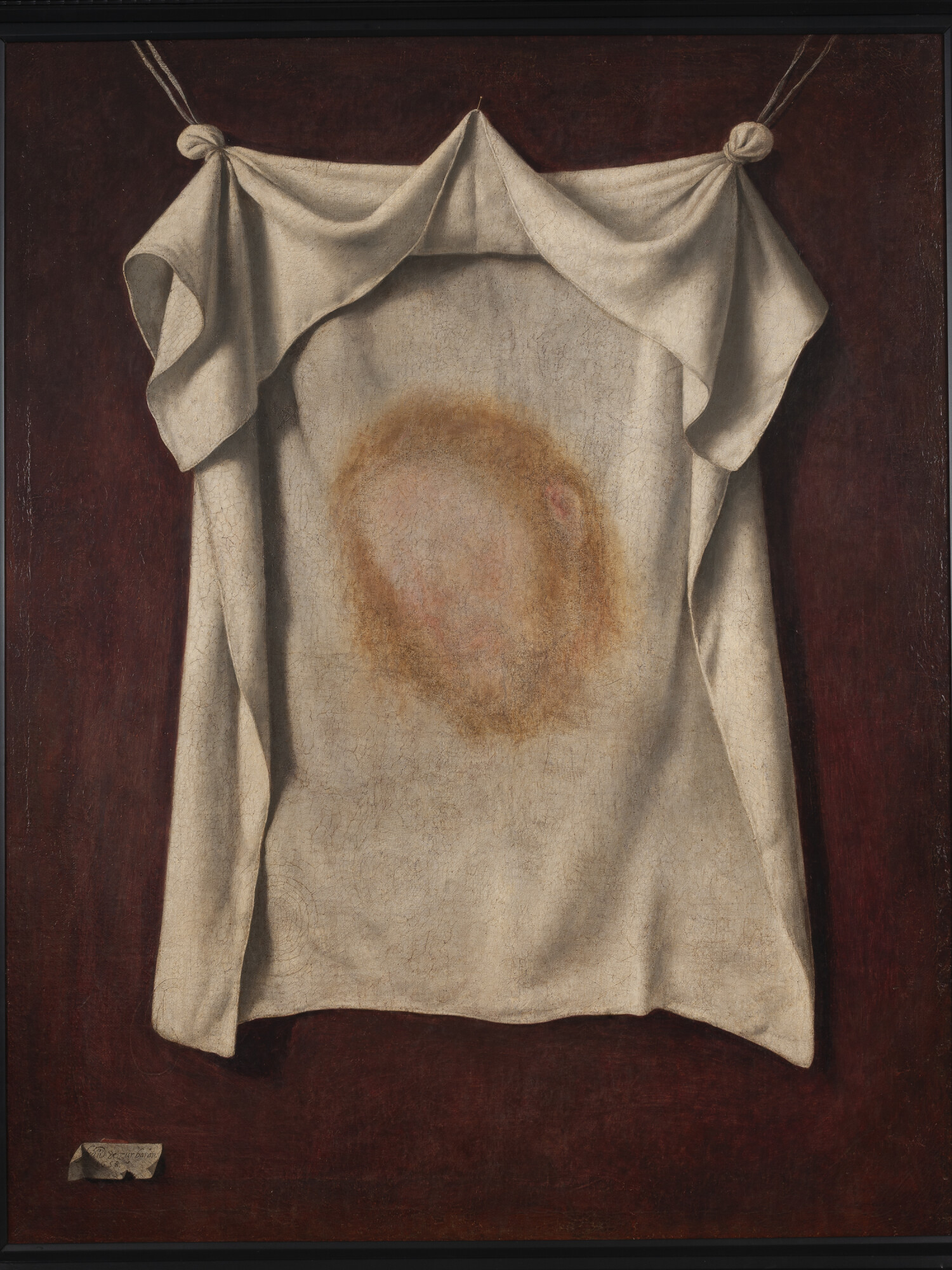
These details have a value that goes beyond mere anecdote. They allow us to understand that the artist did not suddenly appear in Seville as a fully formed master, but rather that his career developed through commissions, contacts, and experiences that helped define his professional position. Art history tends to organize biographies around major cities and moments of consecration, but local archives can reveal the complexity of the processes that precede success.
In this respect, the documentation preserved in Fuente de Cantos is particularly revealing. The town's historical archive of records holds two original signatures of the painter related to contracts from 1622. One document refers to the decoration of the processional platform for the Brotherhood of the Mother of God; the other, to an altarpiece dedicated to the mysteries of the Rosary. The works have disappeared, but the documents recording his commissions have survived. In the absence of the artworks themselves, it is these records that allow us to reconstruct a part of his activity and trace a material heritage that we can no longer see.
The paradox is evident. Fuente de Cantos is the birthplace of one of the great names in European painting, yet it preserves none of his original works. The gap between Zurbarán's universal renown and the absence of original pieces in his hometown raises a question that affects many regions of origin of internationally recognized artists: to what extent does a place's cultural memory depend on the preservation of artworks, and to what extent can it also be sustained through documents, spaces, narratives, and research policies?
The answer should not be to compensate for the absence of original works with a mere recreation of the myth. This absence should be embraced as an opportunity to better understand the artist. His birthplace, archives, churches, documentary evidence of commissions, and historical research can all contribute to a rigorous narrative, provided they are presented as integral parts of a single process of understanding, and not as substitutes for a heritage that has not been preserved.
Llerena, for its part, offers a broader perspective on this early period. Zurbarán started a family there and married María Páez. After becoming a widower, he married Beatriz de Morales. The town was much more than a temporary residence: it became a center of activity where the painter established social and professional connections before moving to Seville in 1629. A crucified Christ related to his work is preserved in the Church of Our Lady of Granada, a presence that helps to keep alive the link between his art and the region.
This relationship did not end with his move to a new city. The Monastery of Guadalupe, in the province of Cáceres, houses an important collection of Zurbarán's paintings, including depictions of religious figures associated with the Hieronymite community. This collection demonstrates that his contacts with ecclesiastical institutions in Extremadura continued to be relevant throughout his career. Extremadura was therefore not only his birthplace or where he began working, but also a region that remained present in his network of relationships and in the history of his commissions.
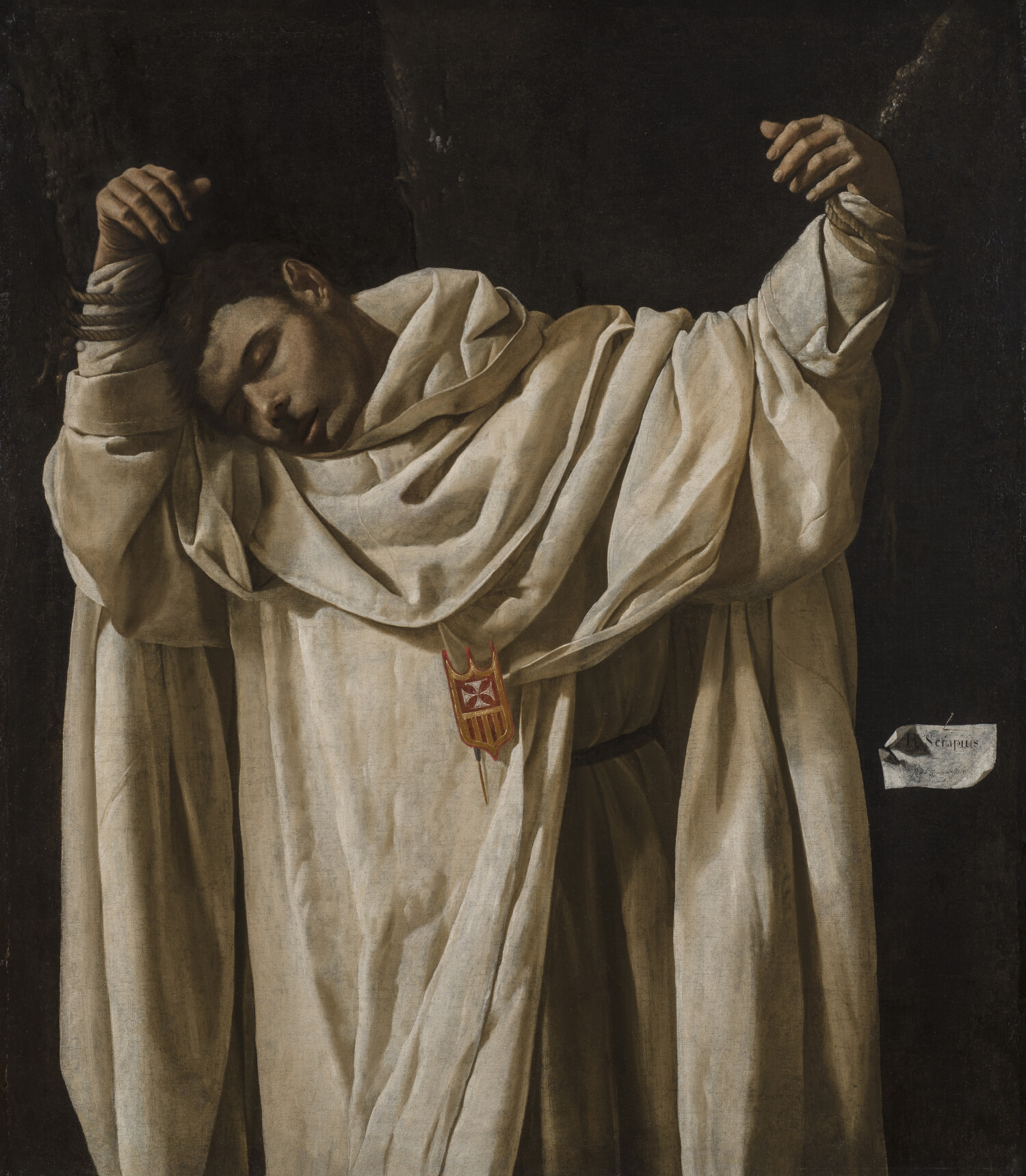
Documentary research is fundamental to understanding this continuity. The book Zurbarán in the Extremadura Archives , published in 2021 by researcher and historian Luis Garraín, contributes to recovering a part of this history through testimonies that allow us to refine the conventional biography of the painter. The archives offer more than just dates and signatures: they reveal a network of relationships, commissions, and responsibilities that places the artist within his social and economic context. This documentation offers another way of looking at Zurbarán, beyond the grandeur of his compositions and the intensity of his use of light.
Public memory has also contributed to shaping his image. In 1887, it was agreed to install a commemorative marble plaque on the façade of the Fuente de Cantos Town Hall, created by the sculptor Jerónimo Suñol. The inscription erroneously states 1662 as the year of the painter's death; he actually died in Madrid on August 27, 1664. This detail is significant because it demonstrates that even monuments intended to preserve memory can transmit errors and that the historical narrative requires constant revision. Furthermore, there is no confirmed authentic portrait that would allow us to establish with certainty what Zurbarán looked like.
Another representation, his bronze sculpture in the Zurbarán Park in Fuente de Cantos, created by Aurelio Cabrera and installed in 1937, depicts him with paintbrushes and a sword. The image evokes an idealized idea of the artist as a nobleman, but it offers no proof of his social standing. It is, above all, an example of how each era constructs its own representation of great figures and how monuments also form part of a cultural history that must be interpreted critically.
The major Louvre exhibition can act as a catalyst for rediscovering these other dimensions of Zurbarán. Its importance lies not only in the opportunity to view his works in one of the world's leading museums, but also in its capacity to generate new questions about the territories, institutions, and communities that shaped his career. When an artist achieves the status of a universal master, there is a risk that the specific places that nurtured his early years will be relegated to a footnote in his biography.
Therefore, Extremadura's challenge should not be merely to celebrate Zurbarán as an illustrious son, but to explain him in greater depth. This requires preserving and studying the archives, documenting the places linked to his life, contextualizing the surviving and lost works, and establishing a dialogue between museums, heritage institutions, and research centers. It also means preventing his figure from becoming trapped in a territorial competition between places of origin and cities of consecration. His history is shared, but the specificities of Extremadura deserve their rightful place in the narrative.


You may be
interested
...