Exhibitions
Psychedelics between art, culture and science
For decades, psychedelics have been surrounded by taboos, controversies, and conflicting narratives. Now, Toronto's Royal Ontario Museum (ROM) proposes revisiting their history from a broad and well-documented perspective with Psychedelics: Art. Culture. Science. , an exhibition that invites visitors to reconsider the role these substances have played in different societies and to reflect on the place they might occupy in the future.
The exhibition presents a journey that combines art, culture, and science to offer a research-based approach to a complex phenomenon. Far from reducing psychedelics to their recreational or therapeutic dimensions, the exhibition examines their cultural, historical, and scientific meanings, considering the different ways in which they have been understood, used, and represented throughout history.
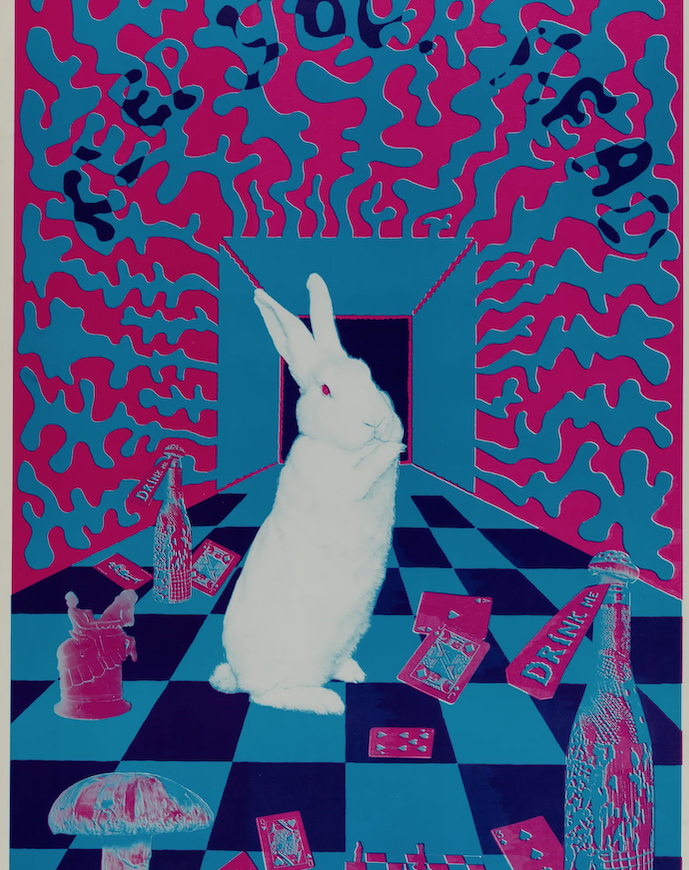
The project brings together artworks, objects, botanical specimens, and interactive experiences that allow the phenomenon to be approached from different perspectives. This diversity of materials constructs a narrative that connects cultural practices, scientific knowledge, traditions, and social transformations, while showing how the perception of psychedelics has changed according to contexts and eras.
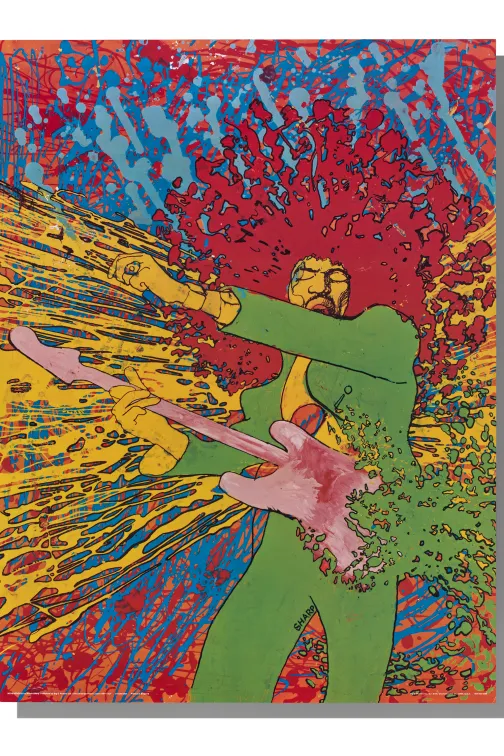
Martin Sharp (Australian, 1942-2013), Explosion, Jimi Hendrix, 1967, London, ROM 989,269.6 Museum Purchase; anonymous gift.
One of the main objectives of Psychedelics: Art. Culture. Science. is precisely to question some of the narratives that have traditionally shaped our view of these substances. The exhibition advocates for a balanced and research-based approach, incorporating different voices and perspectives to open a space for reflection on a topic historically marked by prohibition and stigma.
Through a narrative constructed from extensive research and documentation, the ROM invites visitors to approach psychedelics not as an isolated phenomenon, but as part of a much broader history. The pieces and experiences that make up the exhibition allow us to observe their connections with artistic creation, the understanding of nature, cultural practices, and scientific research.
The exhibition also looks to the present and the future. Beyond explaining what psychedelics have meant throughout history, it raises questions about what they might become in the coming years and how new scientific knowledge and cultural shifts may transform our perception of these substances.

You may be
interested
...