Exhibitions
Whose city, a Córdoba made of memory, conflict and layers of time
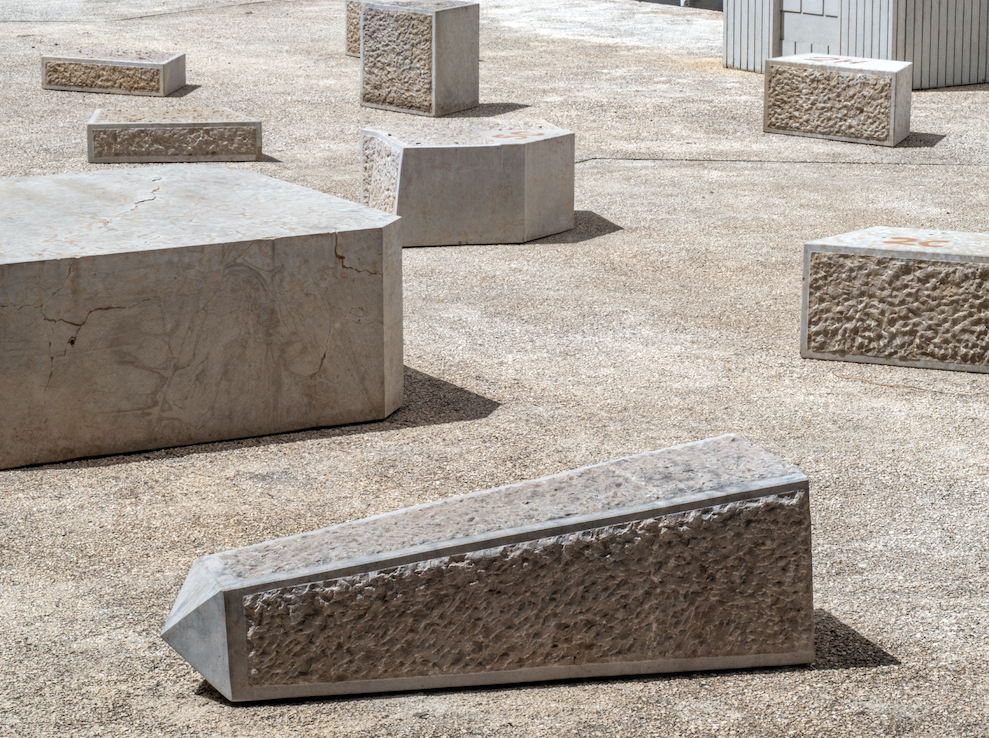
The Andalusian Center for Contemporary Art (C3A) commemorates its tenth anniversary with "City of Whom. CAAC Collection. 10th Anniversary ," an exhibition that transforms its galleries into a temporary museum from which to observe Córdoba as a territory constructed from multiple times, memories, narratives, and ways of life. The exhibition, which will be open until January 31, 2027, proposes a journey in which the boundaries between eras and disciplines blur, generating new relationships between the works and opening up new ways of interpreting the city.
The exhibition brings together pieces from various lenders in Córdoba, works from the CAAC collection, and new pieces created specifically for the occasion. The result is a multifaceted view of Córdoba that does not aim to construct a single image of the city, but rather to reveal the different layers that comprise it: its shared memories, its conflicts, its collective imagination, its transformations, and the experiences of its inhabitants.
Córdoba thus emerges as a unique and, at the same time, universal territory. A city shaped by centuries of history, where tangible traces and invisible vestiges, presences and absences, agreements and tensions coexist. The exhibition explores precisely this complex nature of urban space and how historical processes ultimately condition our ways of occupying, remembering, and transforming the world we inhabit.
Architecture, landscape, collective memory, and individual experience intertwine throughout the journey. Nostalgia and romanticization coexist with the frictions, conflicts, and contradictions inherent in any city. It is not, therefore, about reconstructing an idealized Córdoba, but about confronting its diverse narratives and the ways in which these have contributed to shaping its identity.
The genealogies of a city
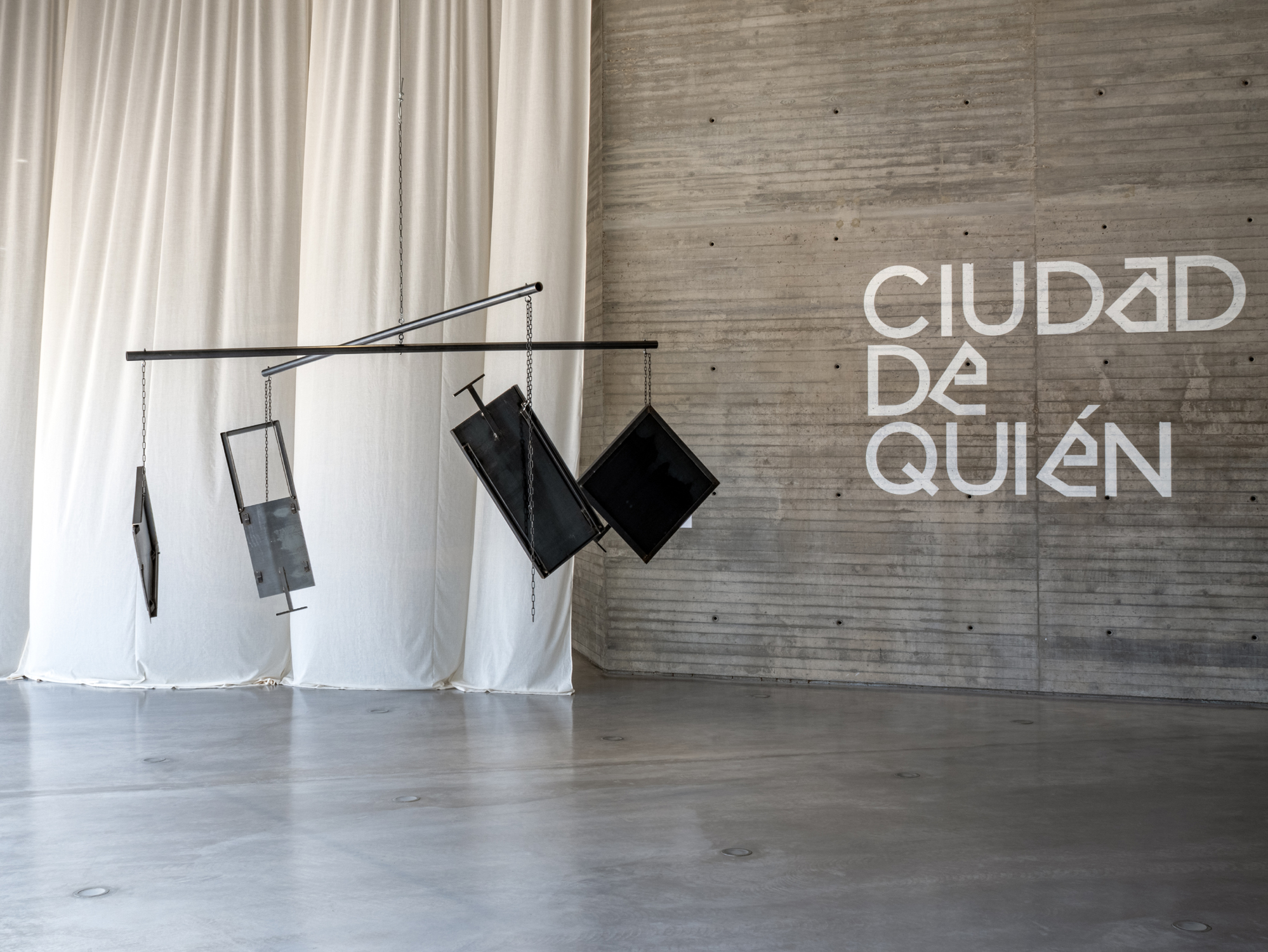
Rooms T2 and T3 form one of the main sections of the exhibition, entitled Genealogies: Inhabiting the Layers of Shared Myths . The tour delves into the symbolic constructions of Córdoba and, at the same time, into the historical realities that underpin them.
"The mythical and the lived experience unfold in a complex space where layers of meaning intertwine," explains Lola Baena. In this dialogue, works from different historical periods coexist, establishing unexpected connections between past and present.
Among the historical pieces are the Mosaic of the Poets and the depictions of Saint Raphael by Juan de Valdés Leal and Saint Raphael by Damián de Castro. Alongside these are contemporary works such as Drowned Sailor by Federico García Lorca, Seated Figure by Francis Bacon, and Carrying VII by Pepe Espaliú. The juxtaposition of these pieces allows us to observe how certain symbols, narratives, and imagery survive, transform, and acquire new meanings over time.
The exhibition also includes two new works directly linked to the social memory of Córdoba. One of them is by Córdoba-born filmmaker and visual artist Pilar Monsell, the result of more than a decade of research on the Bread Riot of 1652. Her work recovers a historical episode in which female leadership and the participation of women from the working classes are particularly relevant.
The second production is by Fernando Vacas, who presents a sound and visual installation dedicated to Campo de la Verdad. The project approaches this territory, located south of Córdoba, through the voices and ways of life of the neighborhood. Flamenco appears here as a tool for transmission and understanding between generations, but also as an expression of a particular way of inhabiting and building community.
The C3A within the city
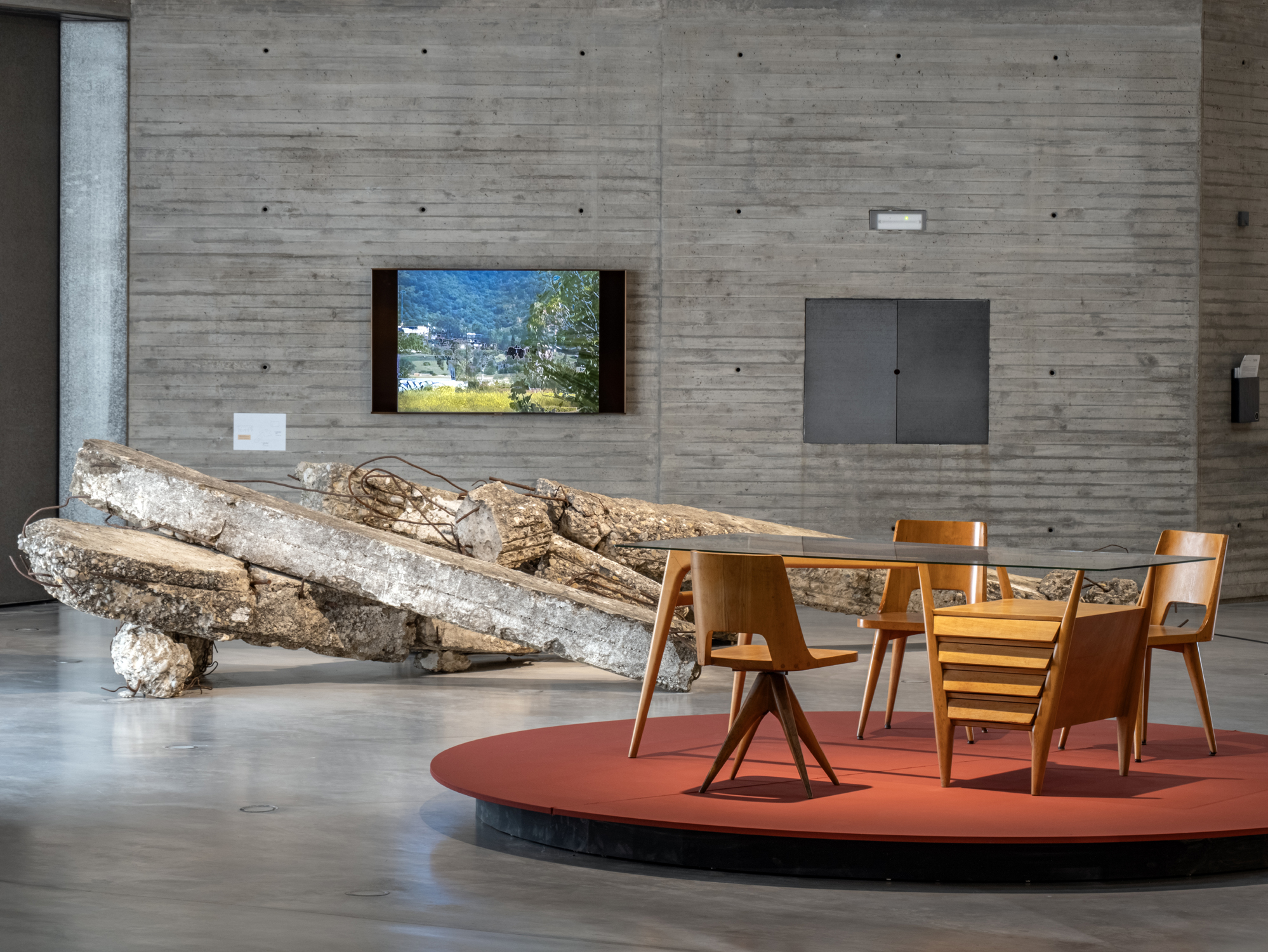
The Andalusian Center for Contemporary Art (C3A) building itself becomes another protagonist of the exhibition. The Atrium is organized into three thematic areas, one of them entitled "Where the City Traverses Time: Why the C3A ?" This space prompts reflection on the relationship between the center's architecture and its urban context. The exhibition incorporates materials that allow visitors to reconstruct part of the C3A's identity and its dialogue with Córdoba, including the model of the building designed by Nieto and Sobejano.
The exhibition also establishes connections between different historical periods through pieces such as a 10th-century marble latticework from the Archaeological Museum of Córdoba and works belonging to the CAAC collection. Among the latter are works by Elena Asins, Ibon Aranberri, Bleda y Rosa, Ana Mendieta, and Manolo Millares, among other artists.
In this way, the building ceases to function merely as a container and becomes an active part of the narrative. Its architecture, its location, and its relationship with the surroundings are incorporated into an exhibition that understands the city as an organism in constant transformation.


You may be
interested
...