News
RCR architects return to their origins with a book that establishes the legacy of an evolving architecture
The Olot Bath Pavilion hosts the presentation of the exhibition catalogue RCR arquitectes. Roots and Wings, a publication that covers almost four decades of the studio's career and expands the contents of the exhibition open at the Museu de la Garrotxa until August 9.
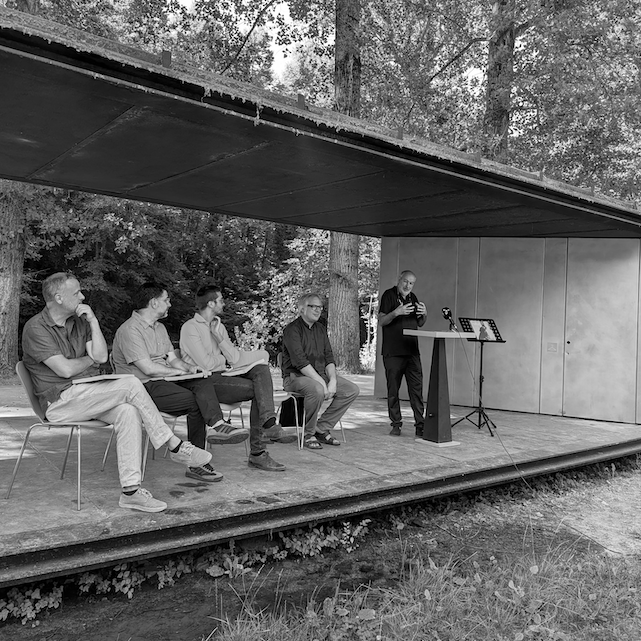
The City Council of Olot, RCR arquitectes and the Museu de la Garrotxa have presented at the Pavelló del Bany the book-catalogue RCR arquitectes. Arrels i ales , a publication that translates the discourse of the exhibition of the same name into an editorial format and offers an in-depth look at nearly forty years of the Olot studio's career. The volume reviews the path taken by the architects from the first projects developed in the capital of La Garrotxa to their consolidation as one of the international references in contemporary architecture.
The choice of the Pavelló del Bany as the setting for the presentation has a strong symbolic charge. Considered one of the founding works of RCR arquitectes, this intervention represents some of the principles that have defined their language since the beginning: respect for the landscape, the search for an architecture integrated into the place, experimentation with materials and a special sensitivity to light and the experience of spaces. The return to this building turns the event into a review of the origins to better understand the evolution of a work that has transcended borders.
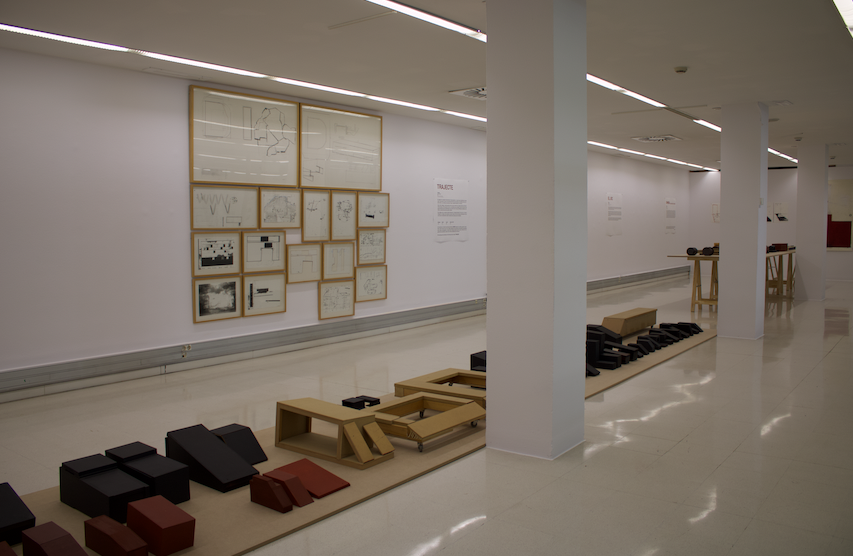
The book expands and complements the contents of the exhibition, which can be visited at the Museu de la Garrotxa until August 9, and is intended as a reference publication for understanding the architectural thinking of RCR. In addition to the tour of the studio's main projects, it incorporates texts by the exhibition's curator, Jaume Prat Ortells, as well as an extensive selection of photographs, drawings, working documents and unpublished materials that allow us to follow the architects' creative evolution.
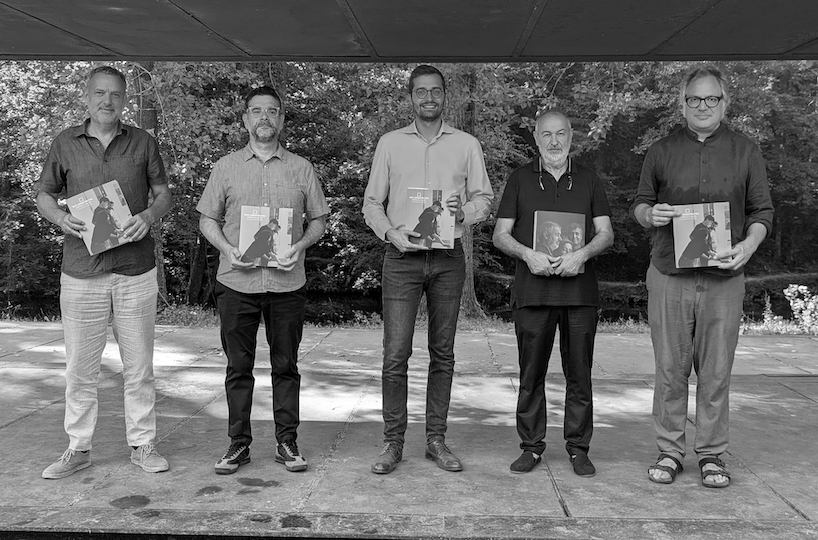
The publication highlights a way of understanding architecture based on the permanent dialogue between landscape, culture, art and experience. At the same time, it shows how the practice of RCR has expanded its limits to build a creative ecosystem that dialogues with other artistic disciplines without losing the link with the territory that saw them born.
This same idea of an open and transforming architecture also defines the exhibition. Since its inauguration, the show has been conceived as a living project, with contents that have been renewed during the months of exhibition to invite the public to revisit it and discover new readings. The book preserves this dynamic spirit, but at the same time converts the exhibition experience into a permanent document that fixes its legacy.
The Pavelló del Bany, built between 1995 and 1998 in the Tossols-Basil area, epitomizes this way of designing. Initially conceived as a facility serving the bathing area of the Fluvià River, the building has ended up becoming one of the most representative works of the first period of RCR arquitectes and a fundamental piece for understanding the evolution of their language.
The presentation of the book also coincides with the completion of the restoration and conditioning works promoted by the Olot City Council, an intervention that reinforces the heritage value of an emblematic building of contemporary Catalan architecture and consolidates the will to preserve a work closely linked to the identity of the city and the international projection of RCR arquitectes.
The event was attended by the mayor of Olot, Agustí Arbós; the councilor for Culture, Josep Quintana; the curator of the exhibition, Jaume Prat Ortells, and the architects Rafael Aranda, Carme Pigem and Ramon Vilalta, founders of RCR arquitectes, who shared with the public the keys to a publication destined to become an essential tool for delving deeper into one of the most influential trajectories of contemporary architecture.

You may be
interested
...