Exhibitions
Inhabit the sculpture, resist the elements with Ana Laura Aláez
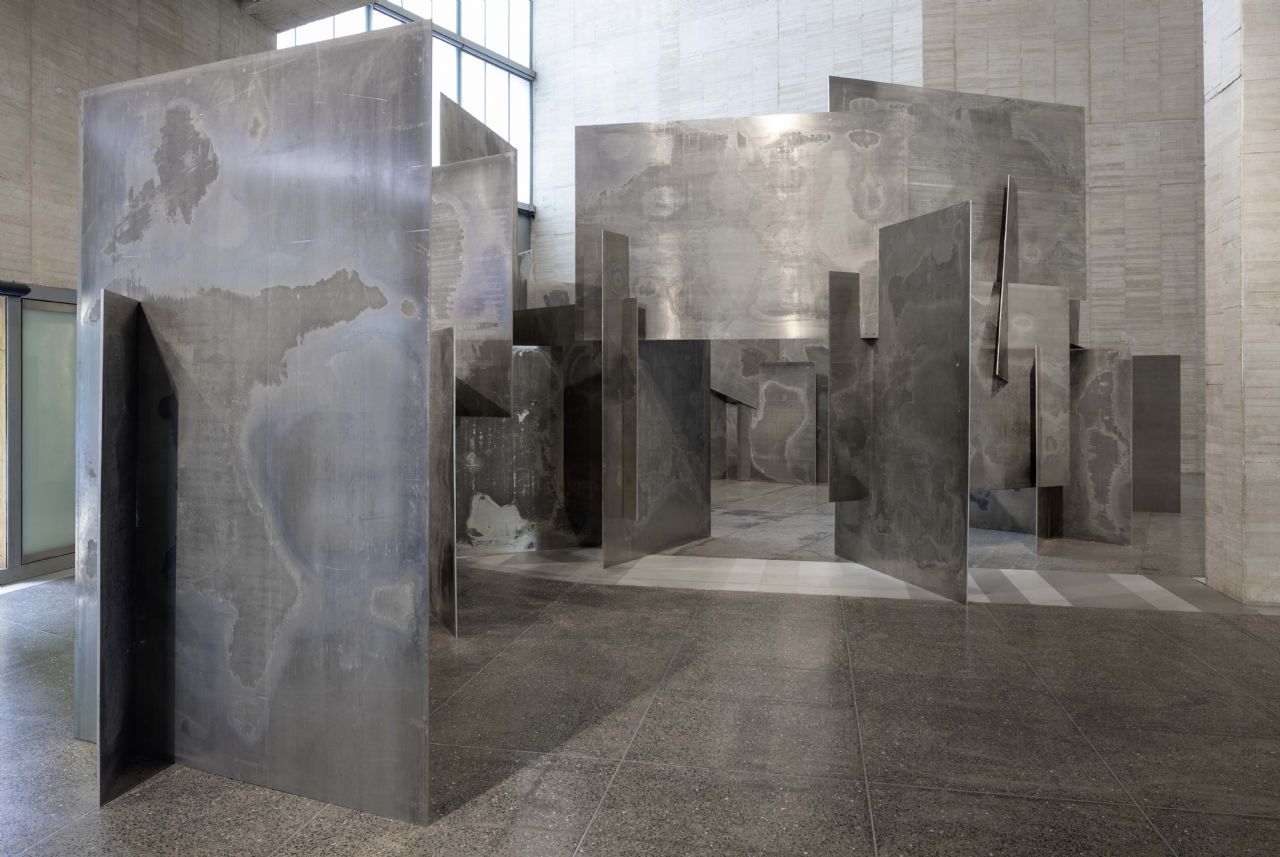
Among the most ambitious pieces in the MUSAC Collection, Ana Laura Aláez's (Bilbao, 1964) Sculpture Pavilion reappears this summer as one of those works capable of altering not only the space it occupies, but also the way in which the viewer experiences it. Installed in rooms 5 and 6 of the museum until October 18, 2026, this monumental structure—originally conceived for the artist's solo exhibition in 2008—reactivates one of the most fertile lines of inquiry in Aláez's work: the tension between shelter and exposure, between body and architecture, between art and the art system.
Composed of thirty-two aluminum sheets assembled into a single unit, the work occupies a hybrid territory where sculpture and architecture cease to be stable categories and become experience. More than an object, Sculpture Pavilion functions as a spatial situation: a construction that does not impose itself through its mass, but through its capacity to make emptiness an active material. This emptiness—common in much of contemporary sculpture, but rarely so charged with resonance—appears here not as absence, but as a place of friction, transit, and memory.
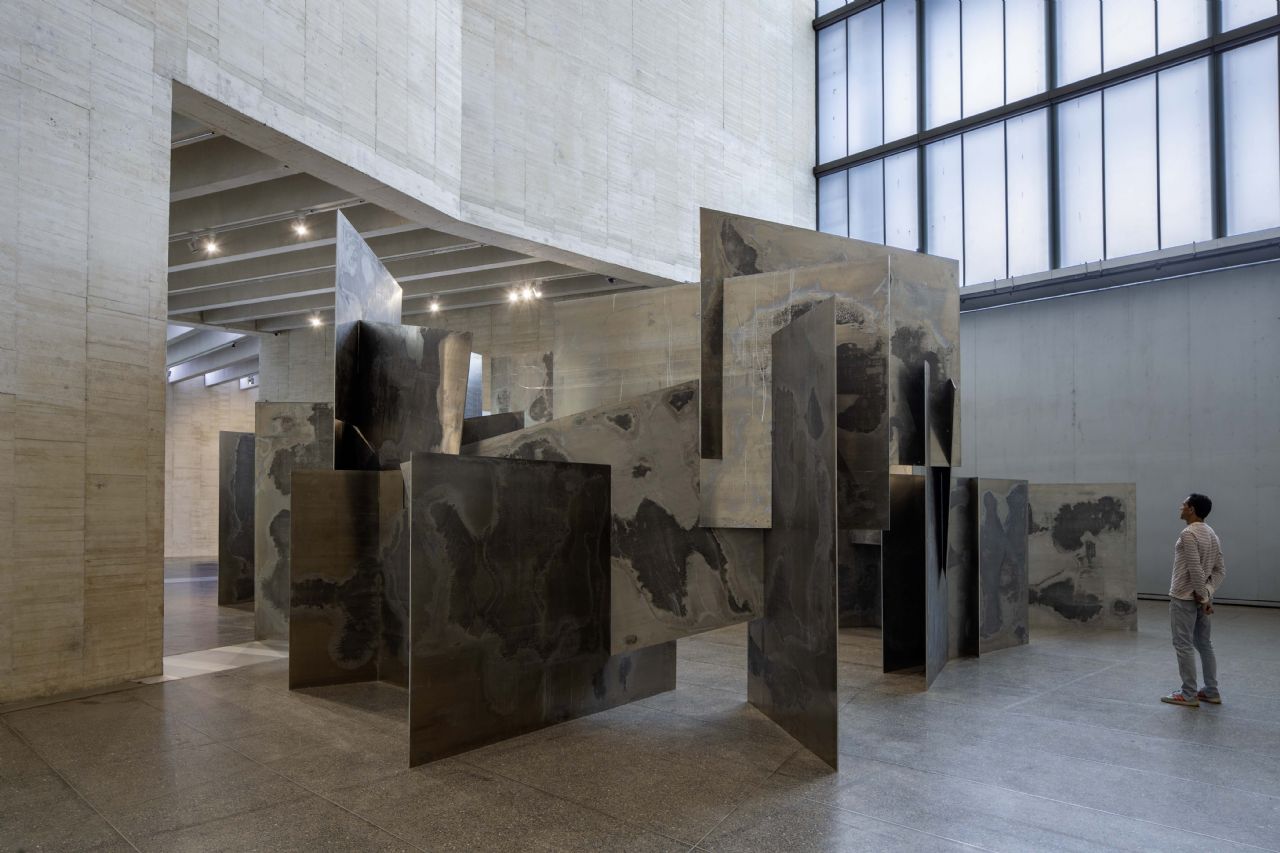
Aláez doesn't create a sculpture to be contemplated from the outside, but rather a space that demands to be interpreted from within, even when its interior resists the traditional notion of refuge. The pavilion promises protection and yet partially denies it; it invites entry, but also exposes. In this ambivalence lies one of the keys to the work. The artist seems to be questioning what it means today to construct a place for art and, at the same time, what happens when that place ceases to be safe. The sculpture thus becomes a critical device: a precarious refuge, an emotional architecture, a structure that protects only to remind us that all protection is unstable.
The piece engages with a genealogy that harks back to the 20th-century avant-garde and the expansion of the sculptural field beyond the pedestal and the closed form. However, Aláez does not simply prolong this tradition; he shifts it toward a more intimate and political terrain. Sculpture Pavilion can be read as a reflection on the spaces of artistic legitimation, but also as a stance taken in relation to them. The gesture of erecting a pavilion within the museum—a museum within a museum, one architecture contained within another—introduces an operation of estrangement that questions the very exhibition apparatus. It is not merely a matter of housing a work, but of highlighting the conditions that make its visibility possible and, at the same time, the mechanisms of its exclusion.
In this sense, the installation suggests a critique of the exhibition space understood as a neutral place. On the contrary: here the museum appears as a structure traversed by tensions, capable of both sheltering and expelling. The work does not celebrate the white cube; it interrogates it. It symbolically pierces it by proposing an enclosure that seems to have been displaced to the margins, as if sculpture finds its truth precisely where the art system ceases to be comfortable. This idea connects with a central conviction in Aláez's career: the difference between "the art world" and art itself. Faced with the institutionalization of the artistic gesture, his work vindicates the power of the unexpected, of that which arises in the least anticipated places, in the folds of experience, in zones of vulnerability.
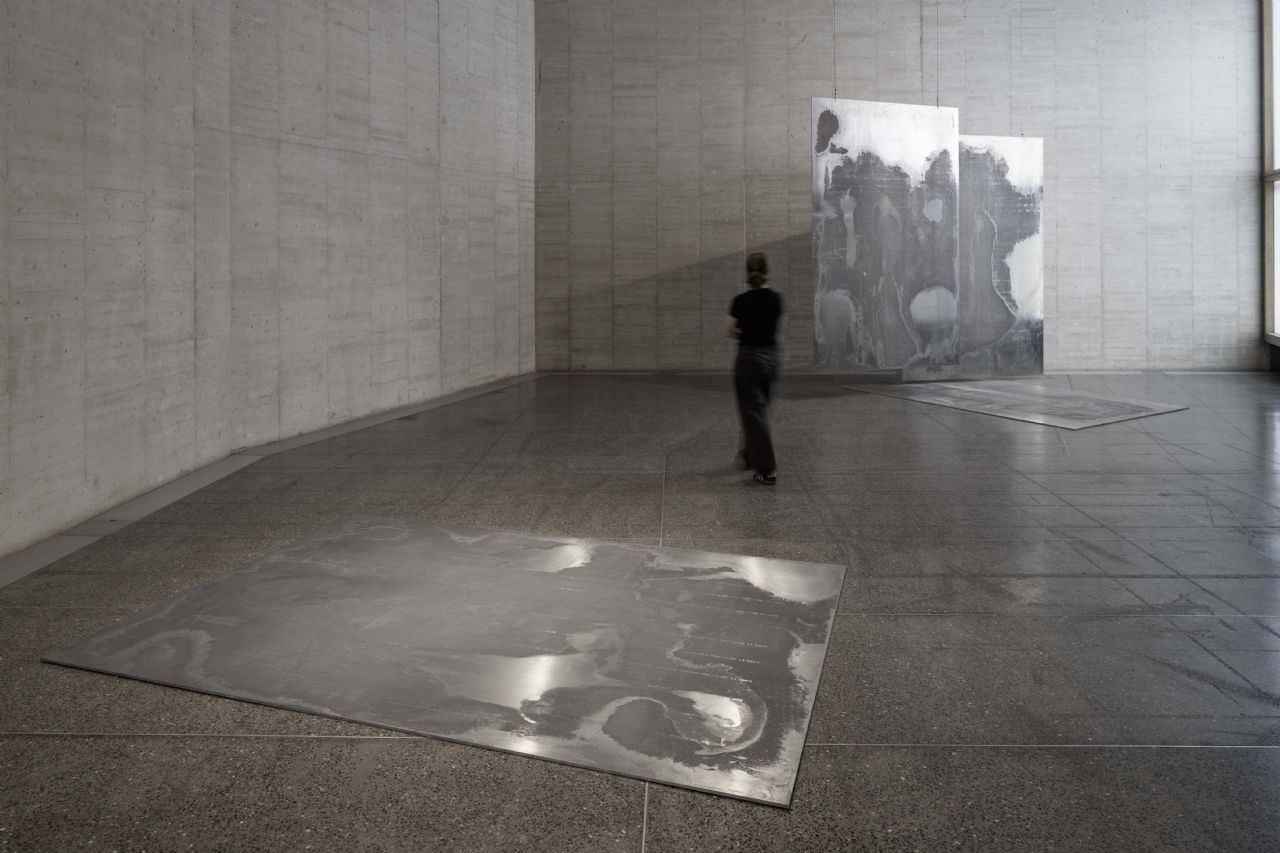
There is also a biographical and emotional dimension that runs through Sculpture Pavilion without ever descending into confessional illustration. The artist has stated on several occasions her need to find in art a refuge, a safe haven from which to confront the complexity of existence. This intuition translates here into a fractured materiality, made of joints, cuts, and folds. The aluminum—cold, industrial, reflective—retains a hardness that precludes any complacent interpretation, but at the same time reflects a trace of lived experience, as if the metallic surface were capable of retaining echoes, tensions, and remnants of a past experience. The result is a work that oscillates between the rational and the vulnerable, between structure and wound.
Viewed today, almost two decades after its conception, Sculpture Pavilion retains its power to challenge. This is not only due to its scale or the clarity of its formal approach, but also because it continues to pose urgent questions: where can contemporary individuals find refuge, what kind of spaces does art produce, and how can a sculpture become a site of resistance? In times marked by the fragility of relationships, by constant exposure, and by a crisis of certainty, Ana Laura Aláez's piece proposes an image as understated as it is incisive: that of a refuge that does not eliminate the harshness of the elements, but rather compels us to reflect upon it.

You may be
interested
...