Exhibitions
Rome hosts a major reading of modern Mexican art through Diego Rivera
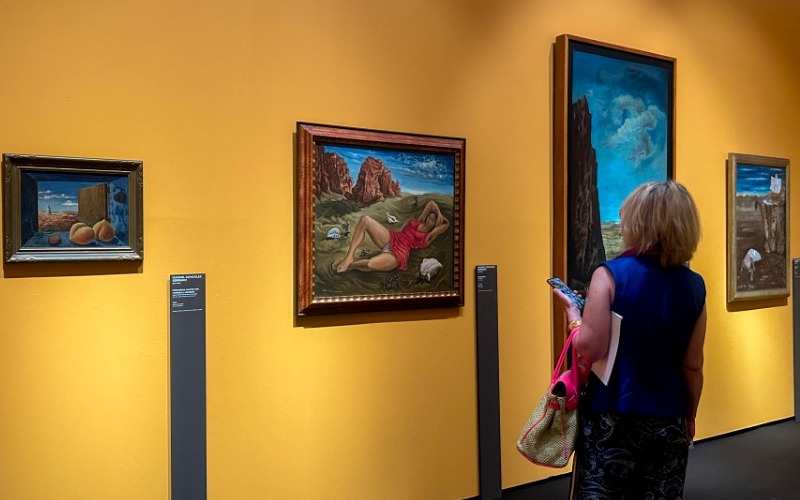
At the Palazzo Caffarelli of the Capitoline Museums in Rome, one of the most ambitious exhibitions dedicated to Latin American art in Europe in recent decades is on display. The exhibition, open to the public until December 13, offers a broad historical and aesthetic exploration of Diego Rivera's work, without limiting itself to a strictly monographic approach.
With over 140 works from public and private collections, the exhibition constructs a complex visual narrative that combines paintings, drawings, preparatory studies, and photographic material. Although Rivera himself occupies the central focus—with a selection of around thirty pieces—the exhibition expands to place him within a much broader artistic and intellectual network.
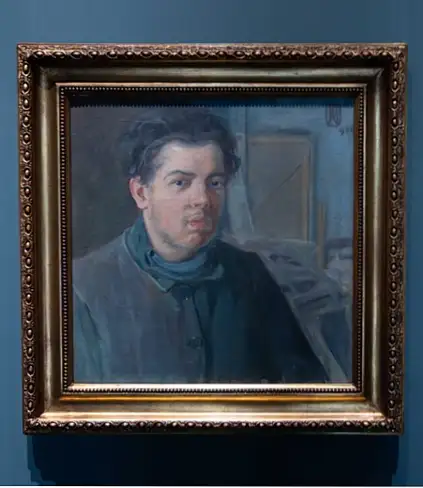
This dialogue features essential figures of 20th-century Mexican art such as Frida Kahlo, José Clemente Orozco, David Alfaro Siqueiros, and María Izquierdo, alongside the landscape legacy of José María Velasco. The documentary dimension is reinforced by Tina Modotti's photographs, which capture the social and cultural transformations of a country undergoing profound redefinition.
The exhibition was conceived as an institutional synergy between Italy and Mexico, with the support of Roma Capitale and the sponsorship of the Embassy of Mexico and the National Institute of Fine Arts and Literature. It was curated by Miguel Fernández Félix, director of the Kaluz Museum in Mexico City, and Alberto González Torres.
Far from being merely a celebration of muralism, the exhibition offers a broader interpretation: understanding how art became a key tool for constructing and communicating Mexican national identity after the Revolution. This reflection is articulated through four narrative sections that guide the visitor smoothly.
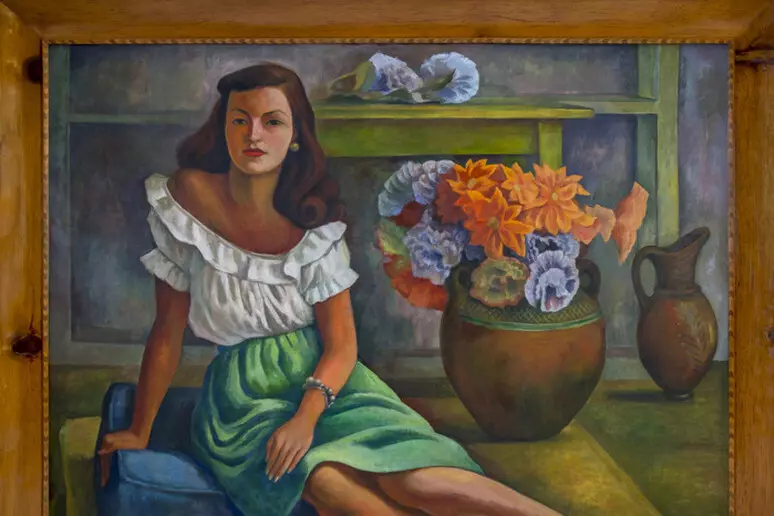
The exhibition begins with the academic foundations of the 19th century, then delves into the European period of these artists, when contact with the continent's avant-garde movements—especially Cubism—transformed their visual language. From there, the exhibition connects to the explosion of artistic modernity in Mexico and its many internal tensions.
However, the story does not strictly begin with the Revolution of 1910. The proposal goes back to 1821, the moment of Mexican independence, to raise a question that runs through the entire exhibition: what does it mean to be Mexican in a country that, since its origin as a nation, seeks to represent itself through imagery.
The result is a chromatic and historical journey that transcends the figure of Rivera to become an exploration of the birth of modern art in Mexico and the cultural exchanges that made it possible.

You may be
interested
...