Exhibitions
From modernism to contemporaneity
La Roca Village turns Gaudí's universe and the city's intimate stories into an artistic experience signed by Flowers by Bornay and Jordi Bernadó.
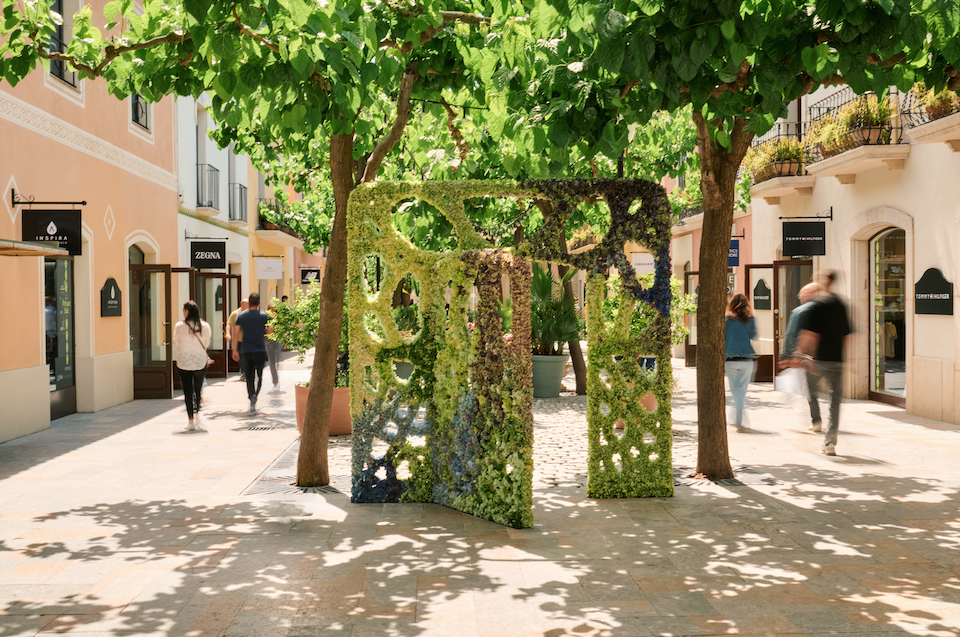
Barcelona is revealed this summer at La Roca Village through an artistic proposal that invites you to rediscover the essence of the city beyond its universal symbols. Under the title A Door to Barcelona , the commercial space is transformed into a cultural journey that dialogues with the legacy of Gaudí and the multiple identities that make up the Catalan capital, with the help of two contemporary creators: Flowers by Bornay and Jordi Bernadó.
The Barcelona studio Flowers by Bornay, led by Joan Xapelli, presents a series of large-format sculptural installations that reinterpret two of Antoni Gaudí's most emblematic works. Inspired by the wrought iron gates of La Pedrera and the ceramic roof of Casa Batlló, these wooden structures have been manually coated, petal by petal, until they become authentic living sculptures. The result is a fusion between architecture, nature and craftsmanship that takes Gaudí's visual language to a new contemporary dimension.
The chromatic palette of the pieces draws directly from the light and colors of the stained glass windows of the Sagrada Família. Volcanic orange dahlias, blue delphiniums, lisianthus and hydrangeas in green tones build a floral universe that oscillates between reality and fantasy. A proposal that vindicates one of Gaudí's great convictions: that true originality consists of returning to the origins. Here there is no serial production or artifice; only time, craft and material transformed with an almost haute couture precision.
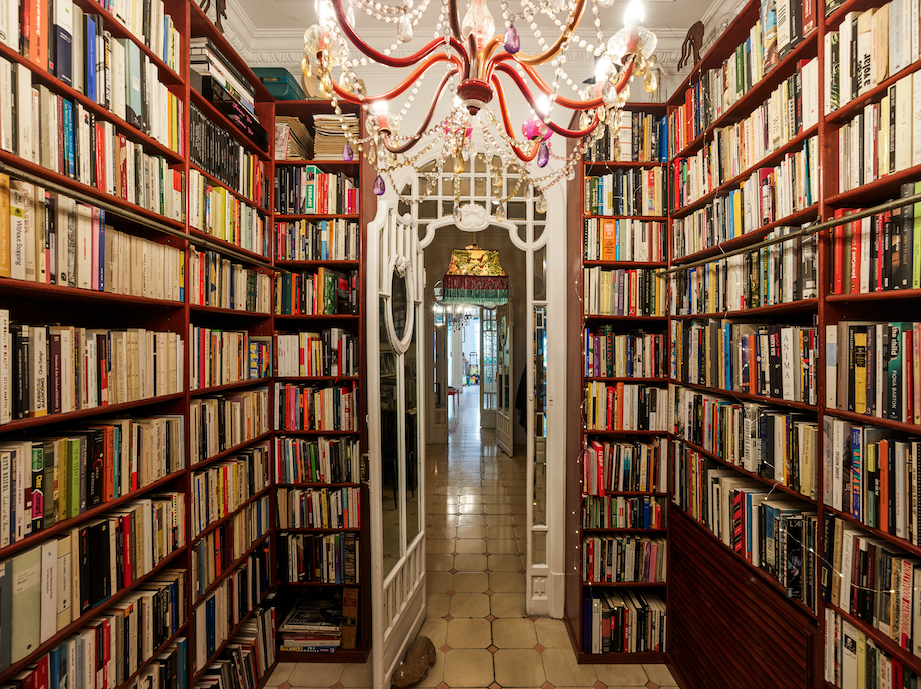
The journey continues with the gaze of photographer and artist Jordi Bernadó (Lleida, 1966), who opens the doors of twenty-four Barcelona homes to show a city that is rarely seen. From La Pedrera to El Raval, Bernadó portrays spaces inhabited by architects, filmmakers, artists, expatriates, diverse communities and anonymous neighbors. Twenty-four images that reveal everyday, intimate and plural Barcelona.
Each photograph encapsulates one of the values that define the city: diversity, creativity, talent, coexistence and the ability to project oneself into the future. Among the stories portrayed, one that stands out is that of the last tenant of La Pedrera, a woman who inhabits Gaudí's work not as a monument, but as a home.
Distributed along the boulevards of La Roca Village, the photographs invite the visitor to stroll through this inner Barcelona with the same curiosity with which one discovers an unknown neighborhood. Door after door, image after image, A Door in Barcelona becomes a celebration of the city lived, imagined and shared: an invitation to cross its most personal thresholds to better understand its soul.
You may be
interested
...