Exhibitions
Last days at KBr: Walker Evans and Carlos Pérez Siquier say goodbye to Barcelona
Two fundamental perspectives on 20th century photography before the arrival of Minor White and Joaquín Tusquets de Cabirol.
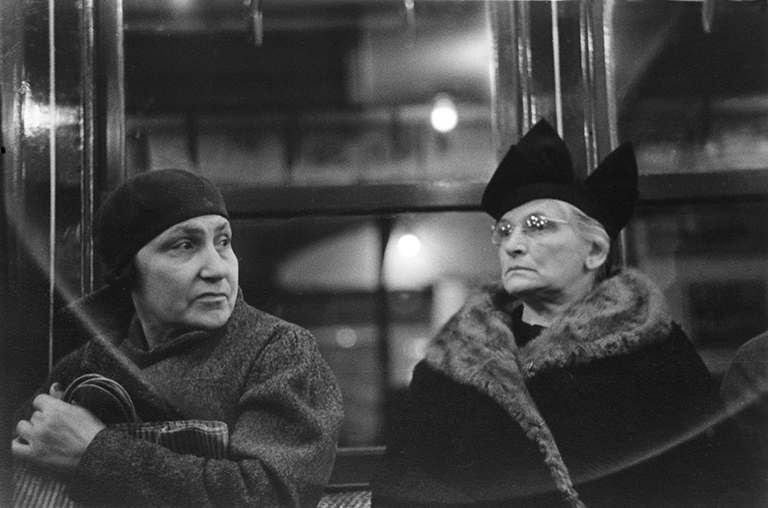
The KBr Fundación Mapfre center is facing the last days of two essential exhibitions for photography lovers: those dedicated to Walker Evans and Carlos Pérez Siquier, two essential figures for understanding the evolution of modern photographic language.
Walker Evans (1903-1975) is considered one of the great visual chroniclers of the United States of the 20th century and a key figure in contemporary documentary photography. His work, apparently austere and direct, hides an enormous formal and conceptual depth. Through urban landscapes, interiors, commercial signs or portraits of anonymous citizens, Evans constructed a lucid portrait of a country in the midst of social and economic transformation. His gaze, marked by an interest in popular culture and the everyday signs of modernity, ended up defining an era while, at the same time, subtly questioning it.
For his part, Carlos Pérez Siquier (Almería, 1930-2021) occupies a central place in the history of Spanish photography. From his hometown, where he lived his entire life, he developed a modern, poetic and profoundly human work that documents the social and cultural changes in post-war Spain with sensitivity, irony and a marked anthropological perspective. A pioneer of color photography in Spain and founder, together with José María Artero, of the Agrupació Fotogràfica Almeriense and the magazine AFAL, Pérez Siquier contributed decisively to the recognition of photography as a contemporary artistic discipline.
The exhibition Pérez Siquier. Fundación MAPFRE Collections brings together the works incorporated into the Foundation's collection since 2022 and offers a broad and representative vision of his entire artistic career. The exhibition thus resumes the major retrospective that the Foundation presented in February 2020 and which was interrupted prematurely due to the COVID-19 pandemic.
June will bring Minor White and Joaquín Tusquets de Cabirol
The KBr programming will continue from June 18 with two new exhibitions dedicated to Minor White and Joaquín Tusquets de Cabirol.
Minor White (Minneapolis, 1908-1976) was a defining figure in 20th-century American photography, both for his artistic work and his pedagogical work. He taught at leading institutions such as the California School of Fine Arts, the George Eastman House and MIT, and also played a central role in the photographic debate of the second half of the century thanks to his work as co-founder, editor and director of Aperture magazine.
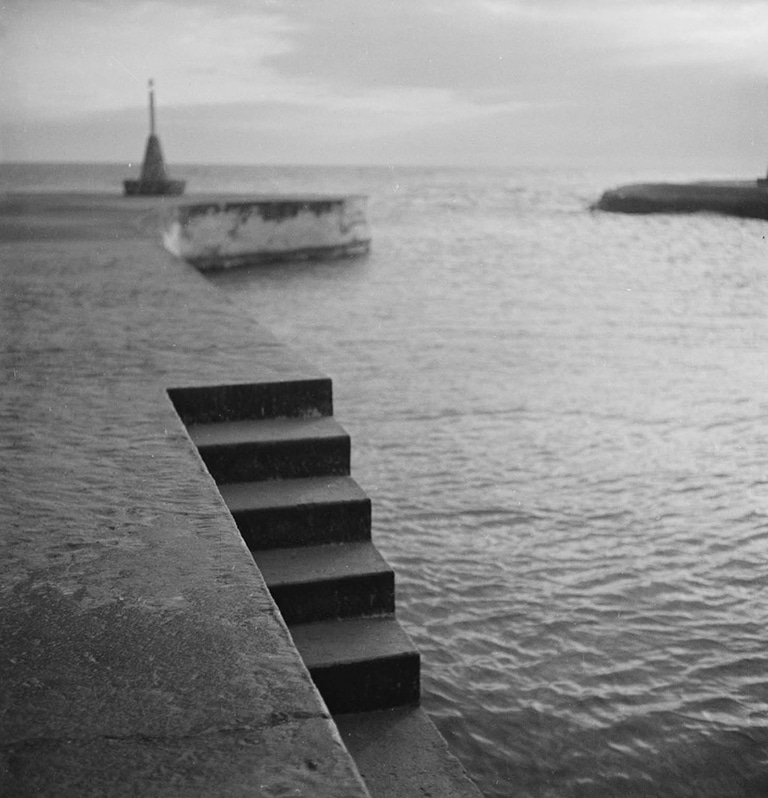
Joaquín Tusquets de Cabirol, Puerto, Barcelona, February/March 1952, Joaquín Tusquets de Cabirol Photographic Archive / Maritime Museum of Barcelona, © Joaquín Tusquets de Cabirol Photographic Archive.
The second major exhibition of the summer will be dedicated to Joaquín Tusquets de Cabirol under the title La forma eloquênt (June 18 – September 6). Born in Barcelona in 1904, Tusquets came from a cultured family environment that was sensitive to the arts, a fact that profoundly marked his photographic vision. A chemist and industrialist by profession, he found in photography a space for artistic experimentation from which to portray post-war Catalonia with an elegant, modern and deeply personal perspective. His work stands out for the evolution of pictorialism towards an innovative formal research and for the extraordinary technical quality of his prints, the result of his mastery of chemical positivation processes.

You may be
interested
...