Opinion
Hotel Kyjev: the concrete ghost that still watches over Bratislava
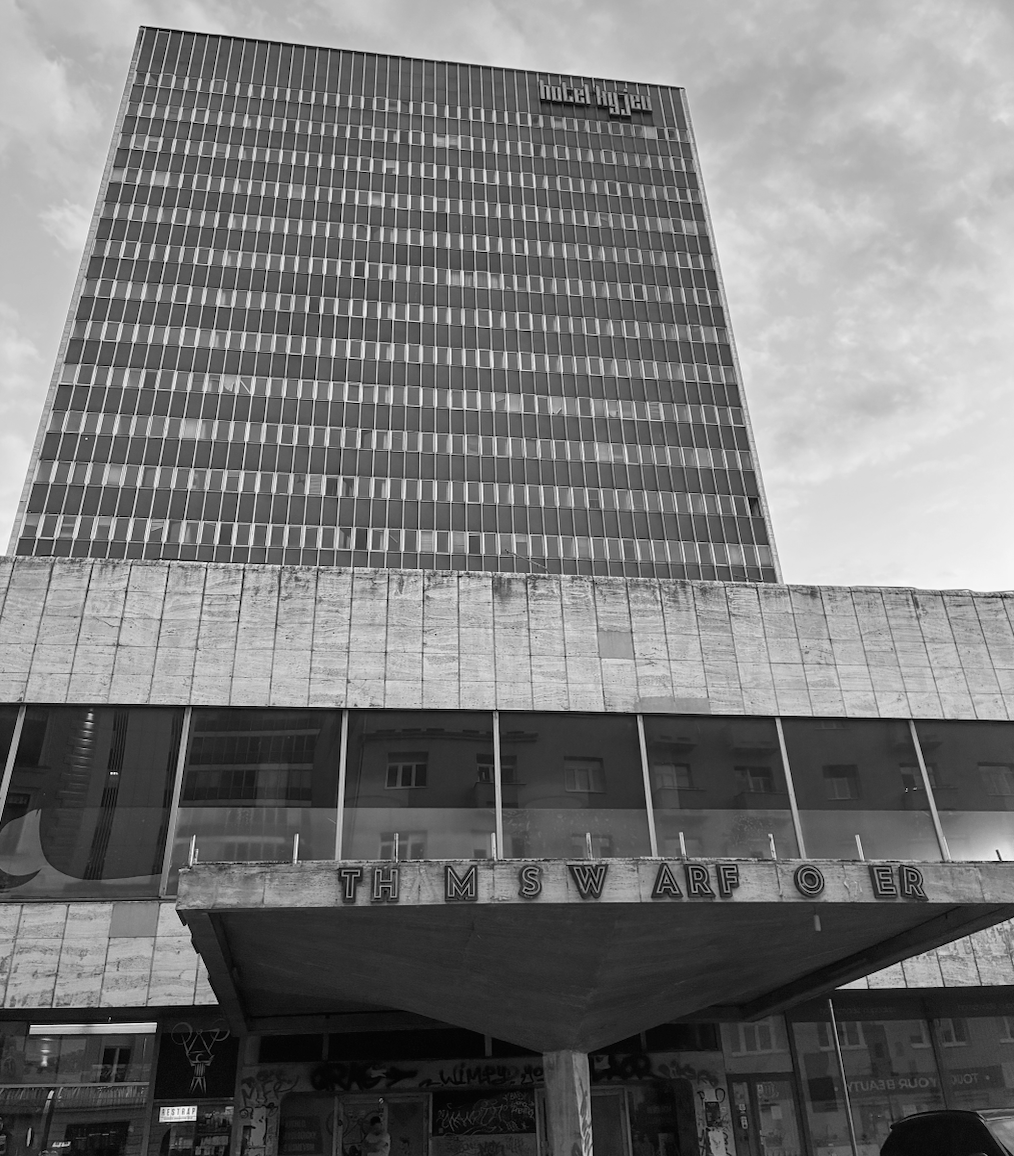
Some cities are best understood from ground level, while others need to be viewed from above. Bratislava belongs to the latter group. A simple climb to Bratislava Castle is enough to grasp how centuries of history, Soviet-era buildings, contemporary architecture, and urban wounds that have yet to heal coexist within just a few kilometers.
From the fortress, perched above the imposing Danube, the city unfolds like a model where each building seems to tell a different story. To the right, the proximity of Austria evokes the opening of a borderless Europe; in the center rises the sprawling Petržalka district, the largest collection of Soviet-era housing in the entire European Union; and among monuments like the Slavín or the iconic SNP Bridge appears a rectangular, gray, and silent silhouette that still dominates part of the cityscape: the Kyjev Hotel.
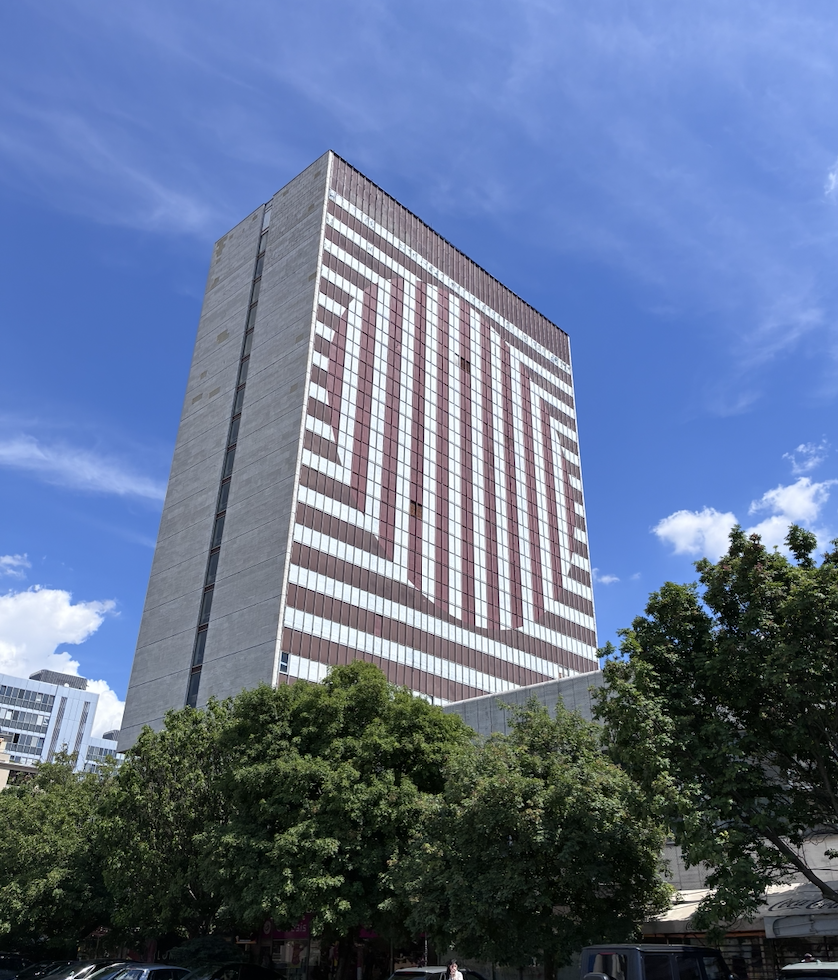
It's not the most beautiful building in Bratislava. Nor the most beloved. But it's probably one of the most symbolic. Because the Kyjev Hotel represents, like few others, the enduring contradiction of cities in the former Soviet bloc: the struggle between preserving memory and erasing the past to embrace a more profitable and aesthetically pleasing modernity.
Designed in the 1970s by Slovak architect Ivan Matúšik, the hotel was conceived as a symbol of progress. Its functionalist architecture, with clean lines and austere geometries, seemed to draw inspiration from the rationalist elegance of Copenhagen's SAS Royal Hotel. At the height of the Cold War, the Kyjev was more than just a hotel: it was a statement of intent. Bratislava wanted to project an image of modernity, internationality, and sophistication.
For decades, the building was one of the city's nerve centers. Its 106 rooms welcomed tourists, businesspeople, and foreign visitors in an era when traveling behind the Iron Curtain still held an air of mystery. The hotel symbolized an urban optimism that seems distant today. Some even remember the microphones installed in the rooms, a reflection of a time when surveillance was part of everyday life.
However, time is rarely kind to political symbols. After years of decline and institutional neglect, the Kyjev Hotel finally closed in 2011. Since then, its structure has become a kind of vertical skeleton caught between nostalgia and real estate speculation.
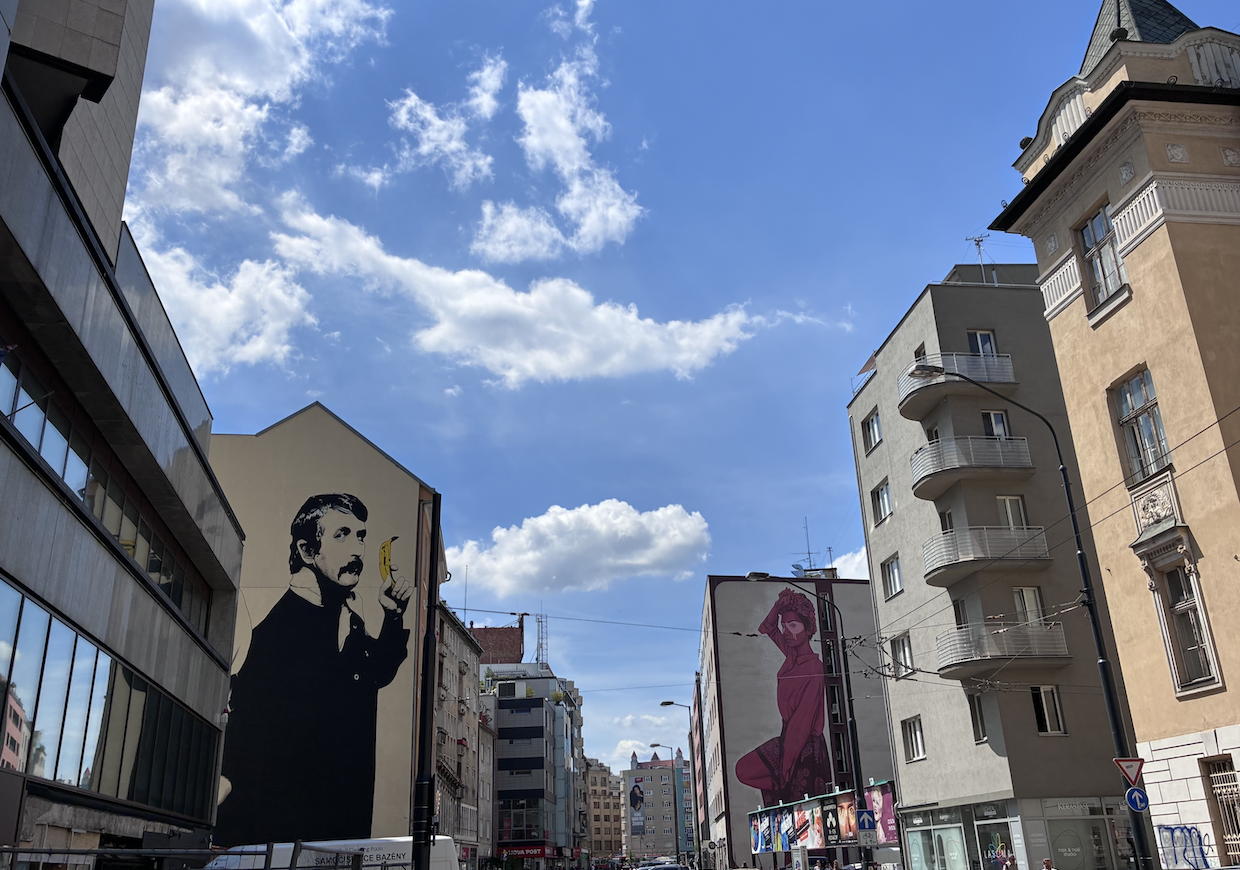
Paradoxically, it was art that momentarily breathed new life into the building. That same year, the hotel hosted the Deconstruction BRATISLAVA STREETART FESTIVAL , one of the largest urban art festivals held in Europe. More than 600 spray cans transformed its facade into an immense contemporary canvas. The contrast was striking: creativity and ruin coexisting in the same space. As if Bratislava were trying to engage with its past without yet knowing what to do with it.
Today, the Kyjev Hotel remains empty. Dark. Motionless. A concrete colossus that continues to loom over the city while awaiting an uncertain future. There are reconstruction plans, promises of renovation, and debates about its preservation, but the building remains stuck in a kind of architectural limbo.
And perhaps therein lies its power. Because the Kyjev is no longer just an abandoned hotel. It's an unsettling mirror. A reminder of how cities, too, age, forget, and betray parts of themselves. As Bratislava moves toward an increasingly European and contemporary image, Ivan Matúšik's old giant continues to watch from the urban hill like a ghost of the past that refuses to disappear.


You may be
interested
...