News
Guernica will not travel to the Basque Country due to conservation concerns
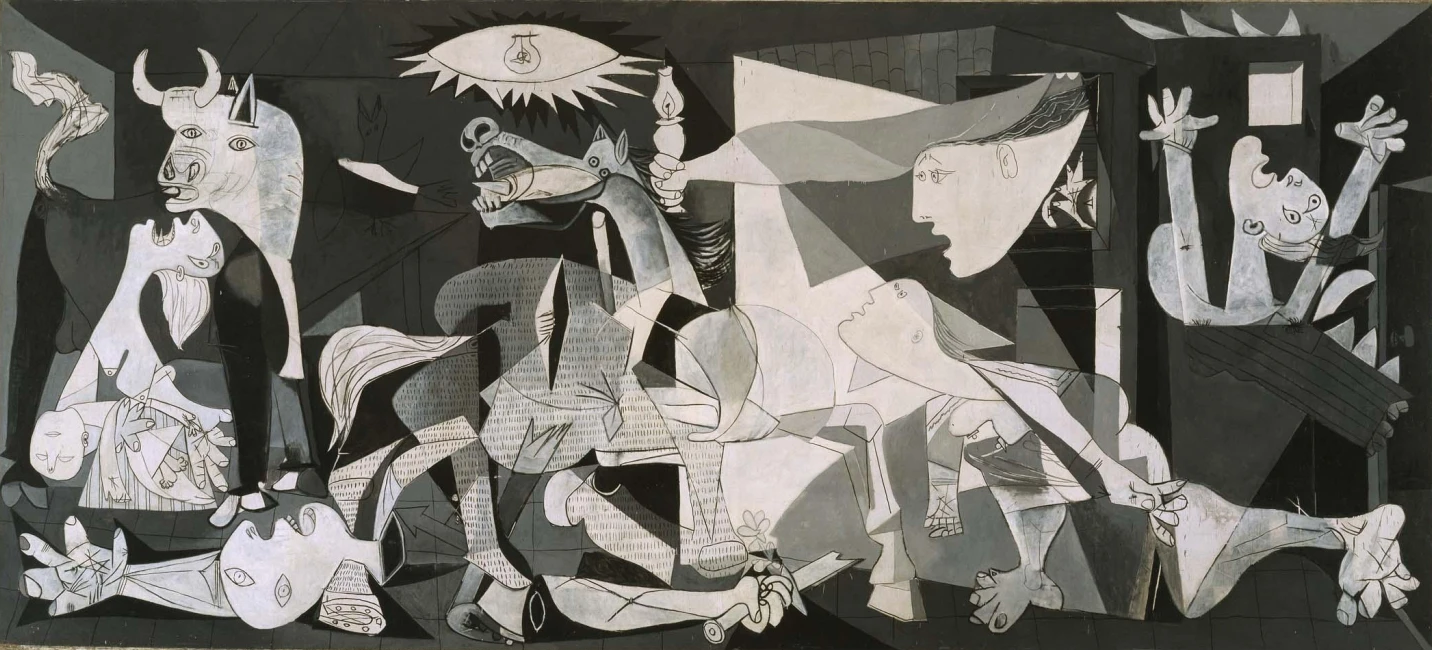
The debate over the fate of Guernica has been reopened at a time charged with historical symbolism. The Basque Government, led by Lehendakari Imanol Pradales, has once again requested the central government to temporarily transfer the painting to the Guggenheim Museum Bilbao. The proposal envisions an exhibition between October 2026 and June 2027 to commemorate the 90th anniversary of the bombing of Guernica, a pivotal event in the Spanish Civil War that inspired Pablo Picasso's painting.
The request has not been limited to the institutional level: the Basque Department of Culture has also formally submitted the request to the Ministry of Culture. However, the response has followed the same pattern as on previous occasions. Minister Ernest Urtasun commissioned a report from the Reina Sofía Museum, where the work has been housed since 1992, and the conclusion was unequivocal: the transfer is not advisable.
The arguments directly address the fragility of the canvas. Considered one of the most complex 20th-century works to conserve, its condition requires extremely controlled conditions that make any safe transport impossible. Urtasun has emphasized that commemorating the bombing also means ensuring the long-term survival of the artwork, insisting that his responsibility is to preserve an artistic heritage of incalculable value.
The history of Guernica is marked, precisely, by movement. Painted in Paris in 1937, in the midst of war, it began an international journey through cities such as Oslo, Copenhagen, and London before settling in the MoMA in New York at Picasso's own request. It did not return to Spain until 1981, after the return of democracy, and after an initial period in the Casón del Buen Retiro, it found its permanent home in the Reina Sofía Museum, where it has remained ever since.
Despite repeated refusals, demands from the Basque Country have not ceased over the years. Now, the anniversary of the bombing has once again placed the issue at the center of cultural and political debate, further straining the relationship between historical memory, territory, and artistic preservation.
The risk of the transfer
The potential relocation of Guernica continues to generate widespread opposition within the field of art conservation. This is not merely an institutional or political issue, but rather a matter of the painting's extreme material fragility. Measuring over seven meters in length, the canvas has a complex and aged structure that has required numerous interventions over time to ensure its stability.
Pablo Picasso employed experimental techniques and materials in its execution, which, over the decades, have proven to be particularly fragile. The painted surface exhibits micro-cracks and vulnerable areas, while the support has been reinforced to prevent deformation. In this context, any movement—however controlled—can generate tensions, vibrations, or alterations that compromise its integrity.
In addition to these factors, there is the strict requirement to maintain constant environmental conditions. Minimal changes in temperature, humidity, or lighting can cumulatively affect the artwork's state of preservation. Transportation, whether by land or air, introduces variables that are difficult to completely neutralize, such as continuous vibrations or pressure variations.
Therefore, the Reina Sofía Museum, where the work has been housed since 1992, has maintained a firm policy for decades: to avoid any unnecessary movement. The current stability of Guernica is largely understood as a result of its presence in a controlled and constant environment. From this perspective, ensuring its long-term preservation means precisely not subjecting it to the risks inherent in a relocation.


You may be
interested
...