Exhibitions
Crònica Team revisits history to understand the present
Art, politics and memory in dialogue within European modernity in Xàtiva with Equipo Crónica at the Museum of Fine Arts.
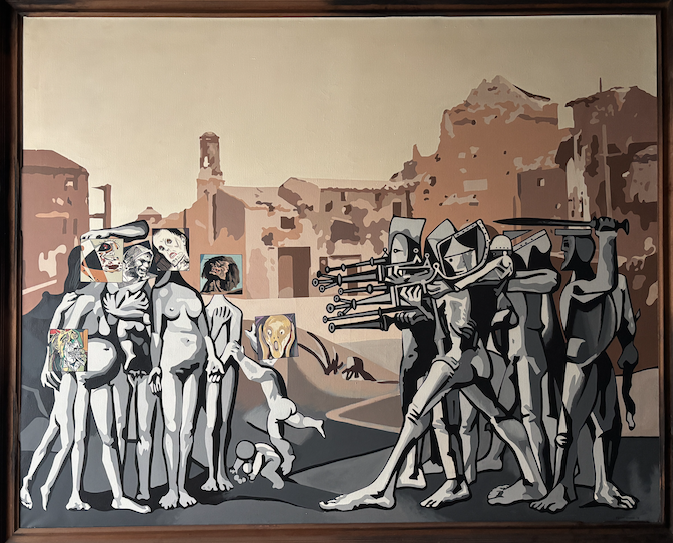
The exhibition Equipo Crónica | Crònica d'un temps , which can be visited in Xàtiva from March 25 to July 26, offers an intense and revealing journey through the creative universe of one of the most decisive groups in the renewal of Valencian and Spanish art in the second half of the 20th century. With a consolidated international projection —present in museum collections around the world—, the exhibition proposal emphasizes the research and critical dimension of the joint work of Rafael Solbes and Manolo Valdés.
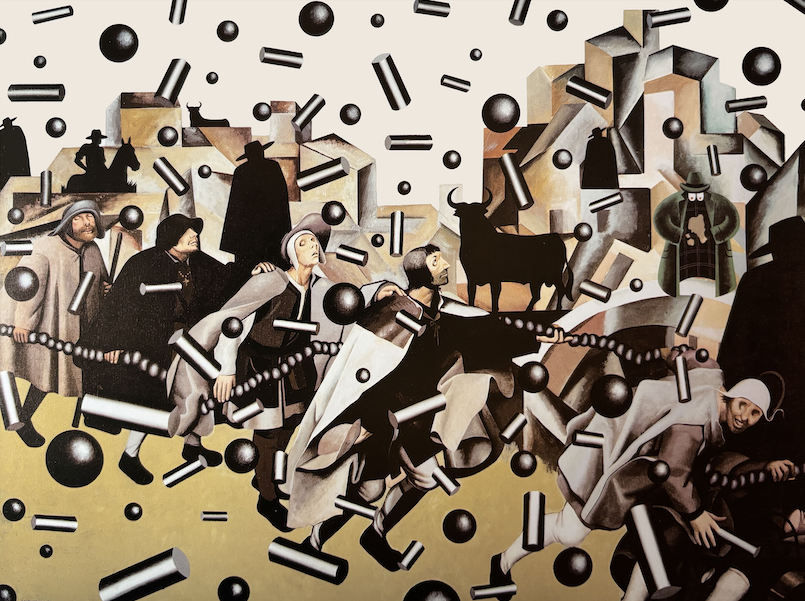
Beyond its plastic quality, the work of Equipo Crònica is configured as a lucid testimony of the political and social context in which it was produced: the Franco dictatorship and the period of transition. In this sense, his paintings not only dialogue with the immediate reality, but also with a broad cultural framework that includes artists, thinkers and European movements of the moment.
One of the fundamental axes of their practice is the constant dialogue with the history of art. Far from a simple reverence for the masters, Solbes and Valdés articulate a critical and contemporary rereading of the European pictorial tradition. The avant-gardes thus become living matter, reinterpreted from an ironic and often demystifying perspective. This attitude is also reflected in the incorporation and transformation of languages originating from movements such as constructivism, pop art or figurativism.
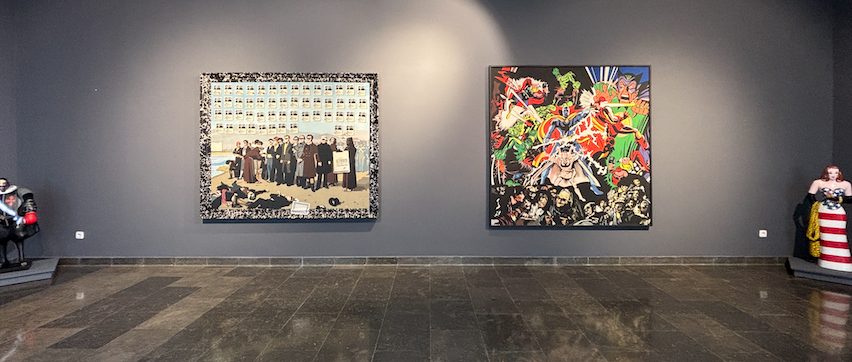
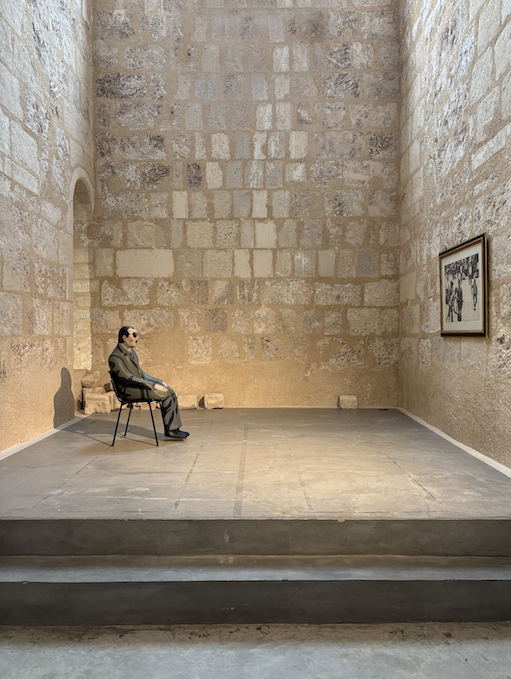
The exhibition is set up in two complementary spaces that dialogue with each other. On the one hand, Sant Domènec hosts the large-format works, highlighting the conceptual and formal ambition of the collective. On the other, the Casa d'Ensenyança presents smaller pieces, which foster a more intimate relationship with the viewer, without sacrificing discursive density.
The distribution of the rooms responds to stylistic and referential criteria, tracing an itinerary that goes from Baroque to Pop Art, and that includes areas dedicated to Constructivism and Abstraction, as well as the influence of photography and cinema. Other sections explore Cubism, Costumbrism and graphic production, configuring a rich and heterogeneous visual map.

You may be
interested
...