Exhibitions
La Cuadra, where time is a moveable feast: Dialogue between Felix Gonzalez-Torres and Luis Barragan
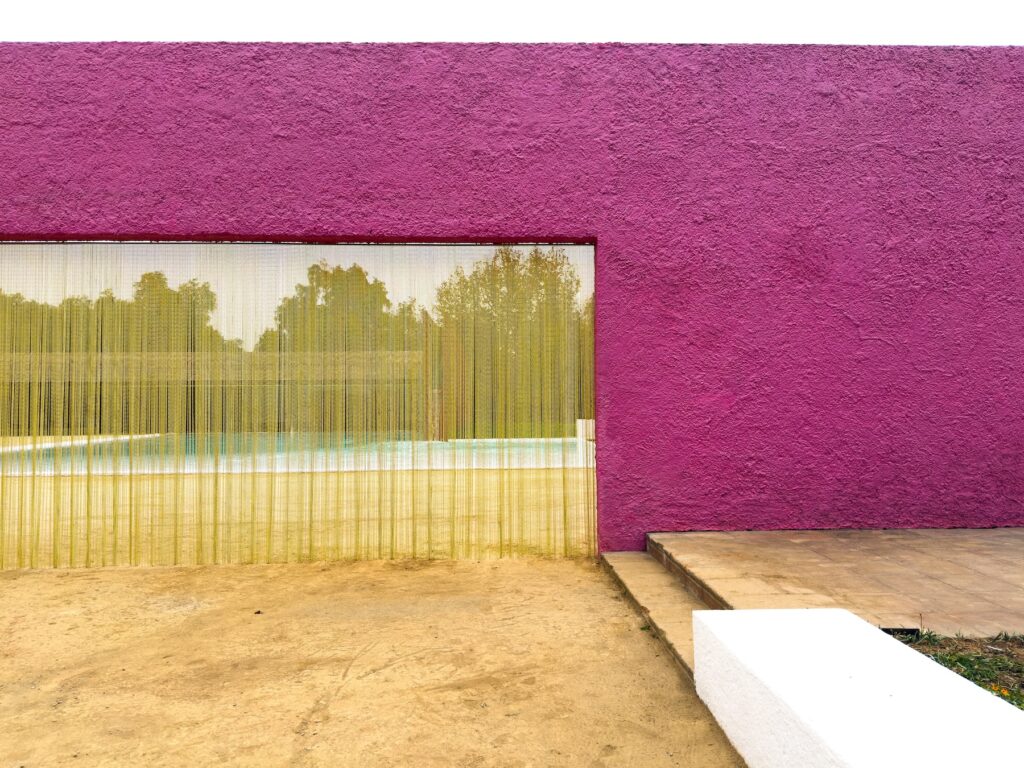
From February 8 to April 5, 2026, La Cuadra will host an exhibition curated by Pablo León de la Barra that stages the coexistence between the architecture of Luis Barragan and the works of Felix-Gonzalez Torres. The exhibition doesn’t really rely on a dialogue, a word that in itself represents too much harmony, but in the lateral approximation between two ways of understanding space, whilst Barragan aspires for permanence, Gonzalez-Torres suspects from it.
Built in 1968 as private stables on the outskirts of Mexico City, La Cuadra remains one of Barragán’s most emblematic works. Conceived as an environment of contemplation shaped by light, color, and proportion, it was later opened to the public as a site dedicated to dialogue between architecture, art, and design. The exhibition coincides with the conclusion of Mexico’s dynamic art week, Zona Maco (February 4–8, 2026), and marks the first solo presentation of Gonzalez-Torres’s work in Mexico City since his exhibition at the Museo Universitario Arte Contemporáneo (2010), following his earlier presentation at the Museo Rufino Tamayo (1998).
Gonzalez-Torres was one of the most influential artists of his generation, who lived and worked resolutely according to his own democratic ideology, determined to "make this a better place for everyone." An ideology that trespasses to the physical in its intervention with the color, light and geometry produced by Luis Barragan’s architectural space in La Cuadra. Within Barragán’s expansive structure, González-Torres’s golden bead curtains introduce a radically different spatial logic. Where the pink wall asserts opacity and distance, the curtain operates through porosity and touch, transforming architecture into a threshold rather than a boundary. The curtains made of golden suspended beads introduce a different logic to that of the wall, where architecture delimits the curtain filters; where the plane affirms stability, the installation proposes transit. Thousands of suspended beads scatter light and sound, registering each passing body as a fleeting trace, an interruption to a scenic moveable sunset where movement replaces monumentality, and permanence gives way to repetition. The space stops being only a container, transforming into a surface of exchange, where light is fragmented, sound altered, and the path becomes variable.
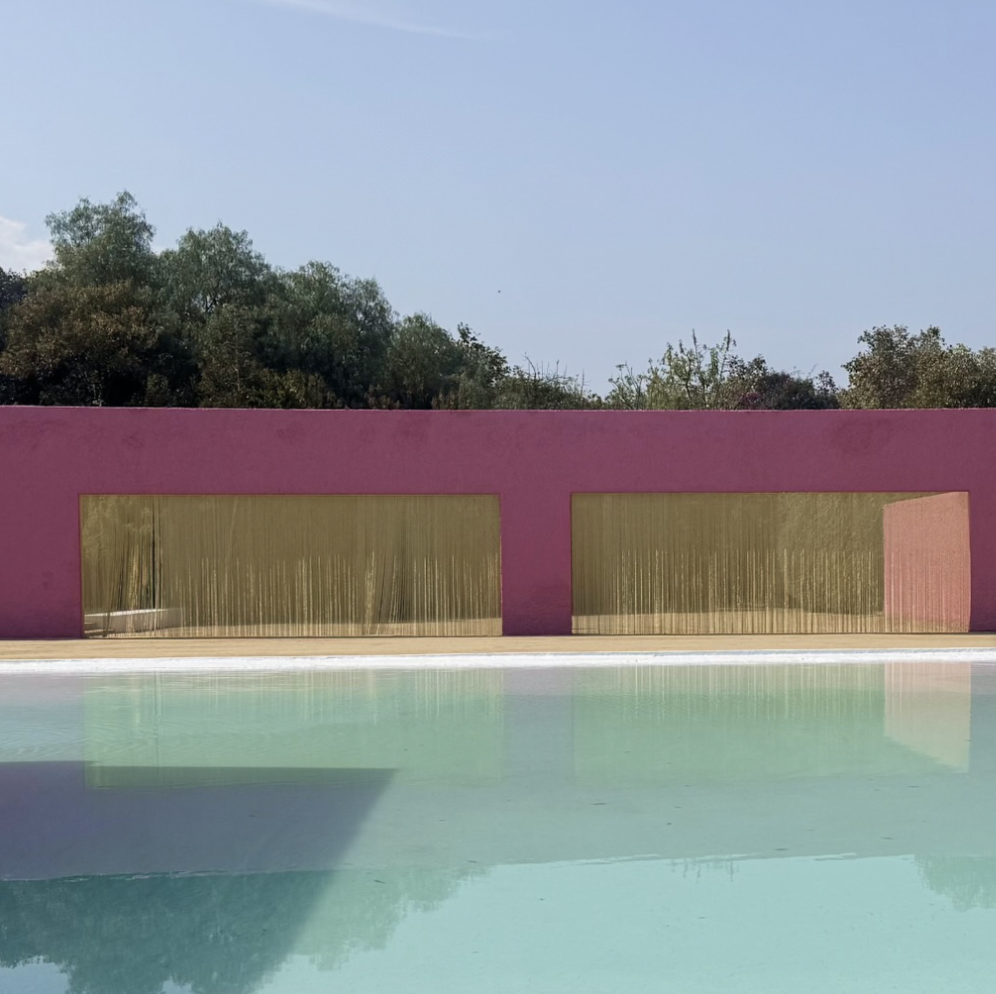
Aware of his own mortality after his diagnosis of AIDS, González-Torres conceived his work as pieces meant to be in constant movement and chaos where candy disappears, paper travels, light flickers, curtains move and reflections erode. His practice exemplifies what queer theorists describe as non-linear time, a mode of temporality that moves through past, present, and future in irregular and resistant ways. Gonzalez-Torres' foundational refusal of permanence produced pieces of work that circulated, diminished, and regenerated. Always in motion, always in a constant state of becoming, leaving behind what he expected of his legacy very clearly. This condition recalls Heraclitus’s assertion that “you can’t step into the same river twice,” Shaped by queer nightlife and bodily performance, his practice remained grounded in vulnerability and exposure. Gonzalez-Torres spoke about love in the realest form, and probably one of the artists that best spoke about it often around the shadow of death. In Heideggerian terms, González-Torres understood life through his awareness of dying, ending up grounding the aesthetic and ethical foundations of his practice in impermanence.
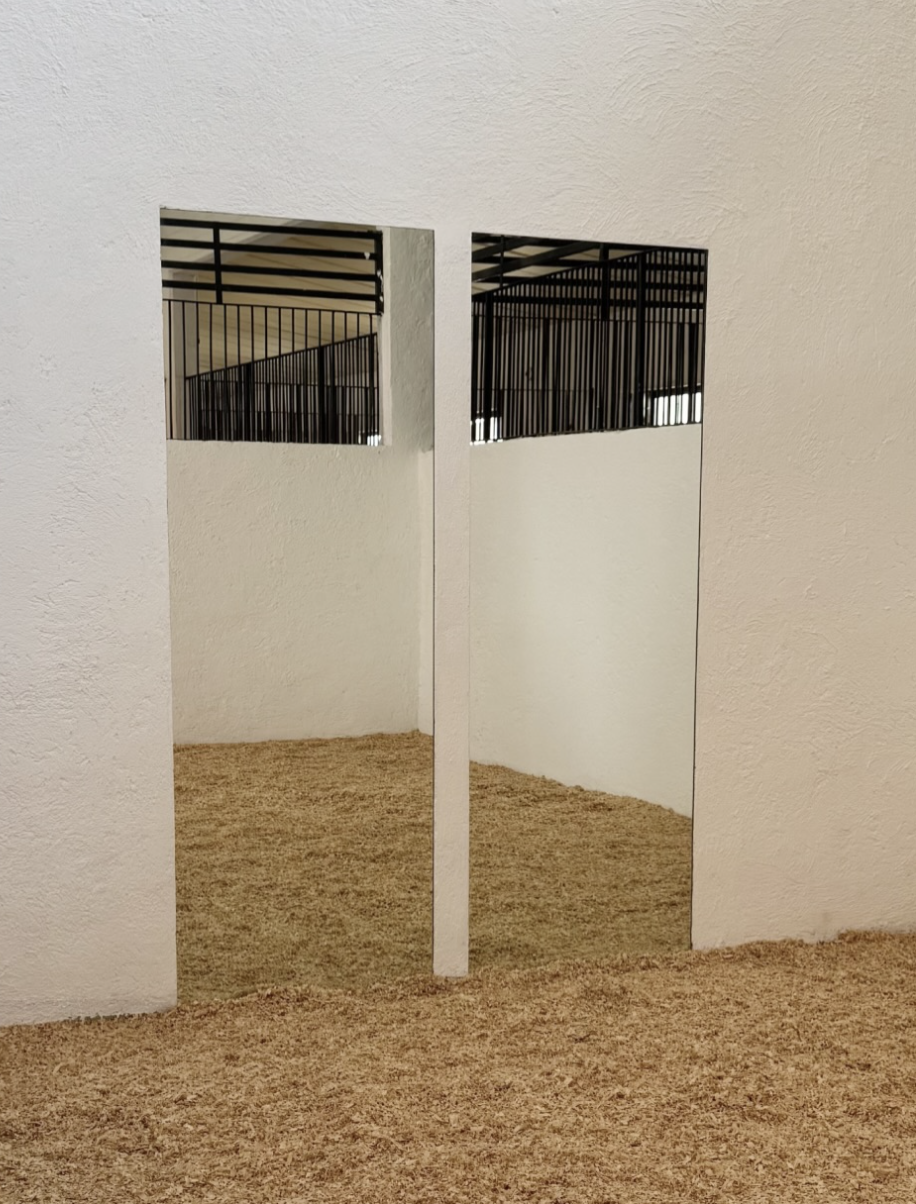
In the exhibition the mirrors, paper stacks, and platforms further complicate the spatial ethics of La Cuadra. The mirrored panels reflect architecture rather than bodies, producing a circuit in which space looks back at itself and subjectivity remains unresolved.In the courtyard, lies Gonzalez-Torres well known raised platforms functioning here as an empty stage in a sunlit room where the viewer doesn’t occupy the centre as a privileged subject; but as a participant with a system that admits variation, attrition and repetition. Architecture, usually associated with stability, is pierced by a logic of circulation.
More than proposing a romantic lecture about ephemerality, this interleaved dialogue suggests that permanence and mutability are not absolute opposites, but spatial regimes that can coexist. Where Barragan constructs atmospheres from materialised control, González-Torres works from these same protocols that allow the piece to change without losing its structure.Ultimately, the space ends up articulating a vision of art and architecture not as instruments of permanence, but as practices of presence grounding Gonzalez-Torres’s ideological determination to simply make the world a better place.
You may be
interested
...