
Exhibitions
An Ode to Printmaking reinterprets fin-de-siècle printmaking from the perspective of its internal tensions
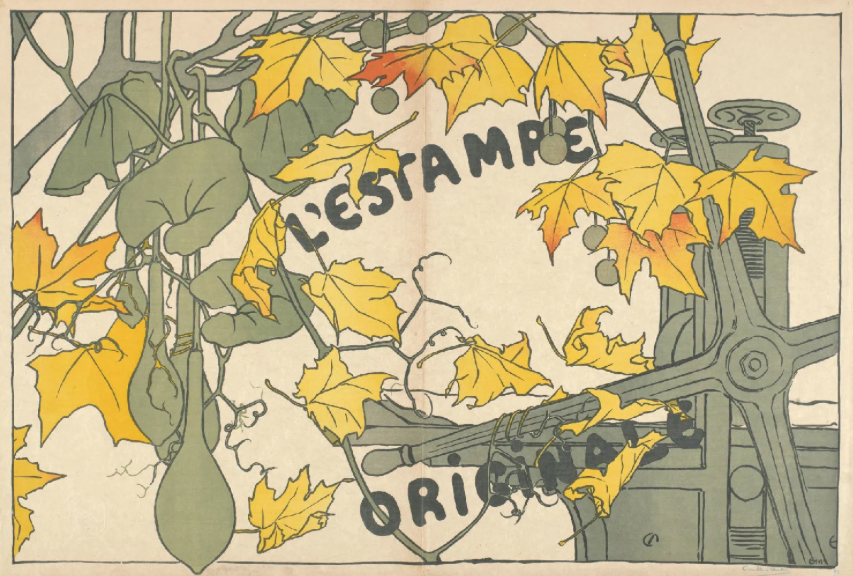
The album L'Estampe originale (1893–1895) occupies a central place in the flourishing of fin de siècle printmaking, not only as a publishing project but also as an aesthetic statement. The Van Gogh Museum in Amsterdam's concise yet precise exhibition, An Ode to Printmaking , brings together some 35 prints that illuminate the ambition, diversity, and internal tensions of this landmark of modern graphic art.
Preserved in their entirety by very few institutions—among them the Van Gogh Museum—L'Estampe originale is today an almost mythical object, both for its material fragility and for the clarity with which it encapsulates a moment of cultural transition. The works, rarely exhibited, reveal a graphic language that oscillates between avant-garde experimentation and a sensibility still rooted in the bourgeois taste of the late 19th century.
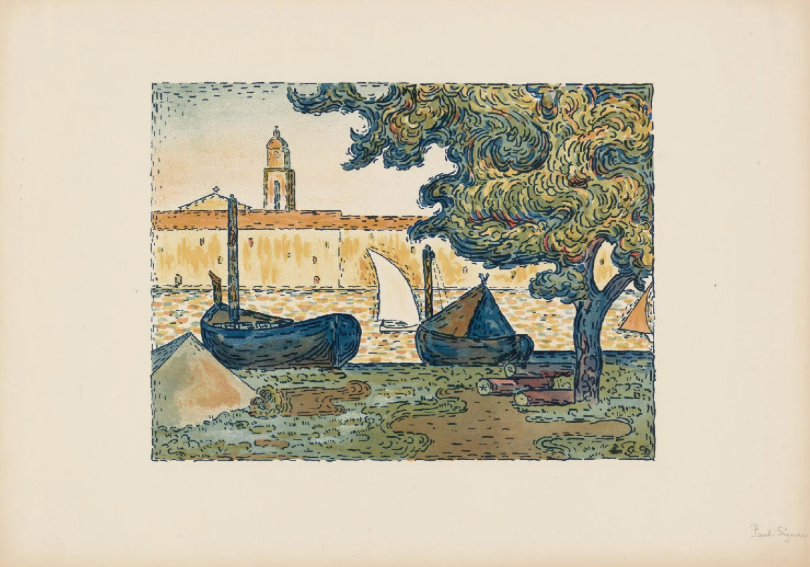
Paul Signac, Saint-Tropez, 1894.
The project launched by publisher André Marty in 1893 revolved around the idea of the estampe originale: an engraving conceived as an autonomous, non-reproductive work, in which the artist had to be involved in every stage of the process. This requirement, coupled with limited editions of one hundred numbered copies, gave prints a status almost equivalent to that of painting, in open opposition to the industrial logic that dominated the visual culture of the time. However, this aspiration to artistic purity coexisted with a clearly calculated publishing strategy, designed to appeal to a still-cautious collectors' market.
This ambiguity is especially visible in the coexistence of established names like Bonnard, Pissarro, Toulouse-Lautrec, and Gauguin with lesser-known artists and more conservative graphic approaches. Far from diluting the whole, this heterogeneity makes it more eloquent: the album doesn't offer a unified vision of modernism, but rather a field of forces in which tradition and rupture observe each other, touch upon each other, and sometimes neutralize one another.
One of the most revealing aspects of the collection is its use of color. Polychrome lithography, for decades considered a minor resource, acquires a prominent presence here. Influenced both by the culture of the urban poster and by the impact of the Japanese prints presented in Paris in 1890, the color print becomes an emblem of modernity. However, its adoption is not uniform: while some artists exploit its decorative and expressive potential, others incorporate it cautiously, as if still weighing its aesthetic consequences.
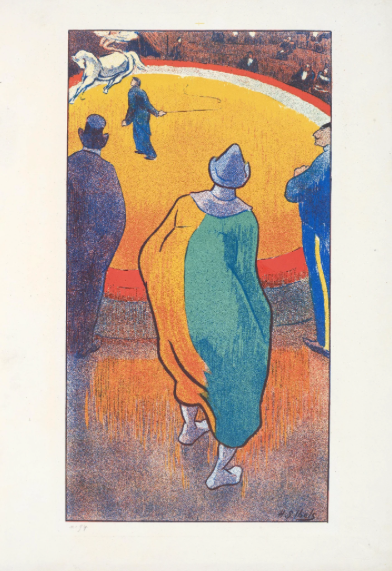
Henri Gabriel Ibels, Au cirque, 1893.
The recurring presence of female figures adds another layer of critical interpretation. Women depicted as muses, mothers, lovers, or allegories populate the prints, almost always without a distinct identity. These images, intended for a private, male audience, both reproduce and fix a gaze that oscillates between desire, idealization, and mystery. The album thus becomes a revealing document not only of artistic transformations but also of the symbolic and social structures that underpin them.
More than just a collection of prints, L'Estampe originale functions as a complex portrait of the fin de siècle. Its pages intertwine technical innovation, editorial strategies, modern aspirations, and social contradictions. This exhibition, on view from January 30 to May 17, by isolating and juxtaposing some of its prints, not only celebrates printmaking as a medium but also invites a critical reconsideration of a moment in which art, the market, and society were being redefined inextricably.

You may be
interested
...