Exhibitions
Lucio Fontana and the alchemy of clay in Venice
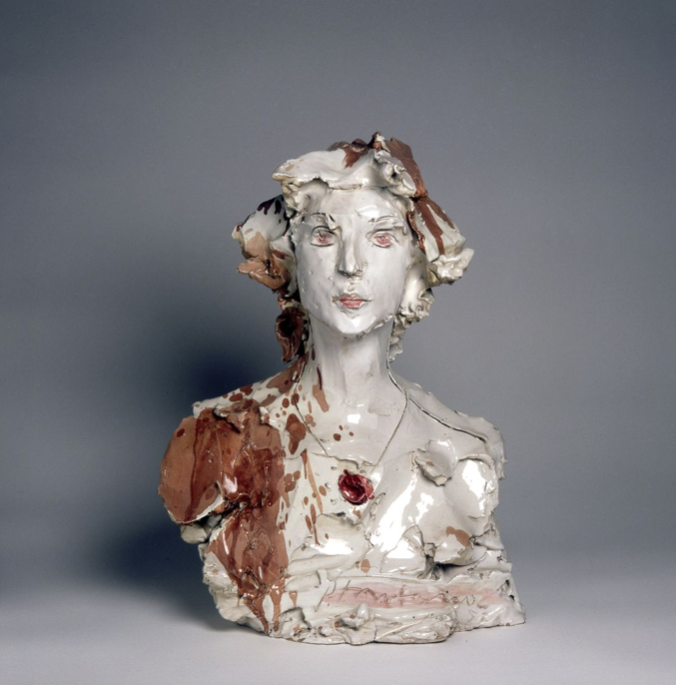
Mani-Fattura: le ceramiche di Lucio Fontana , at the Peggy Guggenheim Collection in Venice, is a groundbreaking exhibition that reveals a lesser-known facet of the artist and offers a broader interpretation of his legacy. Through more than seventy experimental ceramic works, the exhibition explores the fusion of art, craft, and design, and invites us to reevaluate Fontana not only as the father of Spatialism, but also as a creator deeply connected to the ancient alchemy of clay.
In this material and symbolic territory, gesture meets matter, and form emerges from the act of making, giving rise to an open and vital process in which, as Hecker points out, “clay emerges as a receptacle for the affirmative experimentation of life, multiplicity, and generativity.” The exhibition at the Venetian museum will be on view from October 11, 2025, to March 2, 2026, and is the first museum exhibition dedicated exclusively to the ceramic work of Lucio Fontana (1899–1968), one of the most innovative—and, in his own unique way, irreverent—artists of the 20th century.
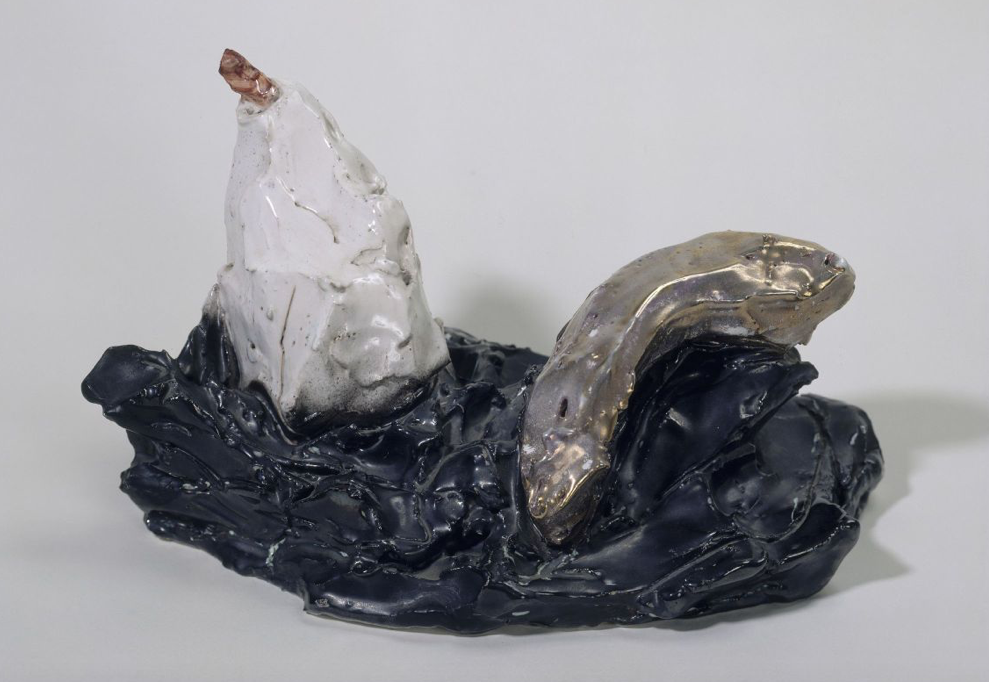
Banana and pear, 1938, Rira Collection.
Although Fontana is best known for his iconic cut and perforated canvases of the 1950s and 60s, this exhibition, curated by art historian Sharon Hecker, focuses on a lesser-known but essential dimension of his work: his work with clay, which he began in Argentina in the 1920s and explored continuously throughout his life. The exhibition thus offers a reinterpretation of his career, positioning ceramics not as a marginal episode, but as a fundamental laboratory for his artistic thought.
Through more than seventy works—several of them never before exhibited and drawn from prominent public and private collections—the exhibition explores the breadth of Fontana's sculptural vision in ceramics, which the artist understood as fertile ground for continuous experimentation. His work with clay developed over decades and in very diverse contexts: from his beginnings in Argentina, through Fascist-era Italy, a return to Argentina, and finally postwar Italy, marked by reconstruction and economic boom.
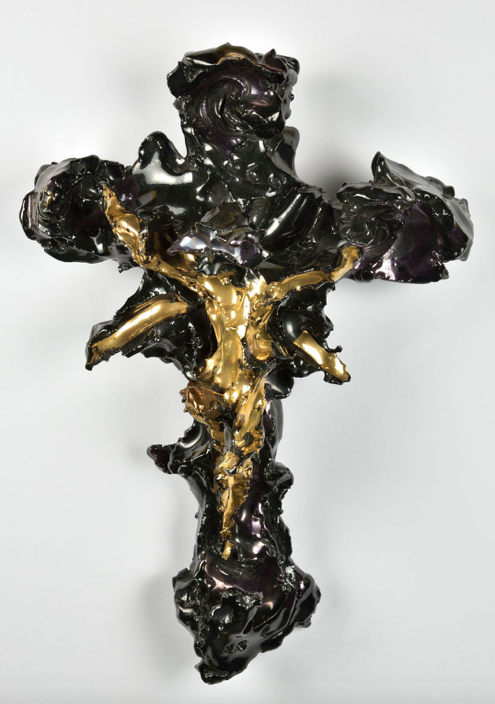
Crocifisso, 1952, MIC – Museo Internazionale delle Ceramiche in Faenza.
Mani-Fattura thus proposes a reinterpretation of Fontana not only as a key figure of Spatialism, but also as an artist deeply engaged with the materiality and expressive potential of clay. The exhibition reveals a more intimate and collaborative side, linked to the soft physicality of clay and lasting ties with creators and workshops such as the ceramist and poet Tullio d'Albisola and the historic Mazzotti manufactory in Albisola.
The exhibition is complemented by a short film made especially for the occasion by the Argentine director Felipe Sanguinetti, which accompanies the tour with a visual journey through different spaces in Milan and through Fontana's collaborations with leading Italian architects.


You may be
interested
...