Exhibitions
Painting after Matisse: color as a way of life
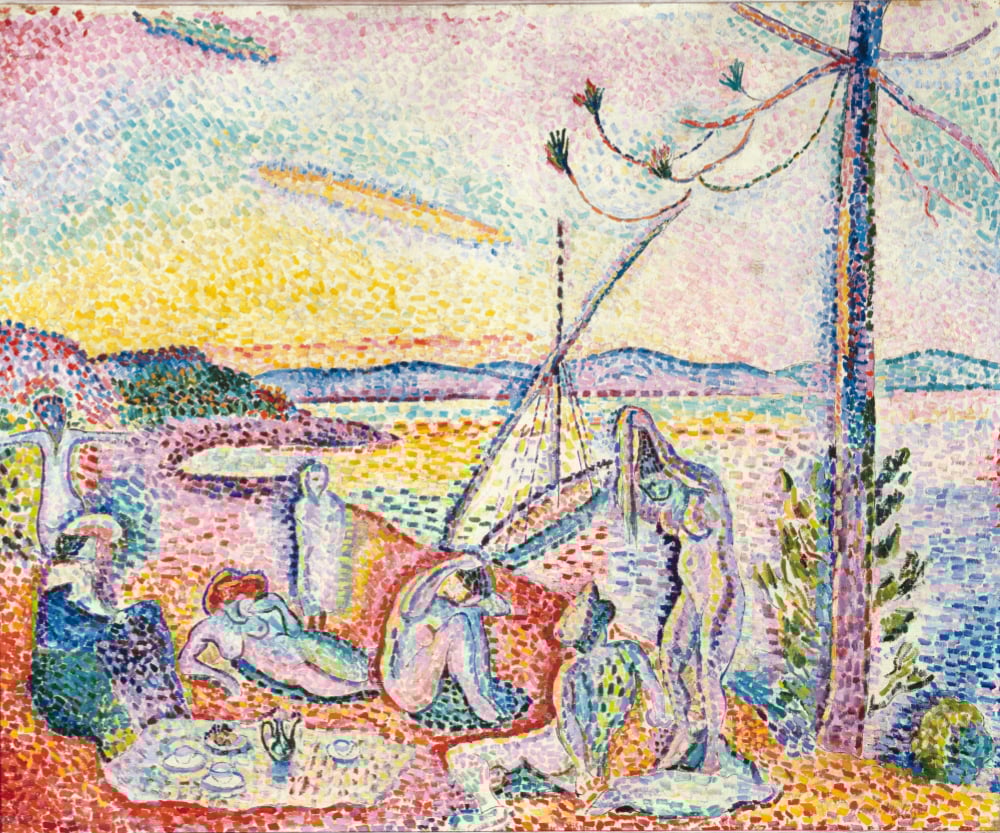
"The essence of modern art is to be part of our lives"
Henri Matisse's restless and radical painting continues to resonate in contemporary art, not as a closed legacy, but as a living force that continues to question the limits of form, color, and pictorial space. This persistence is the central theme of Chez Matisse. The Legacy of a New Painting , an ambitious exhibition on view at CaixaForum Madrid until February 22nd, which offers an expanded interpretation of the French artist's impact beyond his historical context.
Organized in collaboration with the Centre Pompidou, the exhibition brings together nearly one hundred works and proposes a cross-disciplinary dialogue between 46 pieces by Matisse and 49 works by artists from different generations and backgrounds. Far from presenting a conventional retrospective, the exhibition articulates a play of resonances, affinities, and tensions that reveals how Matisse's revolution—his conception of color as an emotional structure, his rejection of naturalism, and his commitment to autonomous painting—was absorbed, transformed, and, at times, questioned by other artists.
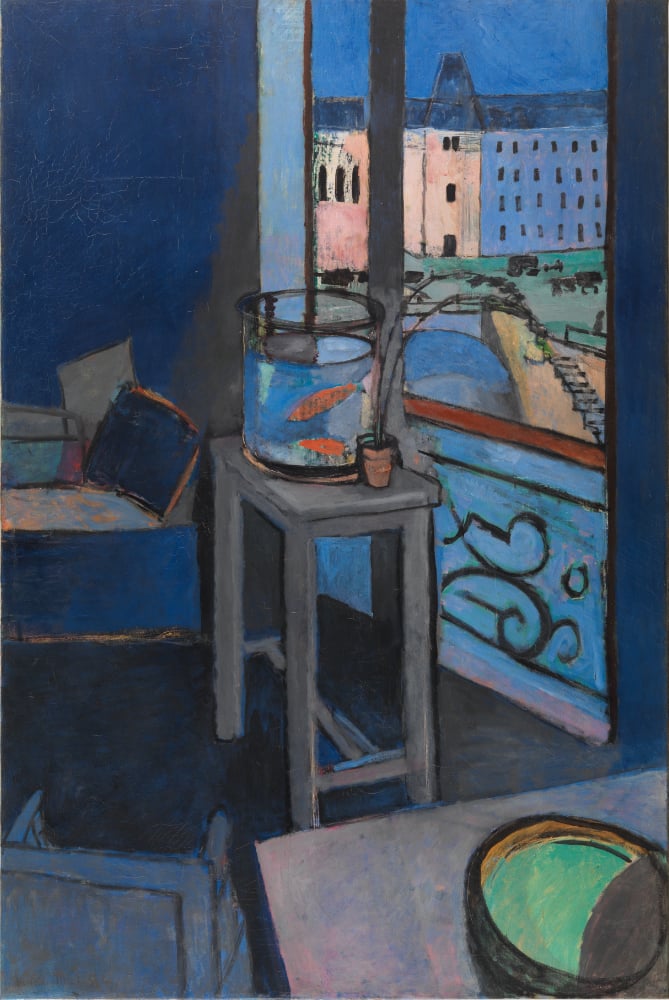
Henri Matisse, Intérieur, bocal de poissons rouges, 1914, Center Pompidou, © Succession H. Matisse / VEGAP / 2025.
The exhibition is organized into eight chronological and conceptual sections, allowing visitors to observe how Matisse's so-called "new painting" engages with key figures of modernism and contemporary art. Works by Pierre Bonnard, Georges Braque, and André Derain showcase the early ramifications of Fauvism and its break with academic tradition, while artists such as Robert Delaunay, František Kupka, and Mikhail F. Larionov demonstrate the expansion of color into territories bordering on abstraction and spiritual experimentation.
The exhibition doesn't stop at historical modernism, but extends its gaze to later figures such as Barnett Newman and Daniel Buren, highlighting how Matisse's conception of pictorial space and color as a total experience anticipates central concerns of 20th- and 21st-century art. Picasso, Le Corbusier, Emil Nolde, Ernst Ludwig Kirchner, Kees van Dongen, and Maurice de Vlaminck also appear in this intersection of references, configuring a complex map of influences, appropriations, and resistances.
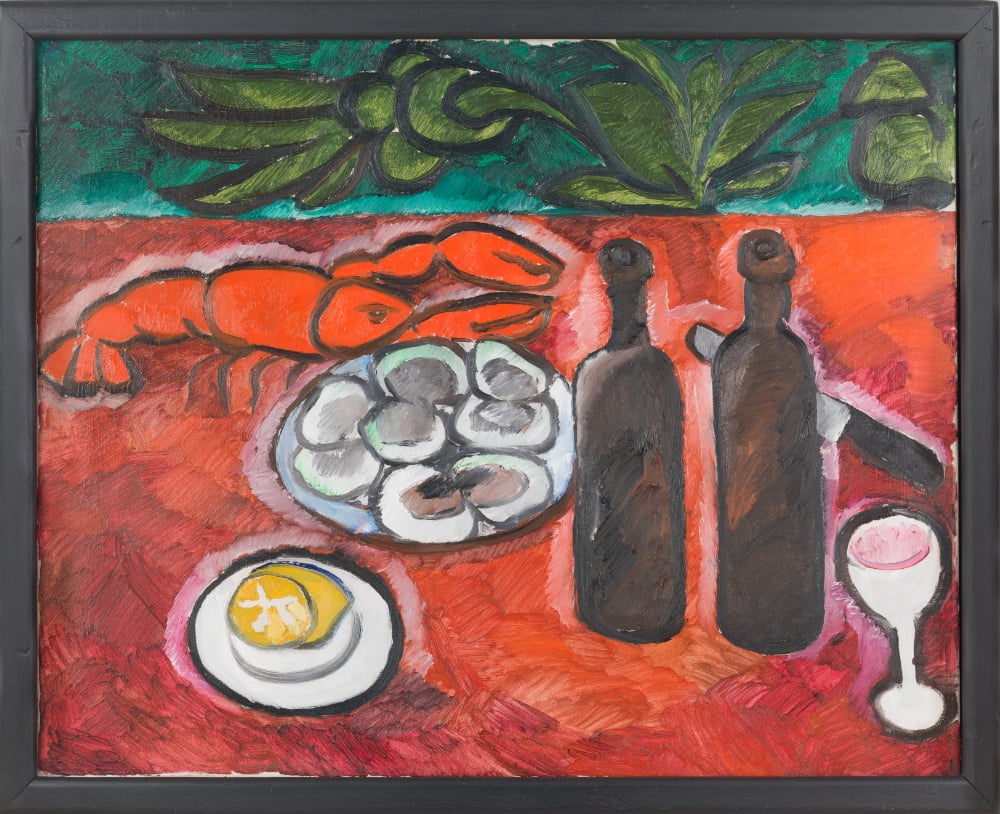
Natalia Goncharova, Nature morte au homard, 1909, Center Pompidou, © Natalia Goncharova / VEGAP / 2025.
Chez Matisse doesn't simply celebrate a renowned master; it poses a critical question: what does it mean to paint today after Matisse? The answer isn't straightforward, but the exhibition suggests that his legacy lies not in a recognizable style, but in a radical attitude toward painting, understood as a field of freedom, risk, and constant invention. In this sense, the exhibition presents itself not only as a historical review, but also as a timely reflection on art's capacity to reinvent itself through its own ruptures.
The temporary exhibition culminates with a section dedicated to the projection of Matisse's work in the languages of New Modernity, Pop Art, and postcolonial aesthetics, extending its influence beyond the strictly pictorial realm into video and film. In this room, a piece by the Russian video artist of Algerian origin, Zoulikha Bouabdellah, takes on particular significance. Her work articulates a contemporary reading of Matisse's legacy from a hybrid perspective, permeated by questions of identity, body, and cultural memory.
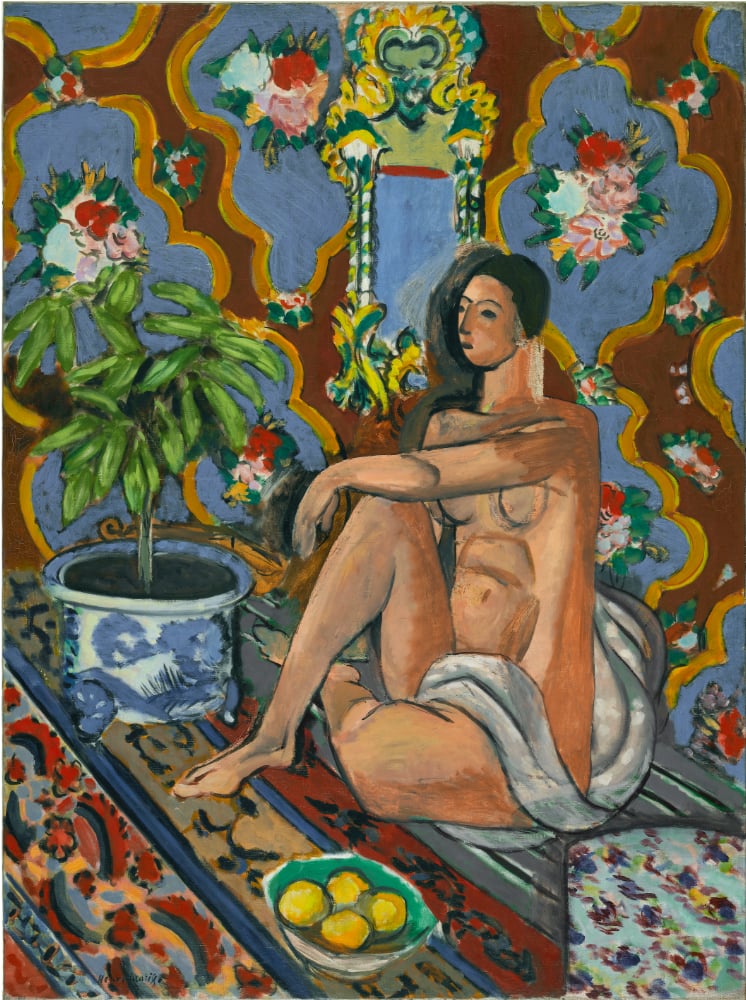
Henri Matisse, Figure décorative sur fond ornementel, 1925, Center Pompidou, © Succession H. Matisse / VEGAP / 2025.
In the final years of his life, Matisse was forced to abandon the use of the paintbrush, a physical limitation that, far from hindering his creative drive, acted as a catalyst for one of the most radical and fruitful periods of his career. His work with painted and cut papers—the celebrated gouaches découpées—not only redefined his artistic practice but also gave rise to some of the most iconic images in 20th-century art. In these compositions, color and form achieve absolute autonomy, anticipating visual solutions that continue to resonate in contemporary practices and confirming Matisse as an artist capable of reinventing himself until the very end.
"An artist should never be a prisoner of himself, a prisoner of his style, a prisoner of his reputation, a prisoner of his success," Henri Matisse, 1947.


You may be
interested
...