Opinion
Christmas and art: the light of winter in the great masterpieces
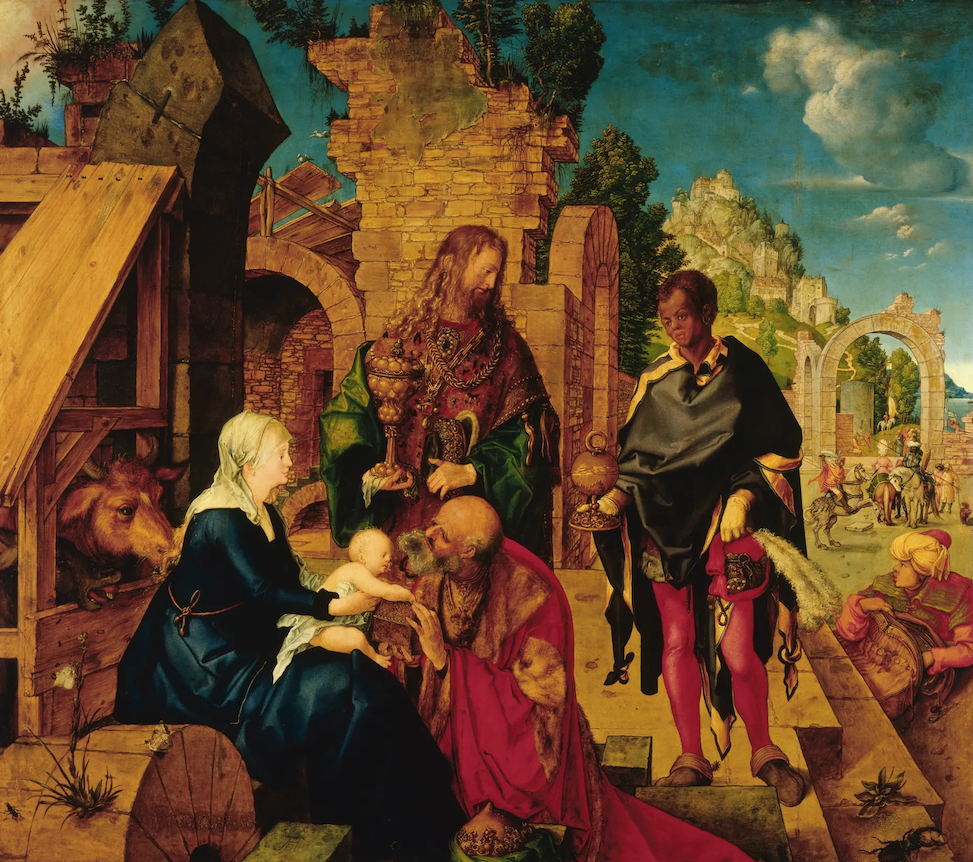
Christmas, beyond its religious or festive dimension, has been a powerful source of artistic inspiration throughout the centuries. Painters, sculptors, and creators from different eras have found in this time of year a symbolic language imbued with light, contemplation, and humanity. From the great masters of the Renaissance to contemporary interpretations, Christmas iconography has served as the backdrop for some of the most memorable works in the history of art.
In museums and collections around the world, scenes such as the Nativity, the Adoration of the Magi, and the Annunciation to the Shepherds reveal not only a biblical episode but also the aesthetic, social, and spiritual sensibilities of each period. Christmas thus becomes a meeting point between faith, tradition, and creativity, where art acts as a bridge between the past and the present, inviting the viewer to pause, contemplate, and rediscover the profound meaning of this time of year.
Albrecht Dürer's The Adoration of the Magi (1504) is one of the most refined and complex interpretations of the Nativity theme in the Northern European Renaissance. Painted at the height of his artistic maturity, the work encapsulates the German artist's technical mastery and his profound interest in harmony, symbolism, and meticulous observation of the world.
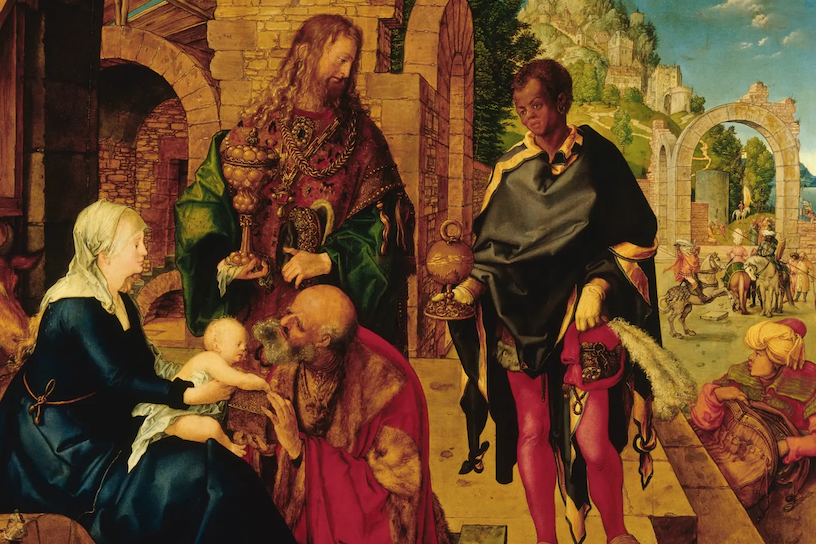
The scene depicts the solemn encounter between the Christ Child and the Magi, representing different ages and backgrounds, a direct allusion to the universality of the Christian message. Dürer sets the scene within a ruined architectural landscape, a symbol of the end of the ancient world and the birth of a new spiritual era. This device, common in Renaissance painting, acquires here an almost archaeological precision, reflecting the artist's interest in proportion and geometry acquired during his travels in Italy.
One of the most distinctive features of the work is the richness of its detail: the sumptuous fabrics, the precious objects offered as gifts, and the delicacy of the gestures reveal Dürer's extraordinary skill as a draftsman and painter. The carefully distributed light guides the viewer's gaze to the emotional heart of the composition: the serene and human Child, who receives adoration without losing his vulnerability.
Beyond its religious significance, The Adoration of the Magi can be interpreted as a reflection on the encounter between cultures, knowledge, and traditions. In the Christmas context, the work invites us to contemplate Christmas not only as a sacred event, but also as a moment of dialogue, recognition, and wonder—values that continue to resonate powerfully with contemporary sensibilities.
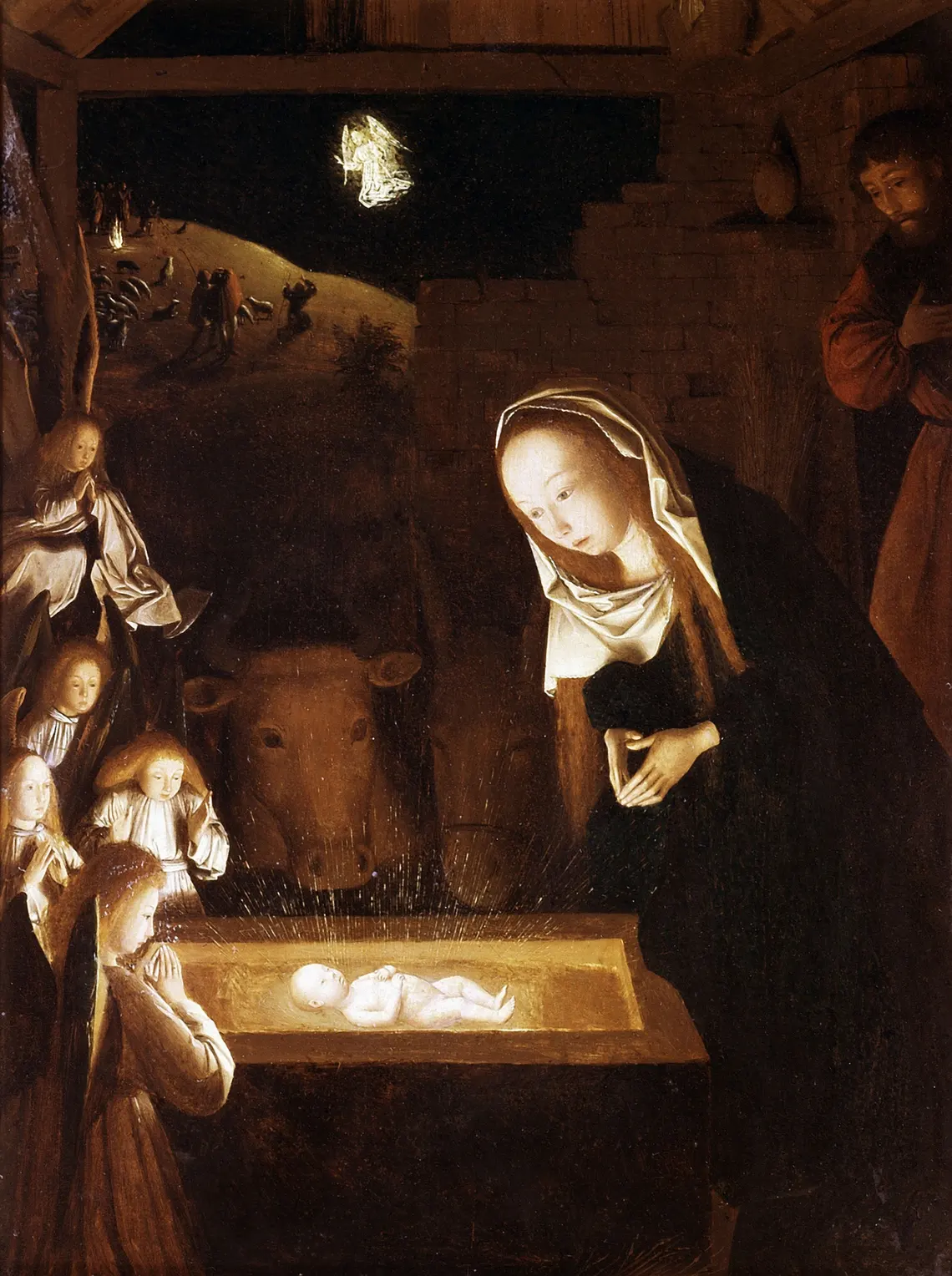
The Nativity at Night, National Gallery, 1490.
Geertgen tot Sint Jans's Nativity at Night (c. 1490) is one of the most poetic and innovative depictions of the birth of Christ in Northern European painting. In this early and exceptional work, the Dutch artist breaks with traditional conventions by setting the scene in the dead of night, using light as a narrative and spiritual element.
The light emanates from the Christ Child himself, whose body radiates a supernatural clarity that illuminates the faces of Mary, Joseph, and the angels. This device, inspired by the mystical visions of Saint Bridget of Sweden, transforms the painting into an intimate and contemplative experience, where light not only reveals forms but also symbolizes the divine incarnation in the earthly world. The surrounding darkness reinforces the contrast and envelops the scene in an almost palpable silence.
Geertgen demonstrates extraordinary sensitivity in his treatment of emotions and gestures. Mary appears kneeling, absorbed in adoration, while the singing angels add a celestial dimension that seems to float in the twilight. The barely perceptible background landscape suggests a distant outside world, underscoring the contemplative and spiritual nature of the moment.
In the context of Christmas, The Nativity at Night invites the viewer to a quiet and contemplative moment. Far from grandeur, the work proposes an inner experience, where light is born in the darkness and simplicity becomes revelation. It is an image that continues to speak to the contemporary viewer, reminding us that the essence of Christmas often resides in the intimate and the unseen.
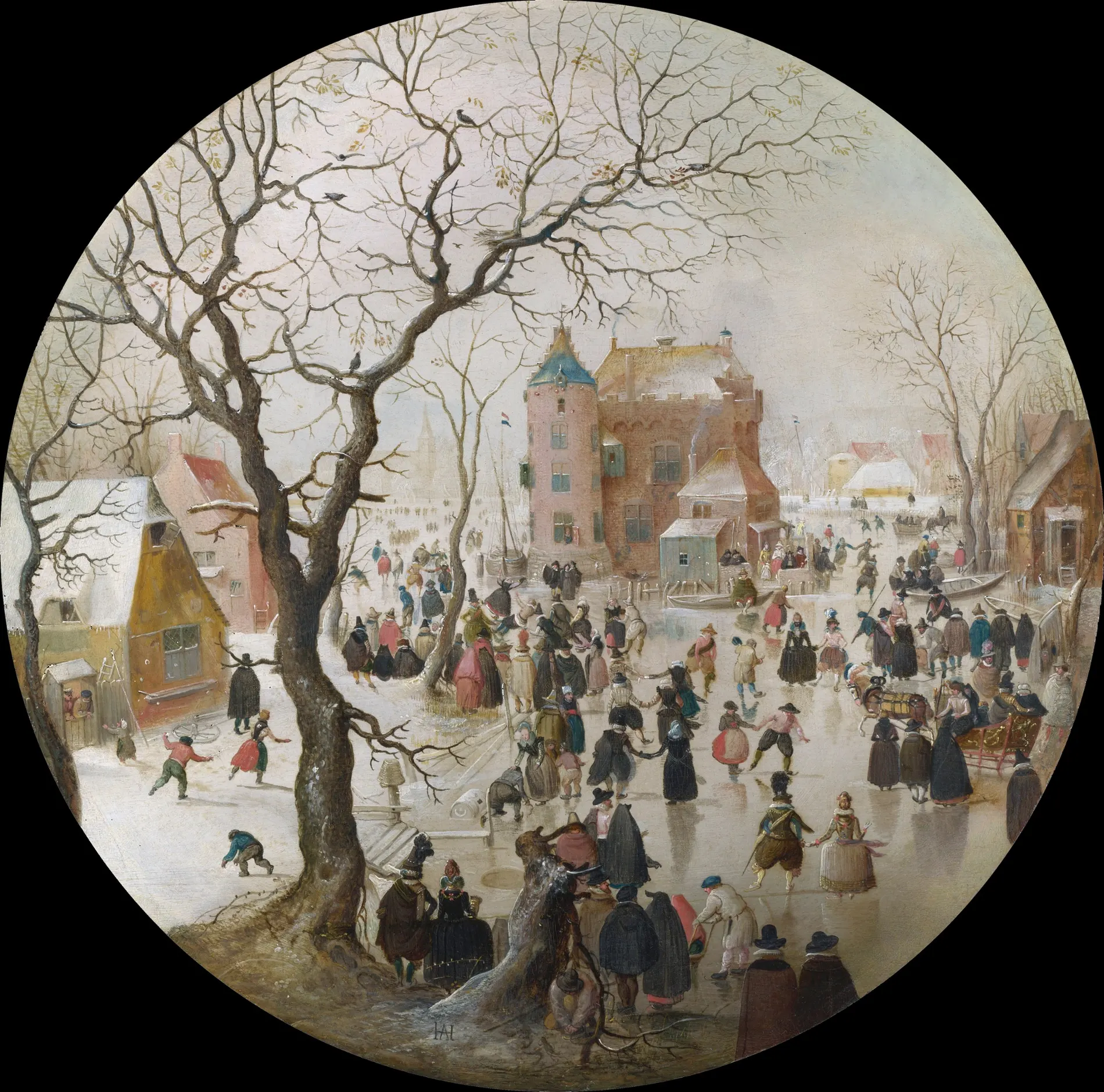
A Winter Scene with Skaters near a Castle by Hendrick Avercamp, National Gallery, 1608-9.
A Winter Scene with Skaters near a Castle , by Hendrick Avercamp, is one of the most iconic images of winter in 17th-century Dutch painting. Unlike the traditional religious scenes associated with Christmas, Avercamp offers an everyday, festive perspective, where the cold becomes a backdrop for conviviality, leisure, and community life.
The composition depicts a frozen landscape teeming with activity: figures skating, conversing, playing, or simply observing, creating a spontaneous choreography on the ice. The castle in the background acts as a visual and symbolic anchor, recalling the presence of social order and history, while everyday life unfolds in the foreground. Avercamp, known as “the painter of winter,” demonstrates here his extraordinary ability to tell multiple stories within a single scene.
The use of a light, cool palette, dominated by whites, grays, and soft blues, conveys a wintry atmosphere without resorting to drama. The diffused light and low sky reinforce the sense of calm and continuity, while small details—gestures, postures, interactions—invite the viewer to pause and explore the painting as if strolling through a frozen landscape.
Within the context of Christmas reflections, Avercamp's work offers a different, yet complementary, vision: that of winter as a shared time, a time for social gatherings and collective enjoyment. A winter scene with skaters beside a castle celebrates the human dimension of the season, reminding us that Christmas also resides in simple gestures, in community, and in the quiet joy of everyday life.

You may be
interested
...