Exhibitions
Memory, desire and identity in the painting of Manuela Solano
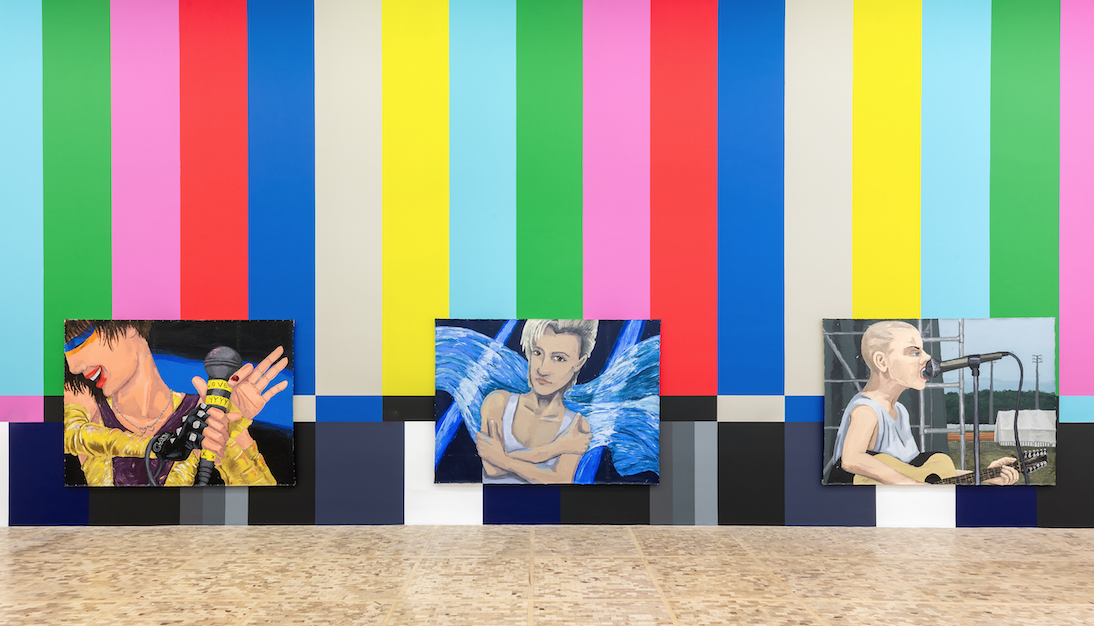
Manuela Solano's exhibition Alien Queen / Strange Paradise occupies Rooms 1 and 2 of the Tamayo Museum, a space of intimate resonances and shared cultural echoes. In collaboration with the Andalusian Center for Contemporary Art (CAAC) and open to the public until January 4, 2026, the exhibition brings together more than thirty large-format paintings created over seven years, forming a body of work that unfolds like an emotional archive, poised between autobiography and collective imagination.
Solano constructs her pictorial universe from portraits of real and fictional characters drawn from the pop culture of the turn of the millennium. Icons of music, fashion, film, television, the internet, and magazines emerge not as mere nostalgic allusions, but as presences imbued with affection, filtered through the artist's life experiences. These are figures who accompanied her adolescence and her entry into adulthood, witnesses to love and loss, to the euphoria of parties and moments of tranquility. In this sense, each painting functions as a point of contact between lived experience and imagination, between personal memory and the visual narratives that shaped a generation.
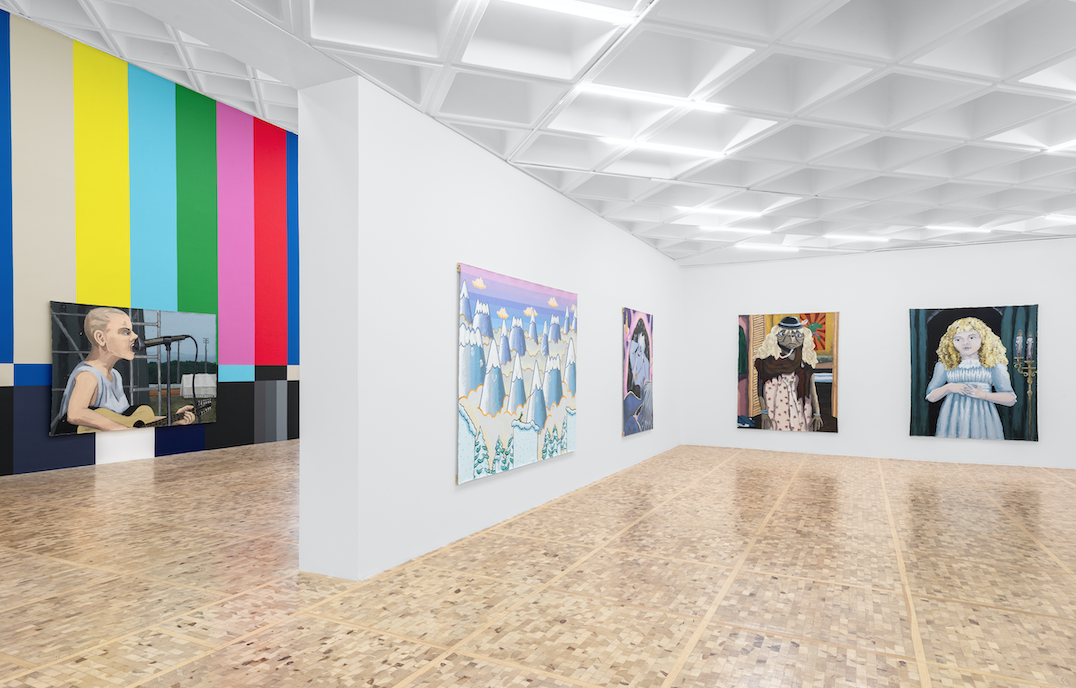
Alien Queen/Strange Paradise, Manuela Solano, Tamayo Museum, 2025. Photographs by Gerardo Landa and Eduardo López (GLR Studio). Images courtesy of the Tamayo Museum.
The aesthetics of the eighties, nineties, and two-thousands reappear filtered through a contemporary lens that blurs the lines between local and global, alternative and mainstream culture. Far from a literal reconstruction, Solano rewrites these codes through painting itself, using dense, persistent layers that reveal a slow, almost confessional process. The painted surface thus becomes a space of friction where times, desires, and contradictions overlap.
In Alien Queen / Strange Paradise , memory is not presented as a linear narrative, but as a constellation of contrasts. The brushstrokes, sometimes vehement and at other times restrained, reflect dilemmas that permeate both artistic production and personal life: to belong or to distance oneself, to expose oneself or to protect oneself, to celebrate or to resist. Painting thus asserts itself as an act of insistence and care, a gesture that allows one to sustain the fragile and the contradictory.
More than a retrospective, the exhibition feels like an expanding mental landscape, where the artist invites the viewer to recognize their own memories within the folds of the image. Between the strange and the familiar, between the alien queen and the promised paradise, Manuela Solano traces an affective cartography that questions how popular images infiltrate our biography and, in doing so, transform into sensitive, persistent, and profoundly human material.
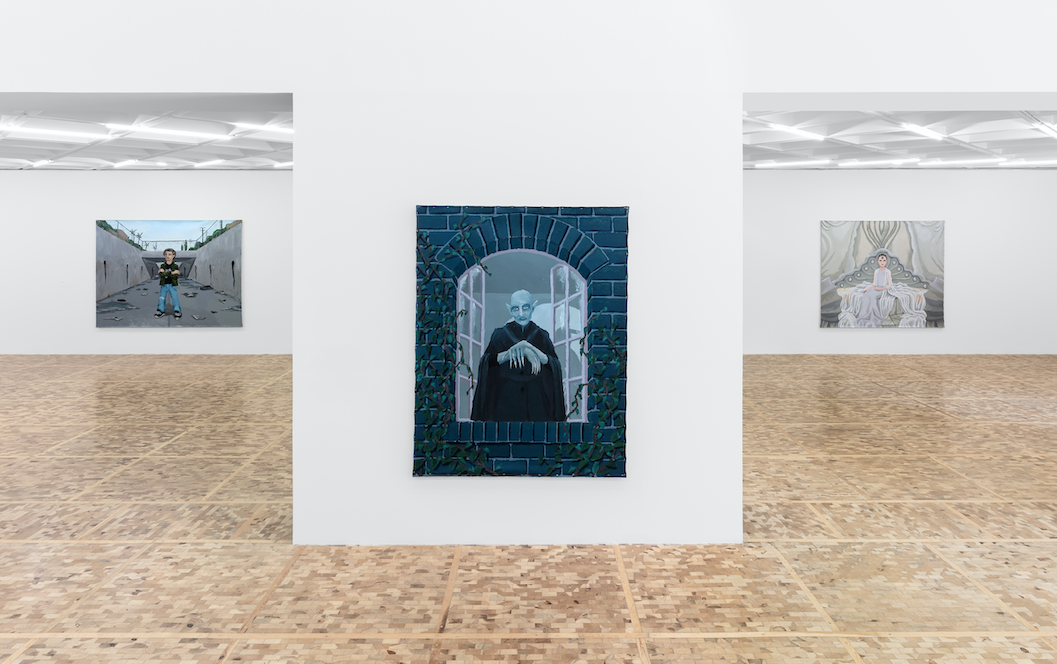
The works that comprise Alien Queen / Strange Paradise can be interpreted as a constellation of displaced self-portraits. In them, identity does not appear as a fixed essence, but as a constantly evolving process, woven over time from experiences, relationships, and explorations of the environment. The assumption of different roles—real or imagined—is thus revealed as a strategy for confronting the social and, at the same time, opening up possibilities for transformation and growth.
From this perspective, Manuela Solano conceives of identity as a twofold gesture: an exercise in survival and a practice of subversion. Her painting emerges from both vulnerability and pleasure, articulating a productive tension between fragility and enjoyment. In this ebb and flow, the work affirms the capacity to reinvent itself, to inhabit multiplicity, and to find in the image a space where personal experience becomes both political and sensitive.
Manuela Solano points out that her practice doesn't follow a predetermined path, but rather an impulse guided by intuition and a proliferation of ideas. "One of the things I've learned in eleven years of being blind is that when something interests me, I pay close attention to it," she explains. This series, which began with pieces like Alien Queen and Strange Paradise , stems from this exercise in attentiveness. It's part of a process in which the artist constructs mental maps of her thoughts and emotions. These maps feature characters in whom she recognizes fragments of herself: her longings and inspirations, but also her fears and loneliness, translated into painting as a form of intimate and persistent exploration.
You may be
interested
...