Exhibitions
Julia Montilla brings to Fabra i Coats the invisible reality of Huelva's day laborers
“Strawberry Fields”, a 2024 Videocreació award, combines visual poetry, documentary and social criticism to denounce the agroindustrial model and the urban-centric perspective that marginalizes rural environments and migrant workers.
The Fabra Contemporary Art Center opened on the first floor, Lalirio: Fuentesal Arenillas occupies the entire space with an intervention that unfolds her plastic universe. One floor above, artist Julia Montilla presents Strawberry Fields , an exhibition in which she focuses on the women day laborers dedicated to the strawberry harvest in the province of Huelva.
This southern territory, known for its immense production of red fruits, has become a particularly eloquent symbol of contemporary agro-industrial capitalism. Its large intensive farms reveal, with uncomfortable clarity, the consequences of this economic model both on the working conditions of the people who work there —often in precarious and invisible situations— and on the environment, which is under increasing pressure from the need to maintain extremely high agricultural yields.
Montilla takes advantage of this context to propose a critical and at the same time sensitive look at the structures that sustain this reality, inviting the public to reflect on the mechanisms of production, exploitation and consumption that make it possible.
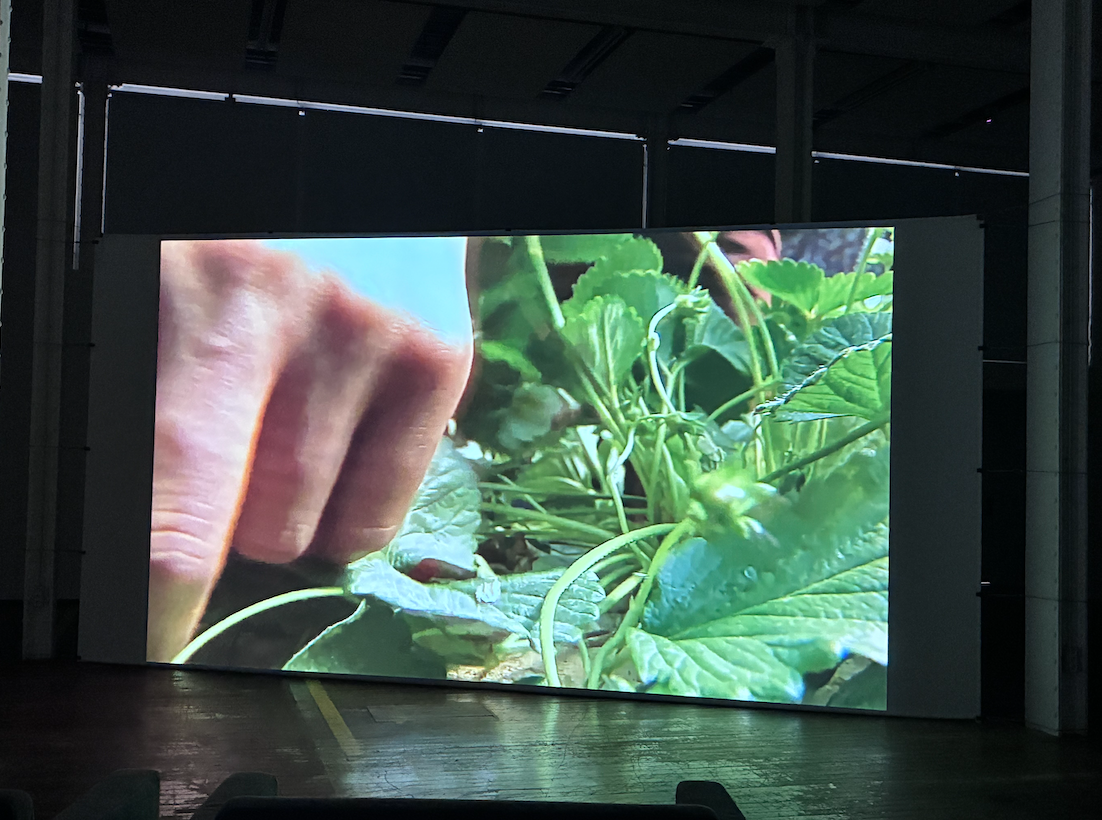
The piece can be visited from November 15 to January 25 as part of the LOOP audiovisual creation festival, where it is exhibited as the winning proposal of the eleventh edition of the Video Creation Award. It is an exploration that combines the languages of the visual arts and the resources of documentary cinema, and whose title is an evocative reference to the legendary Beatles song.
The artist presents this work after being awarded the Video Creation Award, an initiative promoted by the Territorial Centres of the Public System of Visual Arts Facilities of Catalonia, the Santa Mònica arts centre, the Department of Culture and LOOP Barcelona. The award aims to support creators who experiment with new forms of audiovisual narrative and who integrate video as a central element of their artistic processes.
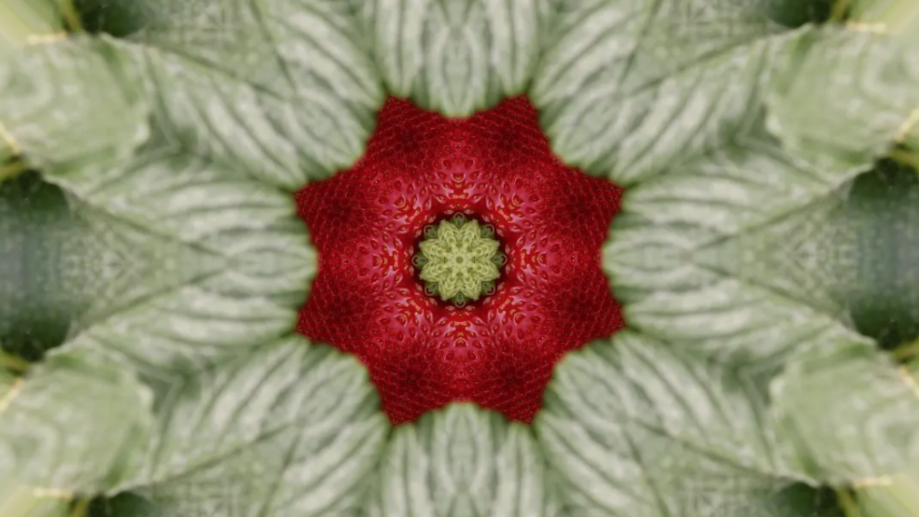
With a duration of 63 minutes and structured in seven chapters, Julia Montilla's work unfolds a leitmotif that returns again and again: flowers and strawberries as a visual and symbolic metaphor. Through this common thread, the artist transports us to Huelva, where the images she proposes constitute a frontal critique of a way of perceiving the world deeply conditioned by the urban gaze.
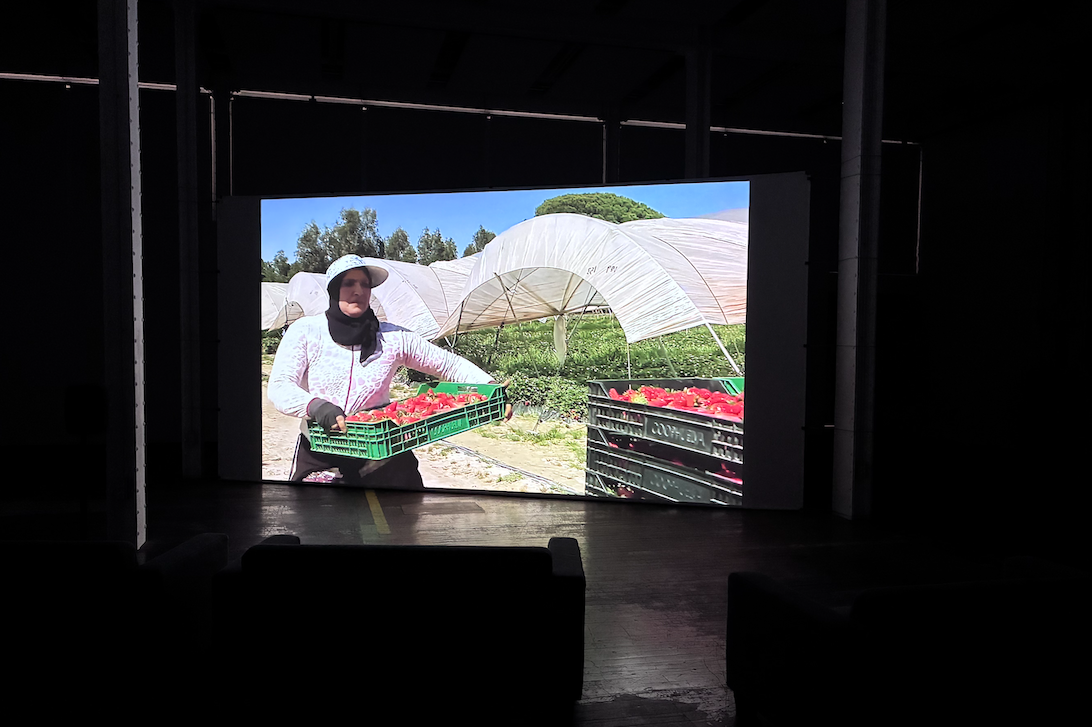
This point of view, focused almost exclusively on life in cities, tends to relegate rural environments to a secondary role, as if they were non-existent or irrelevant spaces. Montilla also denounces how this urban-centric perspective contributes to the invisibility of the realities and conditions of migrant workers, who sustain much of agricultural production but often remain outside the public narrative.
Julia Montilla's work, situated on the border between poetic and observational documentary, visual experimentation and critical reflection, is also displayed through a series of complementary activities. Before the exhibition reaches its end, a special session with the viewing of Strawberry Fields is planned, followed by a dialogue with Gemma Casal, which will allow us to address the reality of the Lleida region in parallel.
The piece cannot be understood without the multiple voices that appear and that structure the story, as well as the sound presence of La Desi, El Sery and Herramientas by Salvador Távora, which contribute to creating an emotional and political atmosphere that runs through the entire film.


You may be
interested
...