News
The Institut Ramon Llull opens a new stage with the replacement of Pere Almeda as director
The governing board is dismissing the jurist and political scientist after almost three years at the helm of the institution, marked by the 2025-2030 Strategic Plan and the drive for the internationalization of Catalan culture.
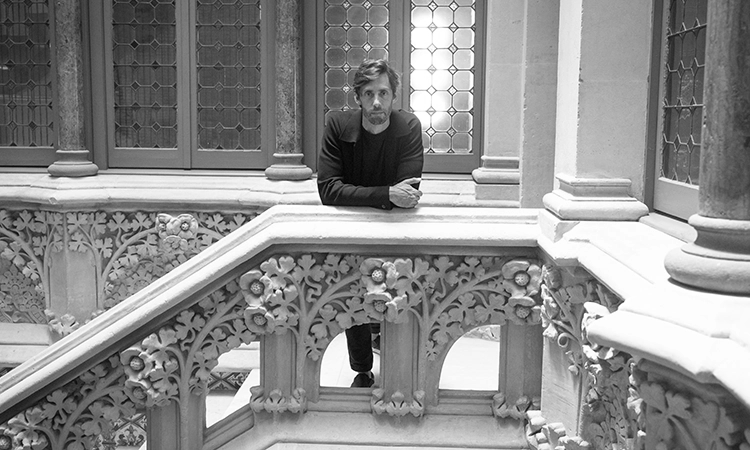
The Institut Ramon Llull has decided to do without Pere Almeda i Samaranch as director of the institution, a change that marks the beginning of a new stage for the organization dedicated to the external projection of the Catalan language and culture. The decision, taken by the governing board —formed by the government of the Generalitat, the government of the Islands, the Barcelona City Council and the Palma City Council—, is part of a desire for internal renewal and the intention to reformulate the management structure of the center, which has played a key role in the internationalization of literature, art, music and the performing arts in the country.
Sources from the institution indicate that the process for appointing a new director is already underway and is expected to be resolved in a matter of weeks. In the meantime, the technical team will continue with ordinary tasks to guarantee the continuity of the projects and the presence of the Llull in the main international cultural events.
A lawyer and political scientist by training, Pere Almeda took over as director of the Institut Ramon Llull in November 2021, succeeding the writer Francesc Serés. Serés had resigned just four months after being appointed, amid internal tensions stemming from political interference and the debate over the institution's governance model. That episode highlighted the need to find a balance between technical management and cultural independence, a challenge that has continued to shape the functioning of the Llull in recent years.
With his departure, Pere Almeda brings to an end a stage defined by the deployment of the Strategic Plan for the Internationalization of Catalan Culture 2025-2030, a roadmap that has sought to strengthen the external presence of contemporary creation and consolidate relations with cultural institutions around the world. During his term, the Institut Ramon Llull has promoted new lines of support for creation, the International Residencies Program and research grants in Catalan studies, with the aim of strengthening links between creators, researchers and international cultural centers.
In addition, under his direction, anthologies of Catalan poetry have been published in various languages and the dissemination of the Clàssics Catalans del Pensament Polític collection has been promoted, contributing to projecting the richness and diversity of Catalan thought and literature beyond the country's borders.
The governing board has expressed its desire to strengthen the institution's role as a tool for projection and intercultural dialogue, while adapting its structure to the new needs of the sector.
With this reformulation, the Institut Ramon Llull seeks to remain a reference platform in the dissemination of Catalan culture in the world, while preserving its founding spirit: bringing Catalan creativity, language and thought to new audiences and territories.


You may be
interested
...