News
Discovering Arenys de Mar: from Marès de la Punta to the mineralogy of Mollfulleda
Bonart talks to Neus Ribas, director of the Arenys de Mar Museum.
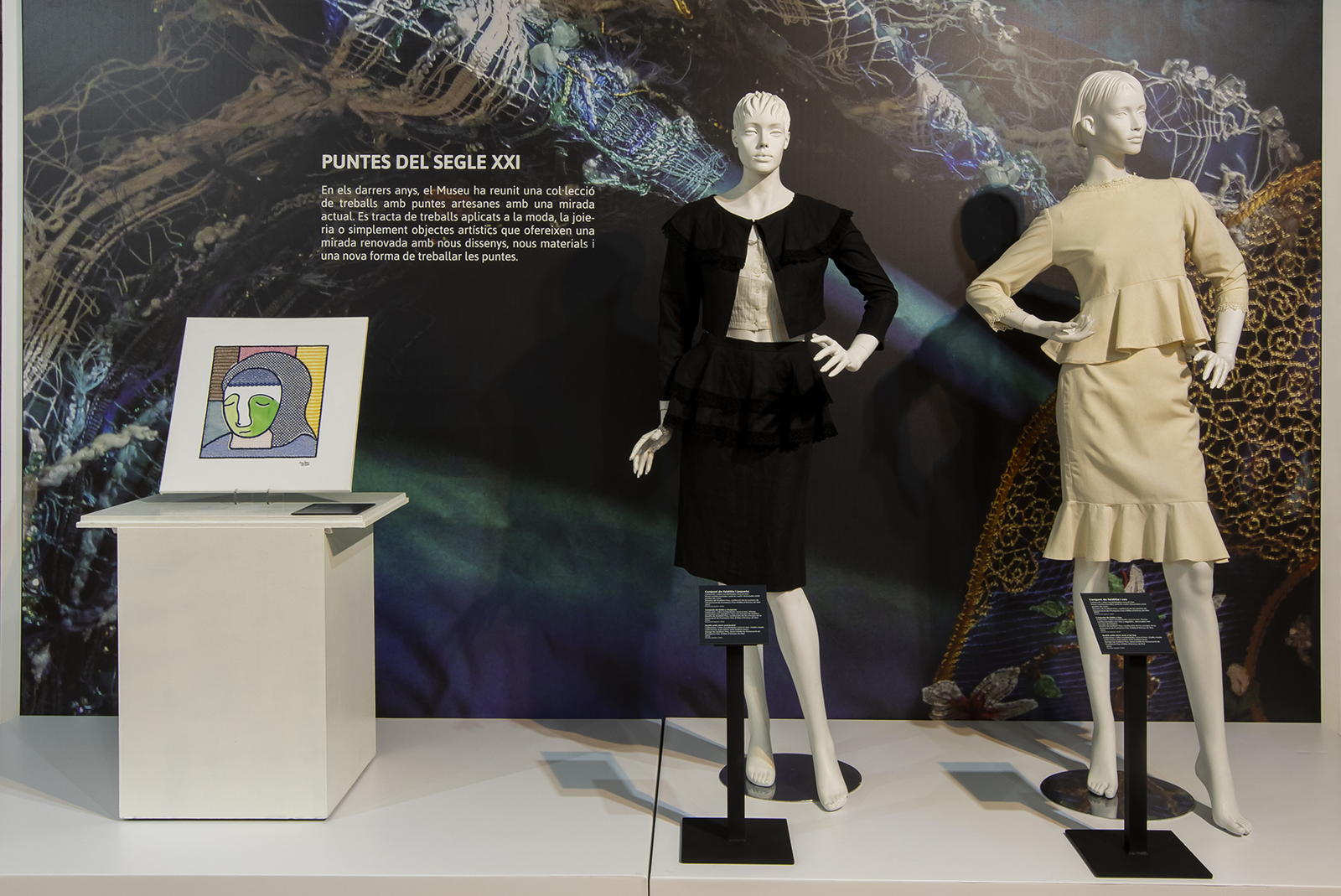
Neus Ribas has been the director of the Arenys de Mar Museum for over twenty years. The center includes two main sections —the Marès de la Punta Museum and the Mollfulleda Mineralogy Museum— and also preserves the collection of the former Fidel Fita Municipal Museum. Bonart spoke with the Arenys de Mar resident about the past, present and future of the museum, as well as the closing of the Estiueig de proximité exhibition, which has attracted over 18,500 visitors.
In 2021, the exhibition 'Summer of Proximity' was exhibited for the first time at the Arenys de Mar Museum and has closed its journey to 2025
The project for the summer exhibition emerged in 2019 as a result of an initiative linked to the Masnou Nautical Museum. The proposal was presented to the Provincial Council's Cultural Heritage Office, which showed interest in producing it.
The script and texts were written by historian Joaquim Maria Puigvert, a professor at the University of Girona and a specialist in the subject. His work was supervised by the Masnou and Arenys de Mar museums, together with the Cultural Heritage Office, which also intervened in the selection of the photographs and pieces on display, coming from municipal archives, photographic archives and collections of local museums.
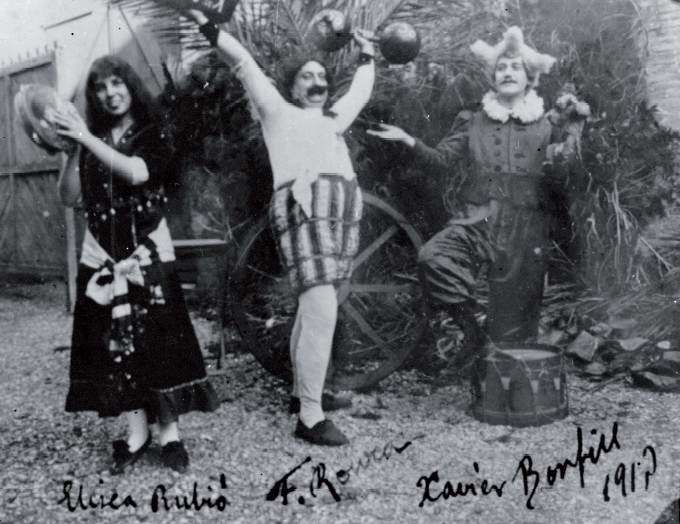
The development of the project was carried out in the midst of the pandemic, which conditioned the work and coordination processes. The exhibition design, by Lídia Antúnez, was completed with a sound proposal by Ramon Coll that provided an immersive dimension to the exhibition.
The inauguration took place in the summer of 2021 in Arenys de Mar and, since then, the exhibition has toured several local museums. The project has been distinguished with an award from the Association of Museologists of Catalonia, in recognition of the quality of its content and its ability to connect with the public.
Relationship between the Marès de la Punta Museum and the Mollfulleda Mineralogy Museum and the elements that should not be overlooked during a visit to the Arenys de Mar Museum
The Arenys de Mar Museum includes two venues born from private collections: the Marès de la Punta Museum, created in 1983 from the collection of lace by the sculptor Frederic Marès, and the Mollfulleda Mineralogy Museum, inaugurated in 1988 thanks to the collection of Joaquim Mollfulleda, a businessman from Calisay. Both institutions, together with the local collection from the former Fidel Fita Museum, form part of the Arenys de Mar Museum, recognised as an official museum in the register of the Generalitat de Catalunya.
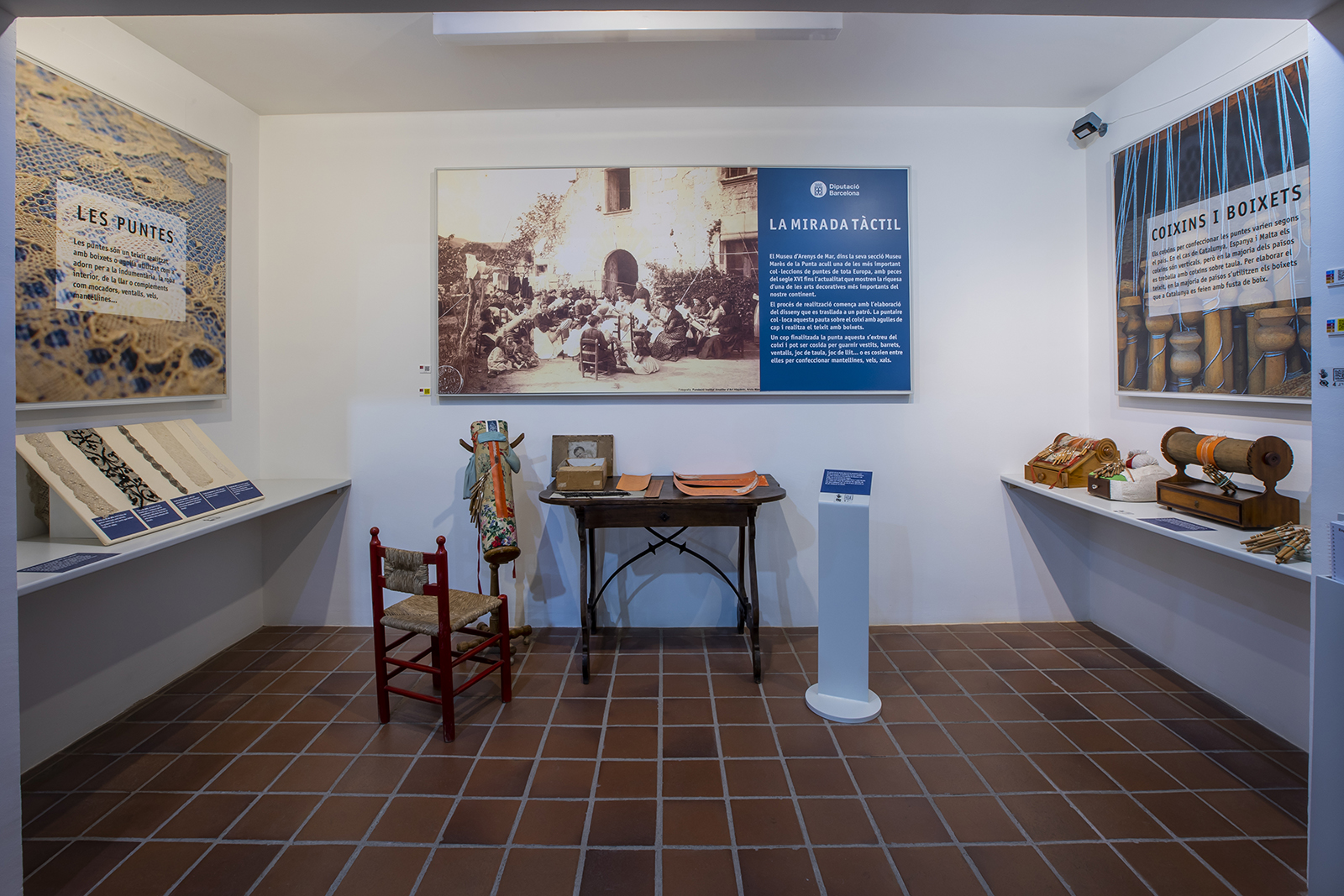
A visit to the complex allows you to delve into the history of Arenys de Mar through local collections, discover the world of lace from multiple perspectives - women's work, artisanal workshops or clothing - and complete the tour with an immersion in the field of mineralogy. In this latter area, the museum preserves one of the most outstanding mineral collections in the country, distributed in a space of didactic and informative nature, a room dedicated to the minerals of Catalonia and a main room with the most relevant specimens of the collection.
Collections of lace and important fabrics as a key element for Arenys de Mar
Textiles have been one of the most important sectors in Catalonia, as they have historically formed the basis of a fundamental part of its economic development. Among its most unique expressions, artisan lace, probably introduced from France, began to be produced in the mid-17th century. One of the oldest testimonies of this activity is preserved in the Baroque Museum of Manresa, in an altarpiece dedicated to the Annunciation of the Virgin where a lace-making cushion is represented.
Maresme became one of the main lace-producing centres, many of which were destined for the luxury market. This production was largely carried out thanks to the domestic work of numerous women who combined lace-making with agricultural tasks. The expansion of trade with America favoured a notable growth of this activity, and in Arenys de Mar several workshops specialised in the production of lace for export were established.
With industrialization, in the mid-19th century, artisanal lace gradually lost its economic and social importance. However, Arenys de Mar maintained some of the last large companies dedicated to this craft, with Casa Castells (1862-1963) being the most emblematic and representative case of the survival of this tradition.
New exhibition at the Arenys Museum until December 28 'Migrants in Arenys de Mar'
The exhibition Youth and Families. Migrants in Arenys de Mar is a project promoted by 2nd year high school students at the Tres Turons Institute as part of the optional subject on the Sustainable Development Goals, during the 2024-2025 academic year. The students carried out the research, the development of the script and the writing of the texts, as well as the filming of a joint project with the students of the Reception Classroom, which offers a space to learn about the migratory reality of the municipality.
The result is an exhibition conceived as a collective reflection by the students on the experiences of migration in Arenys de Mar. The exhibition design, by Escarabar (Aitor Sampere), was conceived in dialogue with the students and is characterized by prioritizing the visual impact and accessibility of the contents.
Season 2025-26 at the Arenys de Mar Museum
During the last quarter of 2025, the Museum will focus its activity on several prominent events. Within the framework of the European Heritage Days, the new website will be presented, visits to the bunkers will be organized and a conference dedicated to the Sert building will be scheduled. In parallel, the Science Week will include workshops aimed at families and the general public, with proposals focused on natural pigments and the theme of Indians.
The Museum will also participate in the Punta a l'Agulla Congress, which will take place in October in La Laguna, Tenerife. At the same time, a significant part of the work of the quarter will be aimed at preparing the programming for next year.



You may be
interested
...