Exhibitions
From canvas to gallery: Fernando Mignoni's artistic revolution
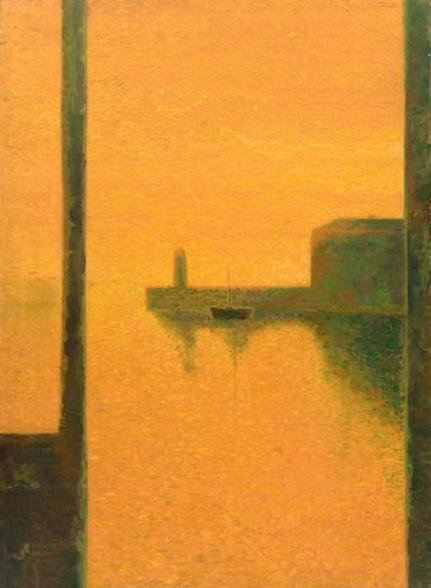
The Elvira González Gallery will present its first exhibition dedicated to Fernando Mignoni on September 11th. The exhibition brings together a selection of twenty pieces created between 1969 and 1991 that span the artist's various creative phases: from his early works focused on the human figure, through his transition to compositions where landscape and nature displace the body, to his final, fully abstract creations, with a constructivist character and a marked attention to space.
Fernando Mignoni Guerra (Madrid, 1929–2011) was a painter, poet, and gallery owner, a key figure in the renewal of contemporary art in Spain during the second half of the 20th century. The son of an Italian stage designer and a Spanish flamenco dancer, he grew up in an environment brimming with creative stimuli that decisively shaped his artistic career.
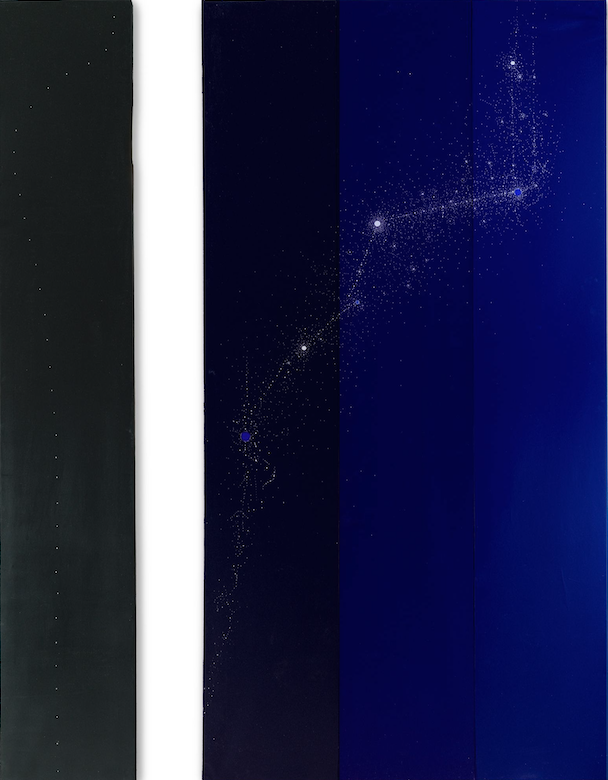
Untitled, 1987.
In 1963 he moved to Paris, where his work underwent a key transformation: the drama of his early work gave way to a more open pictorial language, in which color and abstraction took on increasing importance.
Back in Madrid in 1967, Mignoni and his wife, Elvira González, founded Galería Theo. This pioneering space introduced internationally renowned artists such as Picasso, Bacon, Fontana, and Rothko to Spain. The gallery soon established itself as an epicenter of artistic modernity and played a fundamental role in connecting the Spanish scene with the European and American avant-garde.
As a painter, Fernando Mignoni forged a career marked by the constant search for his own language. In his early period, close to expressionist figuration, he incorporated real objects and drew inspiration from worlds as deeply rooted in Spanish culture as bullfighting and flamenco.
During the 1970s and 1980s, his work took a decisive turn toward abstraction, opting for a more sensorial discourse in which color and the organization of space became absolute protagonists.
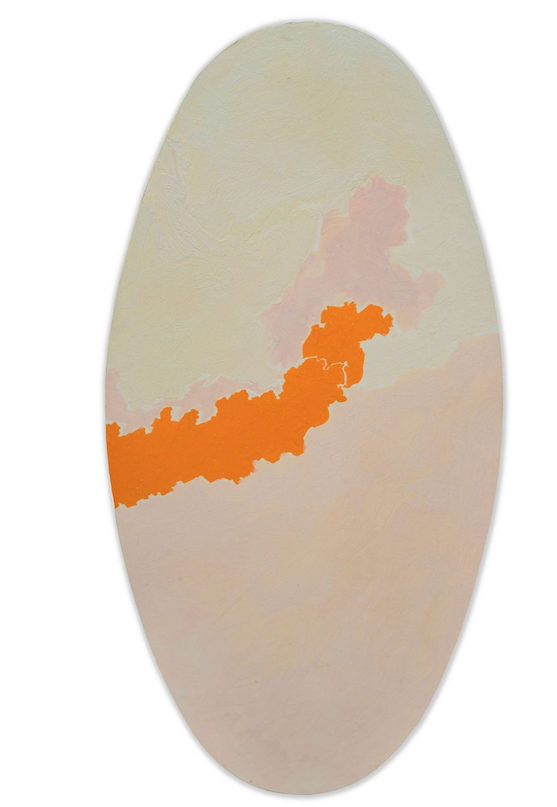
Untitled, 1981.
In a later phase, influenced by artists such as Jesús Soto and American minimalism, Mignoni took his research a step further: he explored three-dimensionality and opened his work to new territories. This resulted in spatial pieces, sculptures, and visual architectures that blurred the boundaries between painting and sculpture, offering the viewer an aesthetic experience based on perception and interaction with space.


You may be
interested
...